BMW presents its new robots as tools that free workers from heavy tasks. However, this optimistic narrative clashes with historical reality: every advance in automation usually translates into fewer stable jobs and more precariousness. Celebrating technology while hiding the human cost is a contradiction that the industry repeats tirelessly.
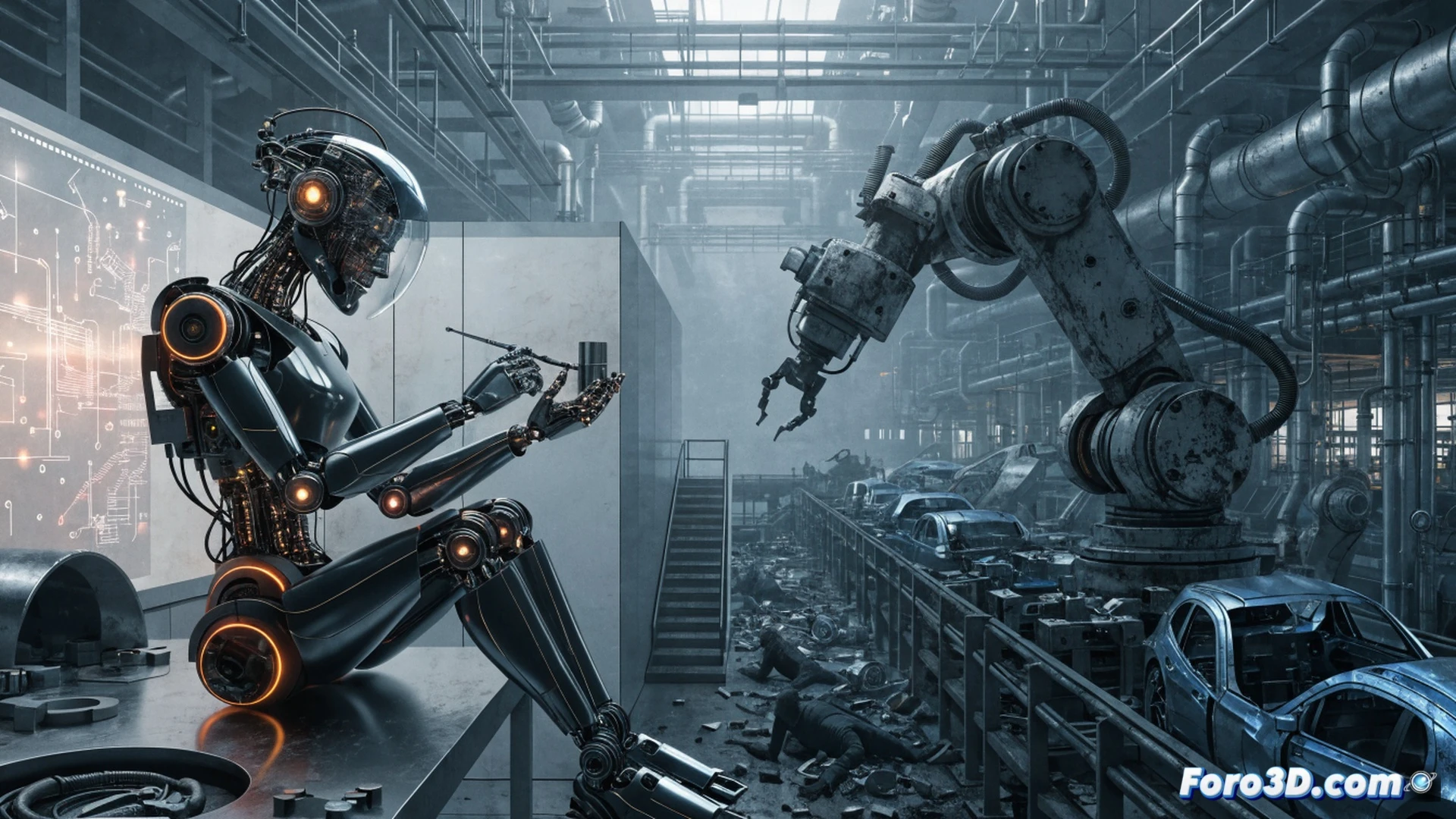
Industrial automation: the hidden cost of efficiency 🤖
BMW's robotic arms perform welds and assemblies with millimeter precision, eliminating human error. But this technical gain comes at a price: the reduction of permanent staff. Companies invest in machines that don't ask for vacations, but don't allocate funds to retrain displaced workers. The result is workers trained for years who end up swelling unemployment lists or accepting temporary contracts without rights.
The robot that takes your job and even smiles at you 😅
Now BMW's robots not only work without breaking a sweat, but are also presented as friendly colleagues who take a load off our shoulders. It's almost endearing to watch them move, as if they were about to invite you for coffee. Too bad you'll drink that coffee alone at home, because the position you held is already a thing of the past. But don't worry: you can always retrain as a caretaker for machines that never complain.