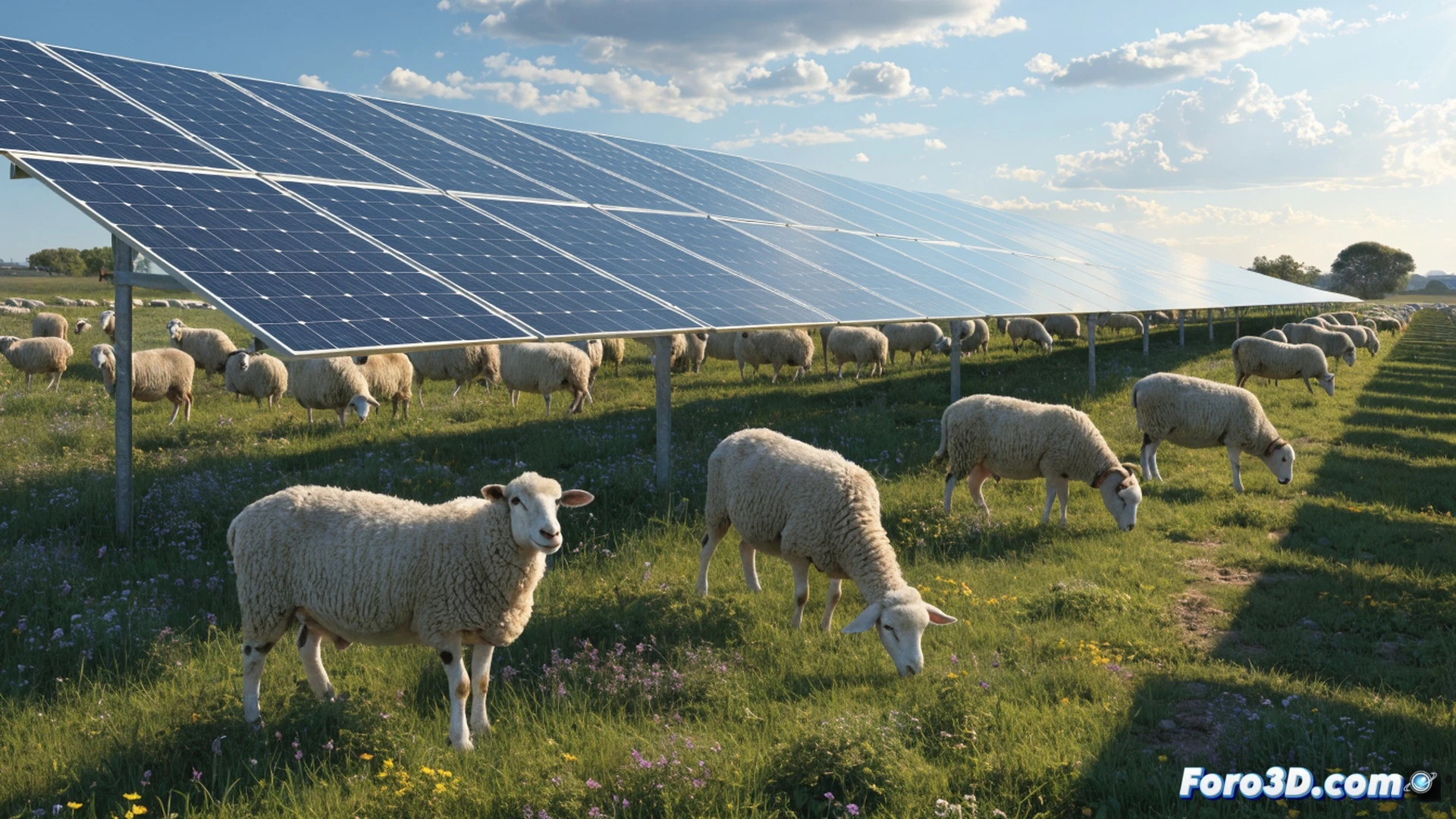
In Texas, the second-largest solar farm in the U.S. has found an unexpected ally: 3,000 sheep that graze the grass beneath the panels. This practice, known as solar grazing, replaces polluting machinery, reduces costs for power companies, and generates income for local ranchers. The initiative has already spread to 30 states and is beginning to be tested in Spain, proving that clean energy and the countryside can be partners.
How the alliance between panels and flocks works 🌿
The sheep graze in a controlled manner, keeping the vegetation low without damaging the panels. This avoids the use of gas-powered brush cutters and herbicides, reducing the farm's carbon footprint. Ranchers install mobile fences and provide water, while power companies save on maintenance. The system adapts to different climates and terrains, and there are already specialized companies coordinating grazing schedules with solar production. A low-cost solution that works.
Sheep with a workday and no union complaints 🐑
While humans debate renewable energy, Texas sheep already have steady jobs: eating grass and providing shade for the panels. Without demanding overtime or vacations, these ruminant employees keep the grass in check and, in the process, fertilize the soil. The only risk is that one day they might ask for a raise in the form of premium alfalfa. For now, the balance is positive: they eat, the panels produce, and everyone wins.