An Etruscan bronze mirror with a supposed ancient relief turned out to be a modern forgery. Researchers detected that the wear on the reverse side was not natural, but caused by automated micro-abrasive blasting. This method, used to erode the surface in a controlled manner, allowed the imitation of centuries-old patina. The case highlights how 3D technology is also used to deceive the archaeological market.
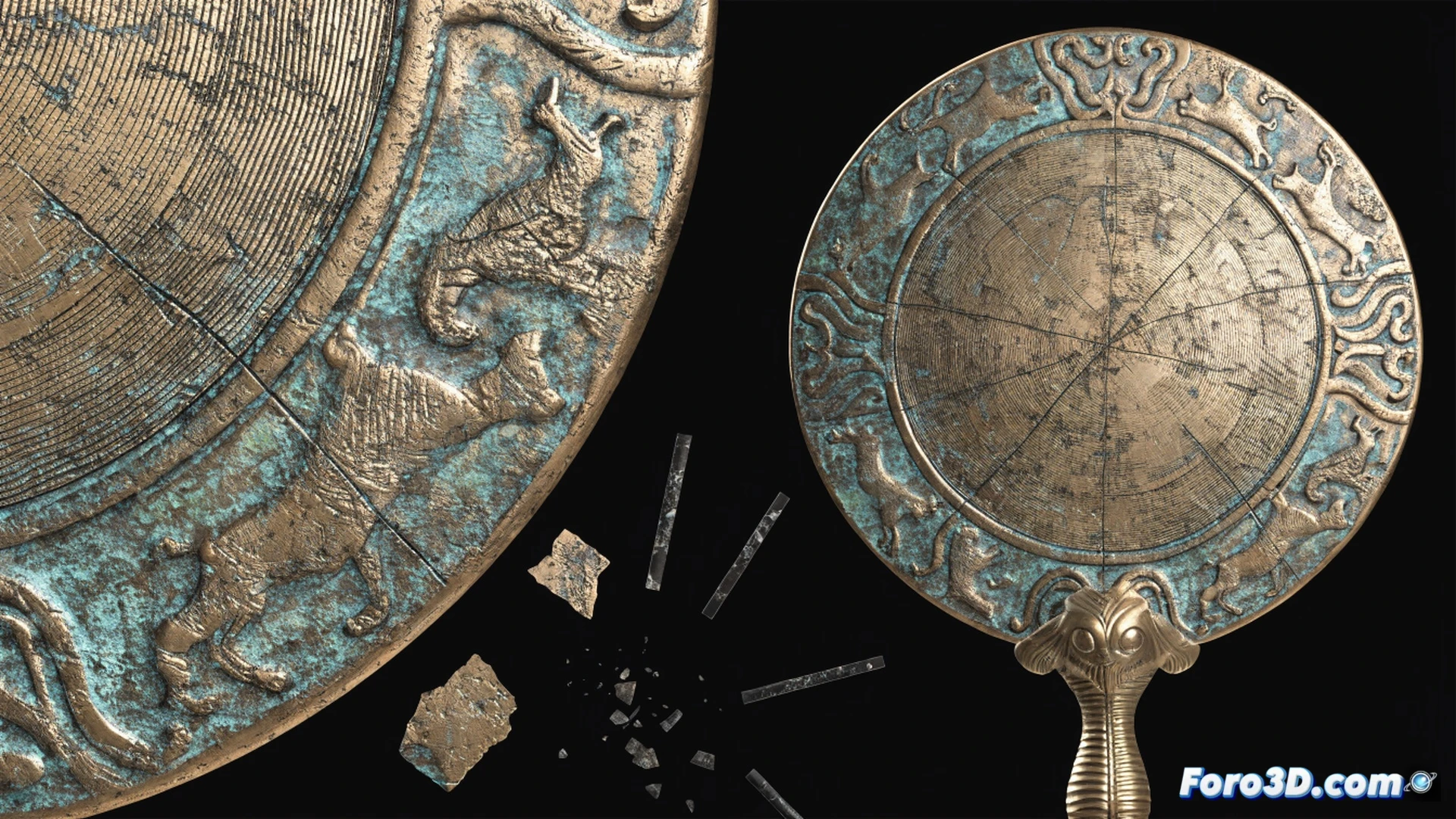
Digital pipeline: from Artec Studio to MeshLab to detect the fraud 🔍
The forensic team scanned the piece with Artec Studio, generating a high-resolution point cloud. When analyzing the topography in MeshLab, they observed linear and uniform erosion patterns, incompatible with millennia-old wear. Filtering and curvature calculation tools revealed directional abrasion marks, typical of a robot-controlled particle jet. Comparison with authentic mirrors confirmed that the relief was carved and then artificially aged.
The modern craftsman who didn't know when to stop 🤖
The forger was so meticulous that they used a robotic arm to wear down the bronze, but forgot that real time leaves no milling marks. The result: a mirror that appeared to be 2,500 years old, but with a texture so perfect it looked fresh out of an industrial catalog. Good thing someone decided to take a look with a 3D scanner before paying a fortune for a souvenir manufactured last month.