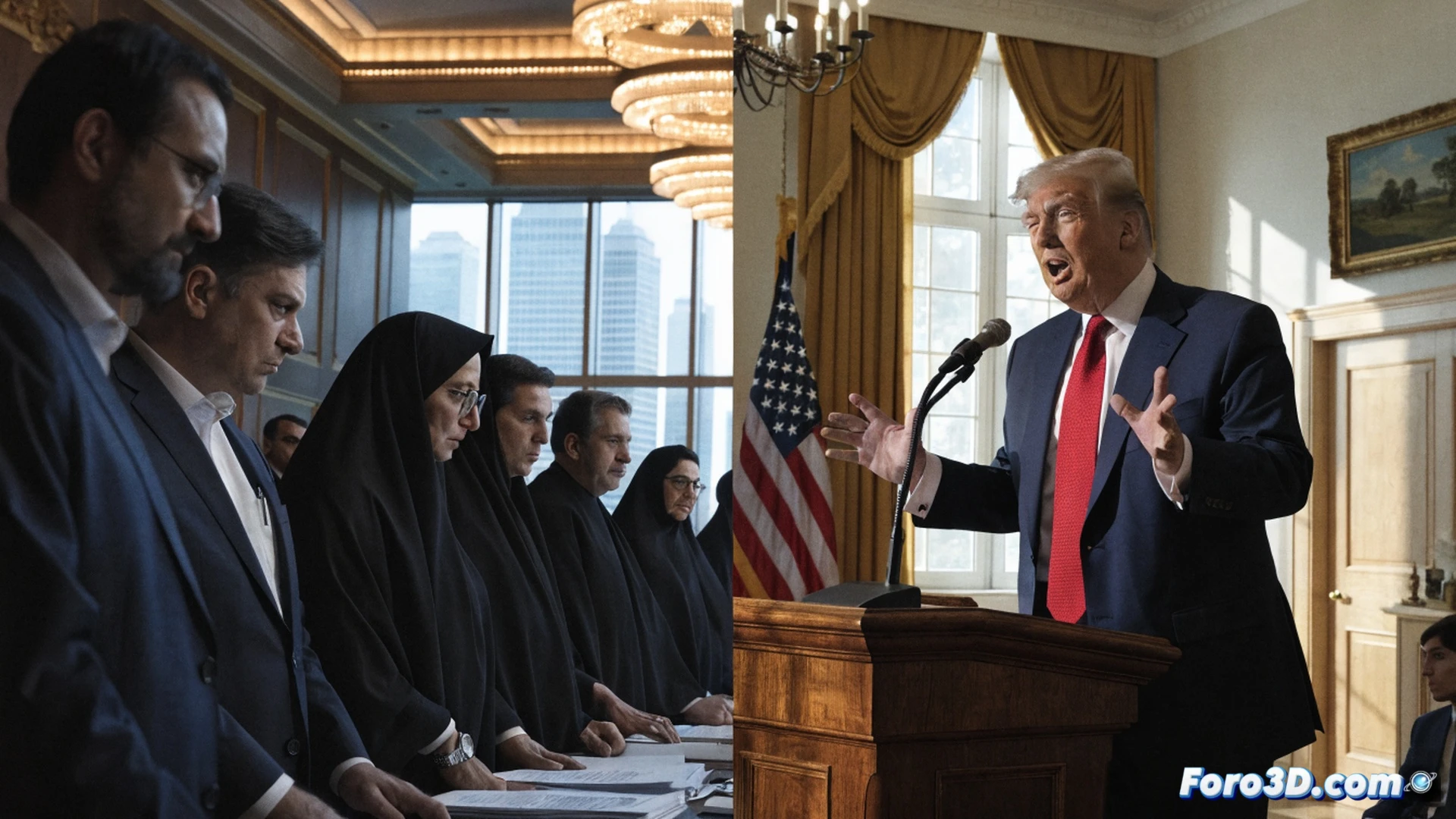
Iran confirmed that it will send a delegation to Doha this week to oversee previous agreements, but denied having a meeting with the United States, contradicting Donald Trump. The Iranian spokesperson clarified that there are still no negotiations for a final agreement and that conditions such as the cessation of attacks and the release of frozen funds must first be met. For citizens, this means that tensions persist between the two countries, affecting regional stability and potentially impacting energy prices.
Diplomacy as a system: technical failures in the negotiation protocol 🤖
From a technical standpoint, this disagreement reflects a failure in the communication layer between diplomatic nodes. Trump's statements act as an unauthenticated message in the network of international relations, generating noise in the channel. Iran, for its part, demands preconditions as if they were confirmed data packets before opening a secure session. Without a formal handshake or mutual trust encryption, any connection attempt ends in a timeout. The region remains in offline mode.
Trump and his diplomatic GPS: Doha is not the exit he thought 🚗
It seems Donald Trump confused Doha with a car dealership: he arrives, asks for a test drive, and expects Iran to sign the contract without reading the fine print. But the Iranian spokesperson reminded him that first you have to pay the deposit (frozen funds) and turn off the engine (cessation of attacks) before sitting down to negotiate. Meanwhile, the Iranian delegation travels to Qatar to oversee previous agreements, like someone going to the workshop to check the air conditioning, not to buy a new car.