Researchers at ETH Zurich have developed a technique that uses a single trapped ion to measure and generate three-dimensional maps of electromagnetic fields over integrated circuits. This breakthrough enables the detection of parasitic fields that degrade the performance of chips in quantum computers and sensors, offering a precise tool to optimize their design and manufacturing.
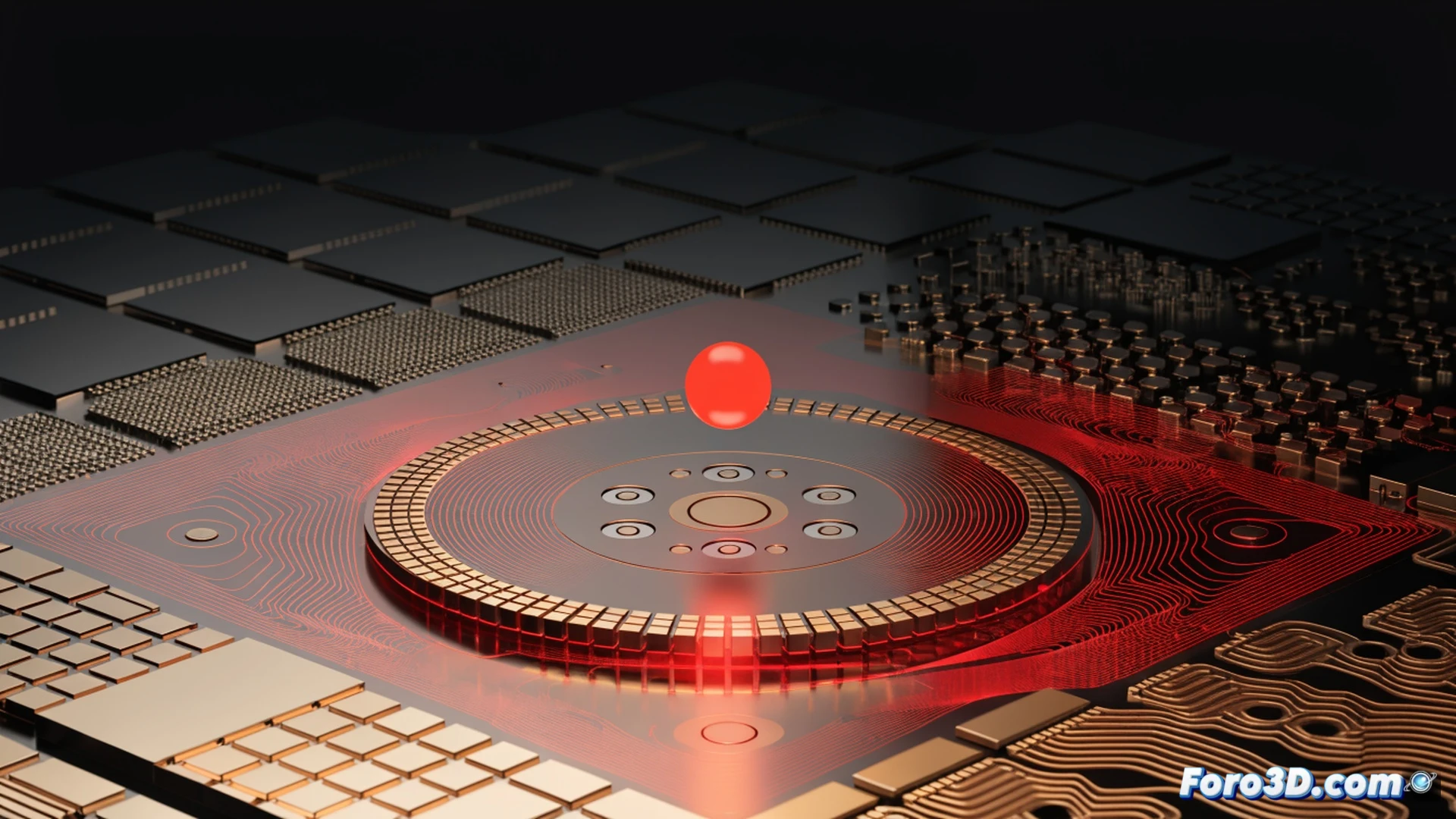
An ion as a high-precision probe for quantum chips 🔬
The method uses an ytterbium ion suspended in a trap, which acts as a sensor by being affected by minuscule electric and magnetic fields. By measuring changes in its quantum state, researchers reconstruct a 3D map of the interference over the chip. With near-micron resolution, this technique allows identifying noise sources that affect qubit coherence, a necessary step to improve the reliability of quantum processors and high-sensitivity sensors.
The quantum chip: now with field cleaning service 🧹
It turns out that quantum chips are like a grumpy neighbor: any stray electric field ruins their day. Thanks to this detective ion, engineers will be able to point a finger at the culprit and say: there's the problem. So, while scientists celebrate their new precision toy, future quantum computers will stop throwing tantrums and work as they should. Or at least that's what we hope.