High-pressure seawater injection into oil wells presents a rarely discussed risk: thermal shock cracking of the cement casing. When cold fluid contacts the hot formation, differential stresses generate microfractures that compromise well integrity. This phenomenon, observed in operations in the Gulf of Mexico, leads to pressure losses and high repair costs.
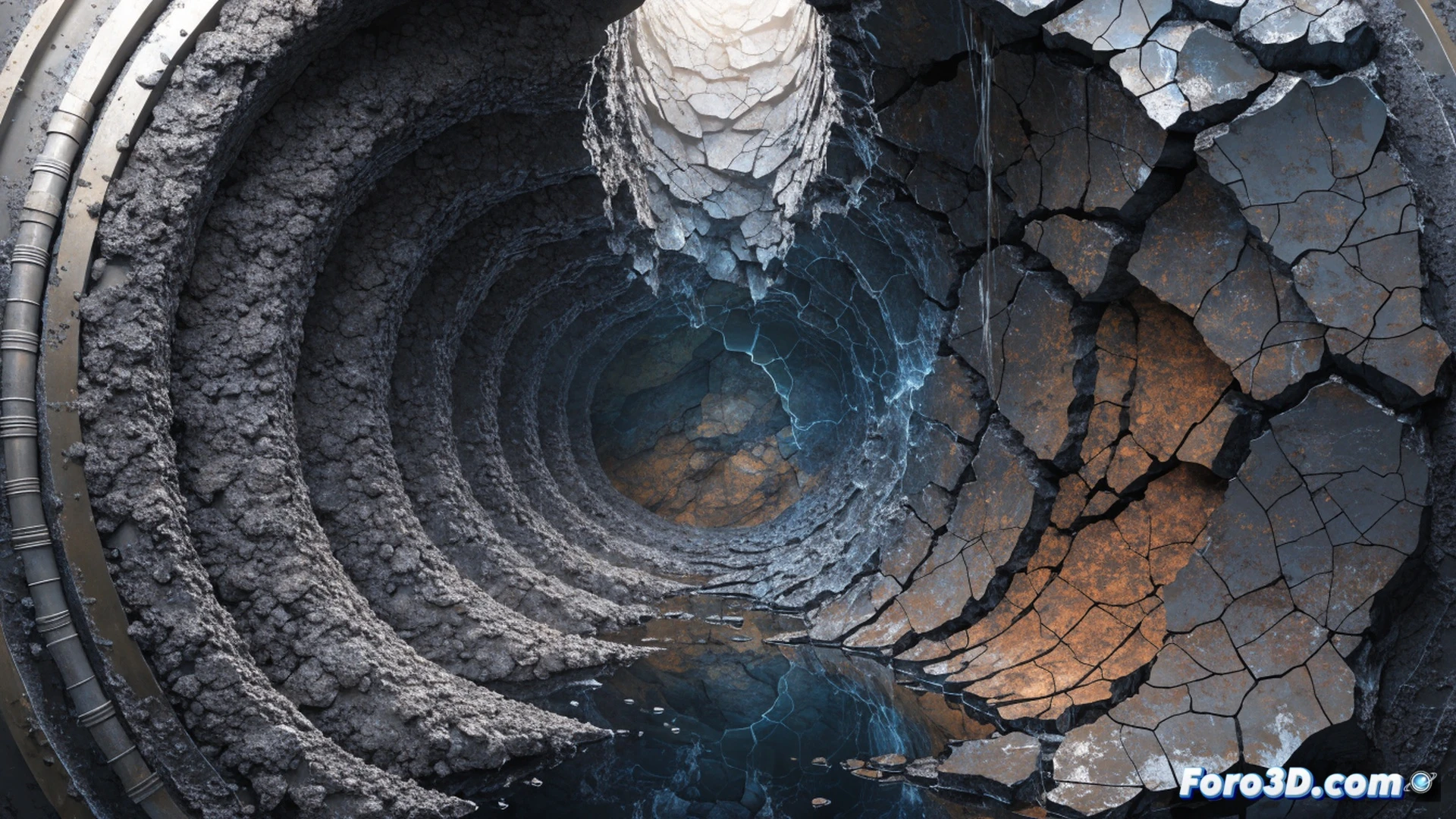
3D Modeling with CloudCompare and FLAC3D to Predict Failures 🛠️
To analyze this disaster, open-source tools and numerical simulation are employed. CloudCompare allows processing point clouds of the damaged casing, identifying deformation zones with millimeter precision. FLAC3D models the thermomechanical behavior of cement under the thermal gradient, simulating crack propagation. The combination of both programs offers a reproducible methodology to predict critical points and design controlled injection strategies, reducing the risk of catastrophic failures.
Cement isn't as tough as you thought: lessons from a cold bath 🧊
It turns out that well cement is like that friend who complains about the air conditioning: it can't handle sudden temperature changes. While engineers plan to inject freezing water under pressure, the casing cracks like a coffee cup when cold milk is added. Next time, maybe they should ask the cement if it prefers a warm bath before subjecting it to such a thermal shock.