Mandibular reconstruction using titanium plates is a common procedure, but mechanical failure can turn a routine surgery into a forensic nightmare. We analyze a case where a low-cycle fatigue fracture, originating from a bending notch, compromised the plate's integrity. The mystery was solved by combining segmentation with 3D Slicer and finite element simulation in Abaqus, revealing the exact point of stress concentration.
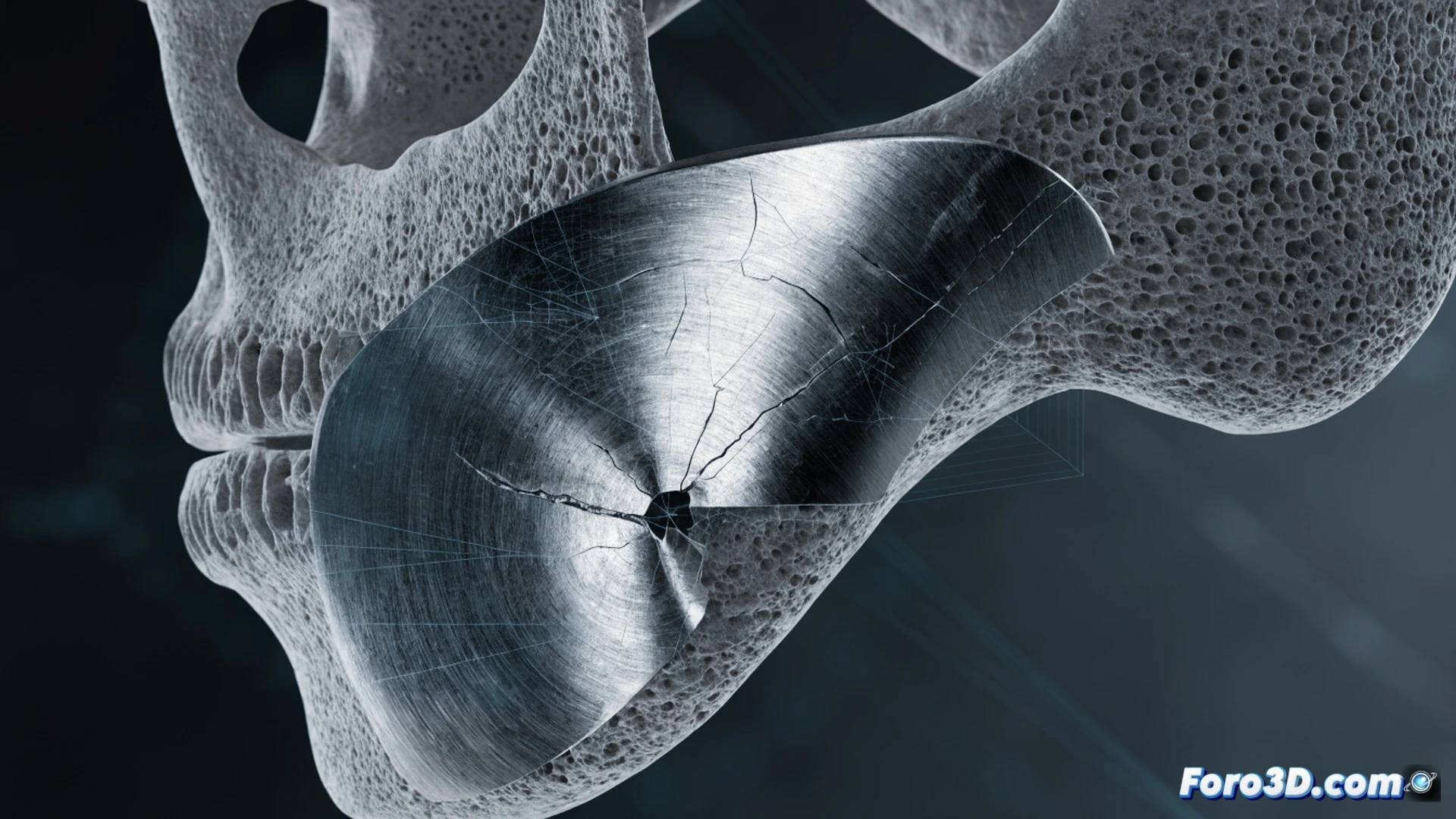
3D Pipeline: from tomography to structural failure analysis 🛠️
The process begins with segmentation of the bone model from a CBCT using 3D Slicer, generating a clean STL. This is imported into Abaqus to create a finite element model. Physiological chewing loads are applied, and the plate material (Ti-6Al-4V) is defined. The analysis reveals that the intraoperative bending zone acts as a geometric notch, generating a stress concentration factor (Kt) close to 2.5. This turns a normal load cycle into a low-cycle fatigue fracture after just 5000 cycles.
The plate bender: a silent enemy with pliers ⚠️
The surgeon, with every intention of adjusting the plate perfectly, applied a cold bend that left a microscopic mark. That small scratch, the result of overconfidence and pliers not designed for that purpose, became ground zero for the disaster. The moral is simple: if you bend a plate like a paperclip, don't be surprised when it breaks like one. The bone, at least, is not to blame.