The locking mechanism of the cargo door has presented a critical failure during pressurization tests. The fracture of the safety pin originated from fatigue induced by repetitive pressure cycles. This issue compromises the structural integrity of the closure system and requires a detailed analysis of the material's behavior under cyclic loading to prevent incidents during operation.
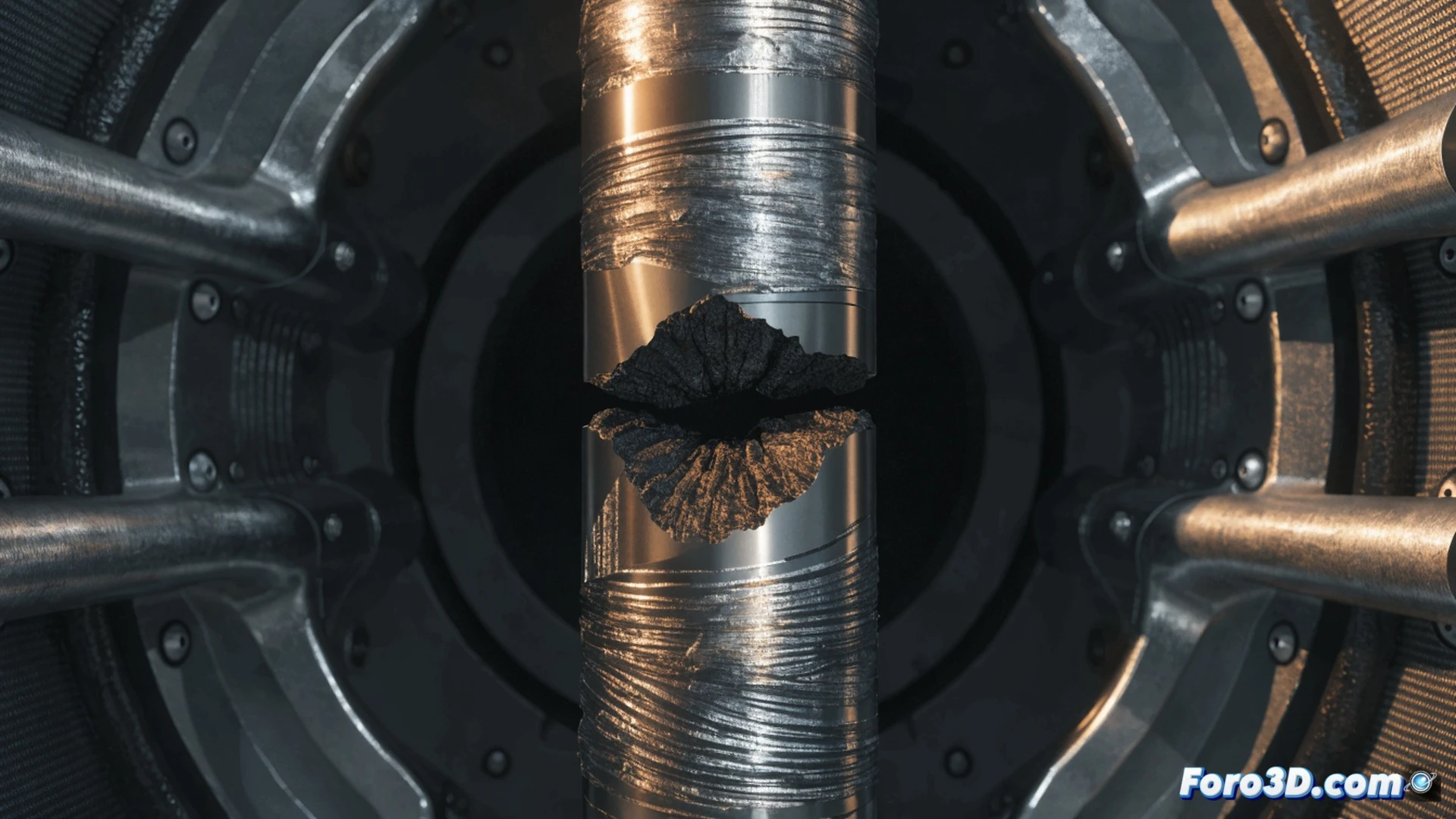
Fatigue analysis with Creo Simulate and validation in Maya 🔧
Creo Simulate was used to model the stress distribution in the pin during the pressurization cycle. The finite element analysis identified stress concentrations in the transition zone of the pin, exceeding the fatigue limit of 17-4PH stainless steel. Subsequently, Maya was used to generate a detailed animation of the progressive fracture process, visualizing crack propagation from the critical point to complete rupture after 1,200 pressure cycles.
The pin said enough and took a permanent vacation ☕
The safety pin, fed up with so many pressure cycles without rest or even a coffee, decided to retire early. With 1,200 cycles under its belt, it chose to break in two and leave the cargo door hanging like a swing. Now engineers are looking for a replacement with greater resistance to work stress, although some suggest the pin just needed a long weekend.