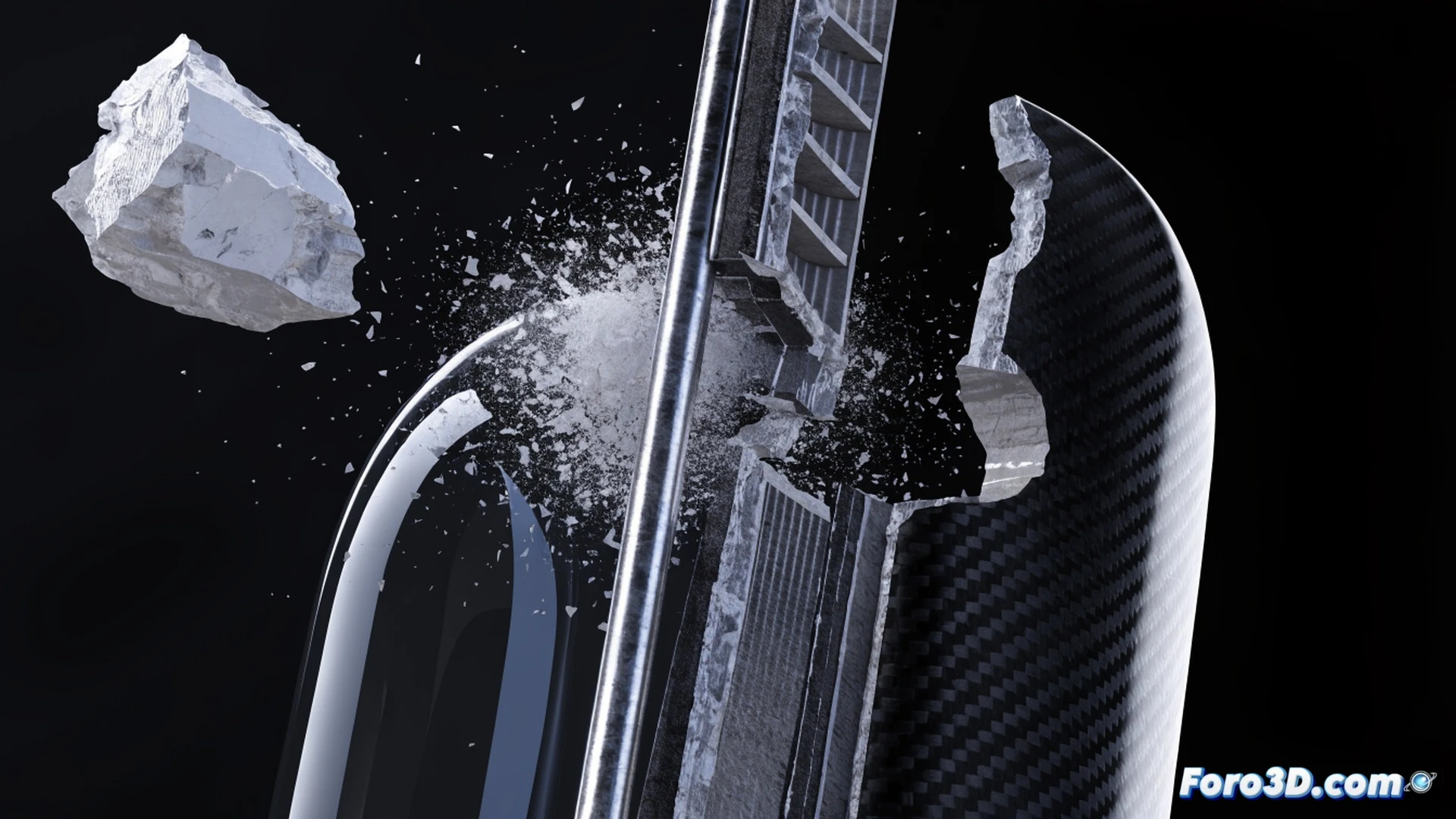
Last month, an electric hydrofoil suffered a fracture in its composite mast after impacting a floating debris. The incident, documented with 3D scanning, revealed weak points in the profile joint. We analyze the forensic pipeline using CloudCompare for the point cloud and SolidWorks for the virtual reconstruction.
Forensic pipeline: from point cloud to simulation 🔧
The process began with laser scanning of the fractured mast. CloudCompare allowed aligning the broken sections and measuring plastic deformation with submillimeter precision. The data was exported to SolidWorks, where the original geometry was modeled and the impact was simulated. The critical area turned out to be the laminate near the anchor, where the carbon fiber was not oriented to withstand transverse loads. The conclusion: the design underestimated vibration fatigue after a localized impact.
The debris that became a quality engineer 🪵
The best part is that the debris, a simple piece of wood, performed more strength tests than the quality department itself. Without manuals or certifications, it proved that the mast joint was as firm as a gelatin flan in a washing machine. Now, instead of blaming the floating trash, it's time to redesign the part. Or, as a cheaper suggestion, start praying that the next piece of debris is made of foam.