Fracture in metal-on-metal hip prostheses is a failure that concerns surgeons and engineers. When the acetabular cup becomes misaligned, friction becomes asymmetric and generates severe wear, releasing metallic micro-particles into the tissue. This process not only compromises implant stability but can also provoke adverse local reactions. We analyze the case using reverse engineering tools and 3D metrology.
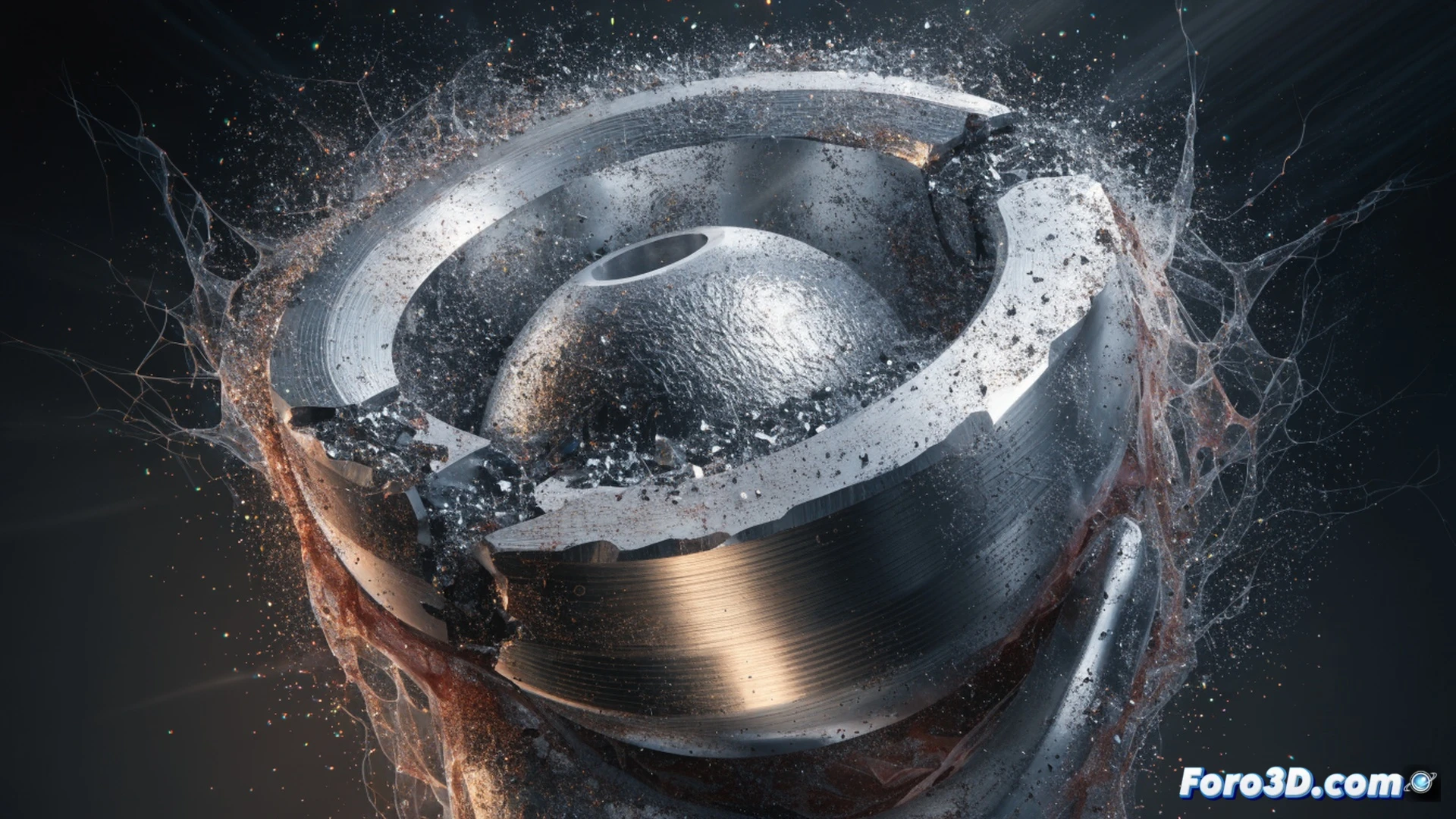
3D Pipeline with Mimics and Geomagic Control X for Forensic Analysis 🛠️
The workflow began in Materialise Mimics, where computed tomography images were segmented to reconstruct the fractured implant and surrounding bone. The models were then exported to Geomagic Control X, where dimensional inspection of the acetabular cup was performed. The angular deviation relative to the native plane exceeded 5 degrees, causing point contact at the edge of the insert. Surface roughness analysis revealed areas with abrasive wear and chromium-cobalt particles embedded in the simulated soft tissue.
When Your Hip Makes More Noise Than Your Knees Getting Up 😅
If your hip prosthesis starts sounding like a kitchen blender, it's not trying to make you a smoothie. It's the misaligned acetabular cup rubbing metal against metal, shedding shavings that would rival a machine shop. Engineers call this severe asymmetric friction; patients call it annoying squeaking at Christmas dinner. Good thing with Mimics and Control X we can diagnose the problem before your hip competes with the bus brakes.