The structural collapse of a methane carrier due to deformation in the secondary supports of its spherical tanks has reopened the debate on the limits of cryogenic materials. The failure, attributed to cycles of thermal expansion and contraction, puts the tools used to prevent such disasters under the spotlight. The forensic analysis focuses on two key programs of the digital pipeline.
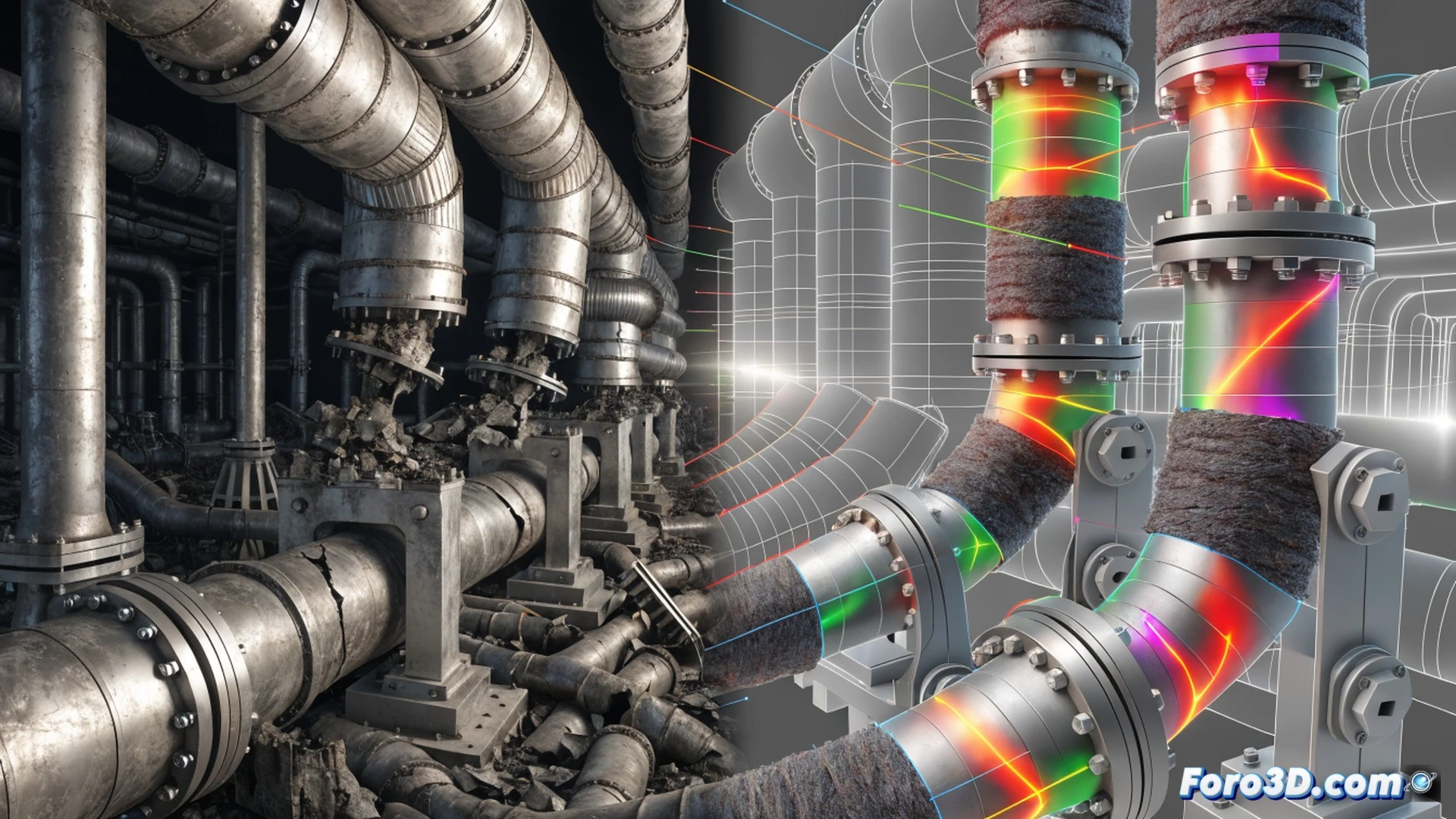
3D Pipeline: PolyWorks and ANSYS Fluent in the investigation 🔧
The incident reconstruction used PolyWorks for the three-dimensional scanning of the deformed supports, generating high-precision point clouds. This data was integrated into ANSYS Fluent to simulate heat transfer and mechanical stresses during the loading and unloading phases of the liquefied gas. The results showed extreme thermal gradients at the joints, exceeding the fatigue margins of stainless steel. The study suggests revising the expansion coefficients in simulation models for future fleets.
The dance of the tanks: when the cold plays Twister 🕺
It turns out that the secondary supports, designed to be firm and stable, decided to imitate a contortionist on a night of cryogenic alcohol. With each polar cold cycle, the metals expanded and contracted as if they were in a molecular disco. In the end, the dance ended with a fracture and a stranded vessel. Engineers are now considering installing a heater or, at least, teaching them to dance a slower waltz.