An accident in an automated archery attraction has highlighted the risks of mechanical fatigue in robotic systems. The launcher robot arm gave way after thousands of stress cycles, causing an unexpected structural failure. To analyze the incident, a 3D pipeline was used with Agisoft Metashape for photogrammetric reconstruction and LS-DYNA to simulate the fracture.
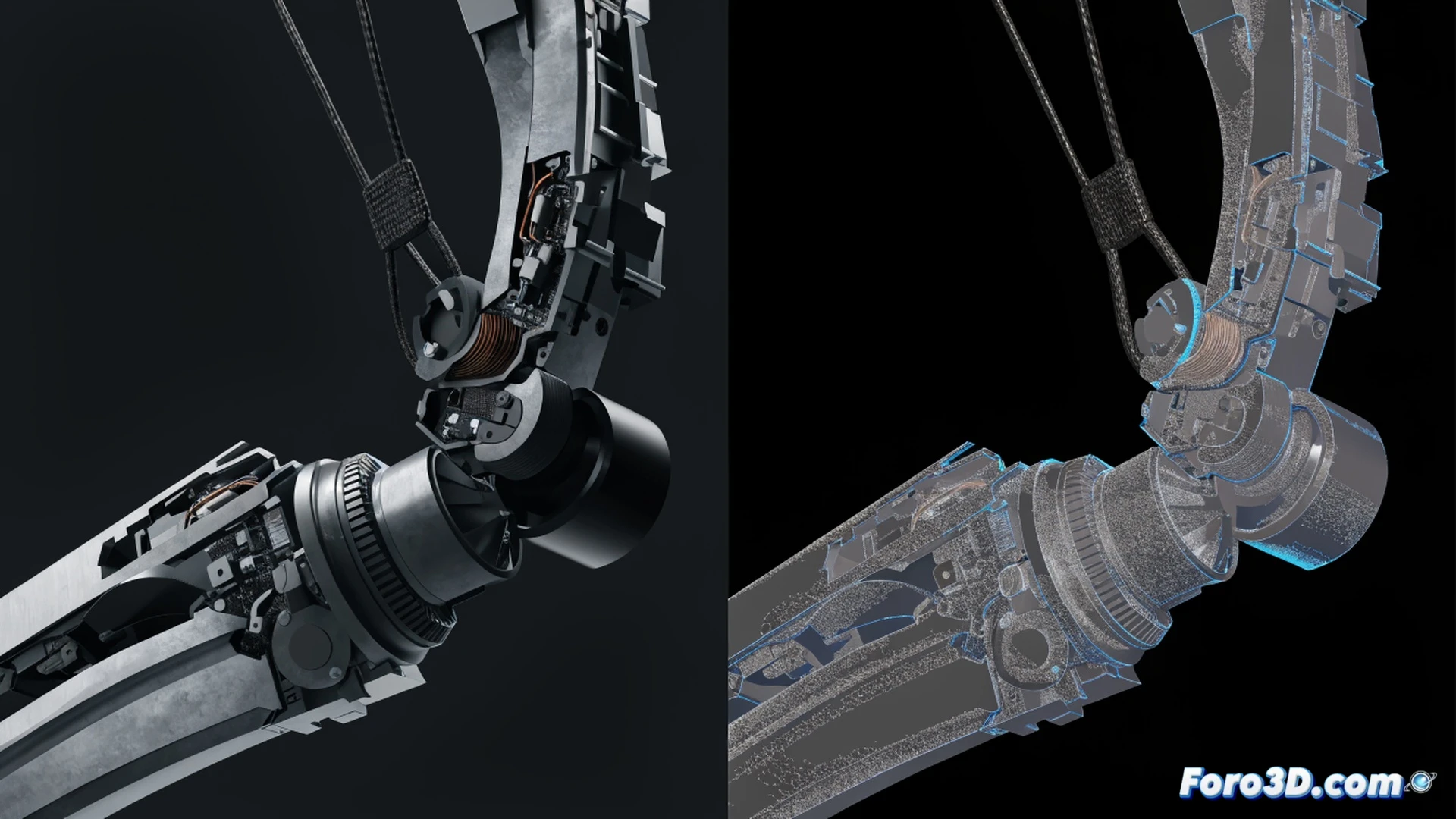
Forensic reconstruction with photogrammetry and finite element simulation 🛠️
The process began with capturing images of the fractured arm and its surroundings. Agisoft Metashape generated a high-precision 3D model, revealing microcracks in the failure zone. With this geometry, it was imported into LS-DYNA to perform an explicit dynamic analysis. The simulation reproduced crack propagation under cyclic loads, confirming that high-cycle fatigue was the cause of the collapse. The material, an alloy steel, showed a service life shorter than estimated by the manufacturer.
The robotic arm that didn't ask for a vacation 🤖
The launcher robot worked like an intern during exam season: non-stop and with increasingly heavier loads. Technicians discovered that the arm had accumulated more cycles than a crossfit gym. In the end, it decided to take a forced break by breaking in half. The moral is clear: if you design a robot to shoot arrows, make sure it also knows when to ask for a check-up.