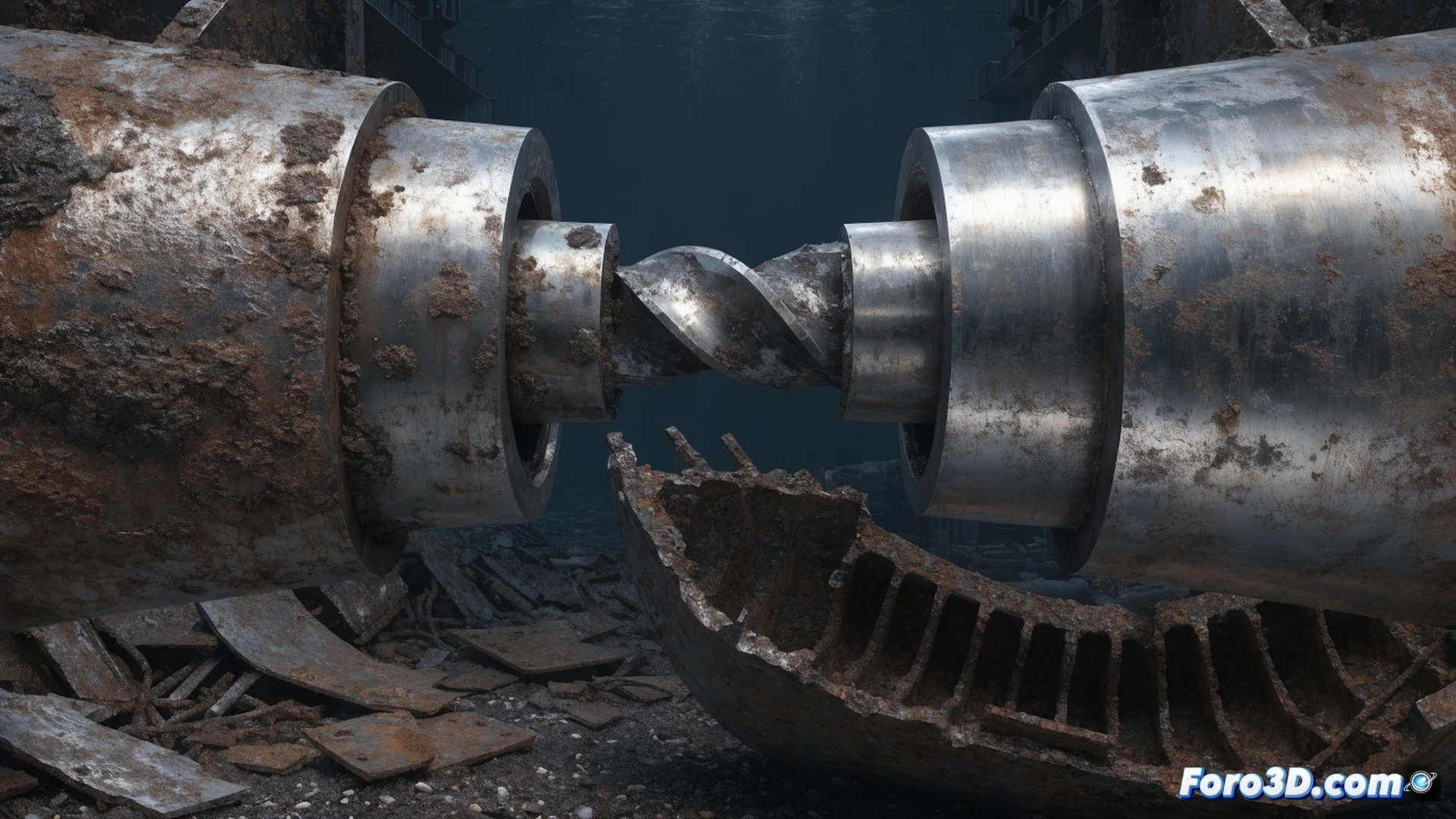
The accident involving the marine minesweeper's bucket revealed a critical failure due to combined abrasive fatigue and marine corrosion. The swivel link gave way after stress cycles in a saline environment, a classic engineering problem that comes at a high cost offshore. We analyze how the issue was detected using 3D simulation tools.
3D Pipeline: PolyWorks and ANSYS Fluent for Forensic Analysis 🛠️
The team used PolyWorks to scan the geometry of the fractured link and generate an accurate point cloud. With ANSYS Fluent, the flow of water and abrasive particles over the surface was simulated, revealing areas of accelerated wear. The combination of metrological scanning and CFD made it possible to identify the interaction between galvanic corrosion and mechanical erosion as the root cause of the collapse.
The Link That Said Enough: Chronicle of a Death Foretold 💥
The swivel link, like a supporting actor in a disaster movie, held on until corrosion and marine sand teamed up. While the engineers debated whether it was fatigue or wear, the bucket decided to take a vacation at the bottom of the sea. Good thing PolyWorks and Fluent arrived at the crime scene to place the blame where it belonged.