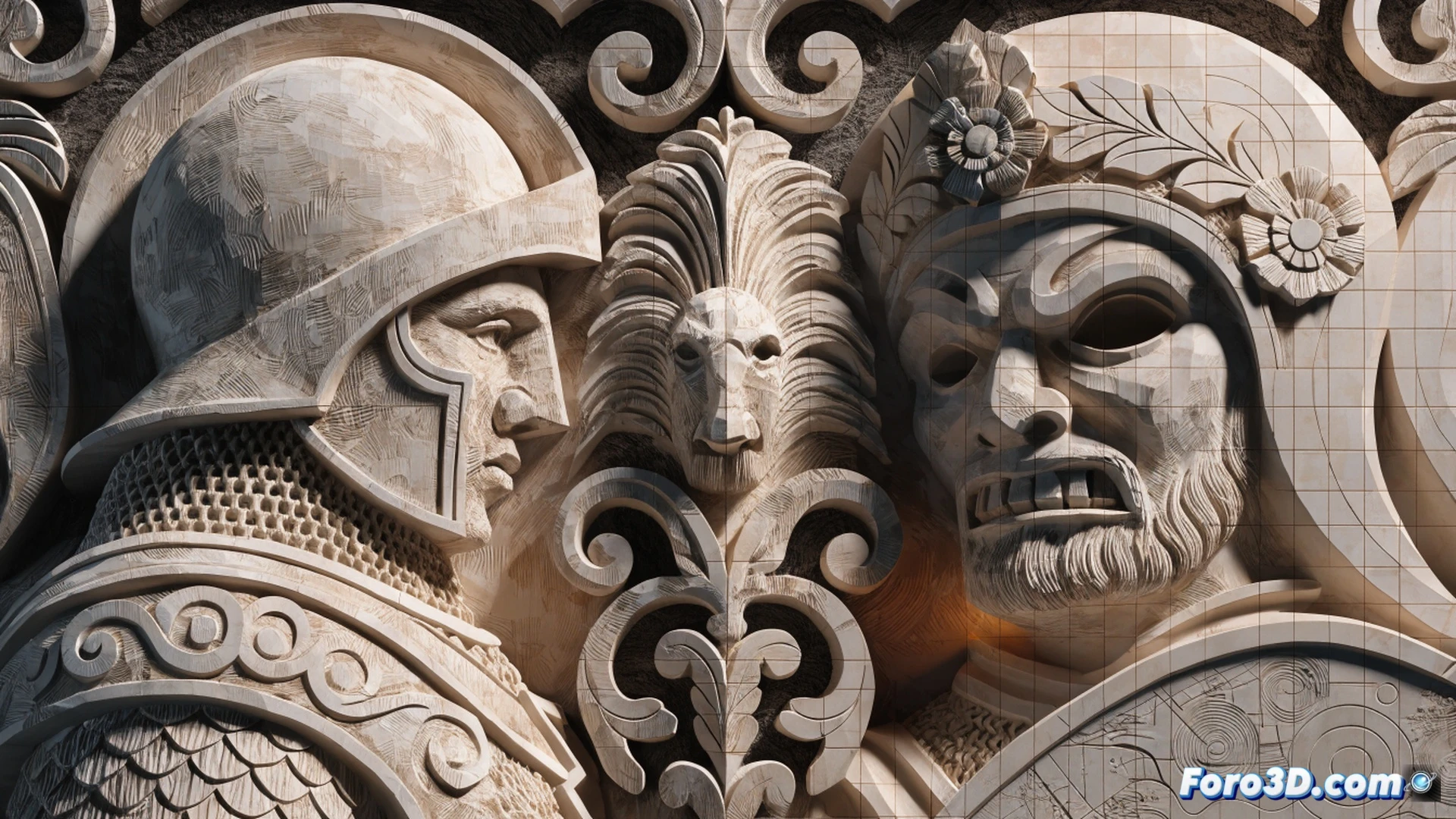
A supposedly medieval stone relief has turned out to be a modern forgery. The fraud was detected by analyzing the carving marks: they were not from a manual chisel, but from CNC abrasive milling. The scammers used a 3D pipeline with Artec Studio to digitize an original and MeshLab to retouch the model before automated manufacturing.
The digital pipeline of deception: from Artec Studio to MeshLab 🛠️
The process began by scanning an authentic relief with Artec Studio to capture the geometry and textures. Then, in MeshLab, smoothing and noise filters were applied to remove imperfections and generate a clean model. That file was sent to a CNC milling machine with an abrasive tool, which replicated the design but left uniform parallel striations, impossible in manual chisel work. The absence of microcracks and the regularity of the grooves betrayed the deception.
The chisel that never existed and the CNC that exposed it 🔍
The forgers thought no one would notice their perfect milling marks. They forgot that a medieval stonemason had bad days, made mistakes, and left crooked blows. Their relief looked like it was made by a robot obsessed with symmetry. All very pretty, too pretty. Until a restorer with a clinical eye and a jeweler's loupe asked: Where are the flaws? There were none. That was the condemnation.