In the biomechanics laboratory, a gait rehabilitation exoskeleton failed abruptly. The knee support broke during a session with a patient who applied a dynamic load higher than expected. The incident forced the trial to stop and the mechanical design limits to be reassessed before continuing with clinical tests.
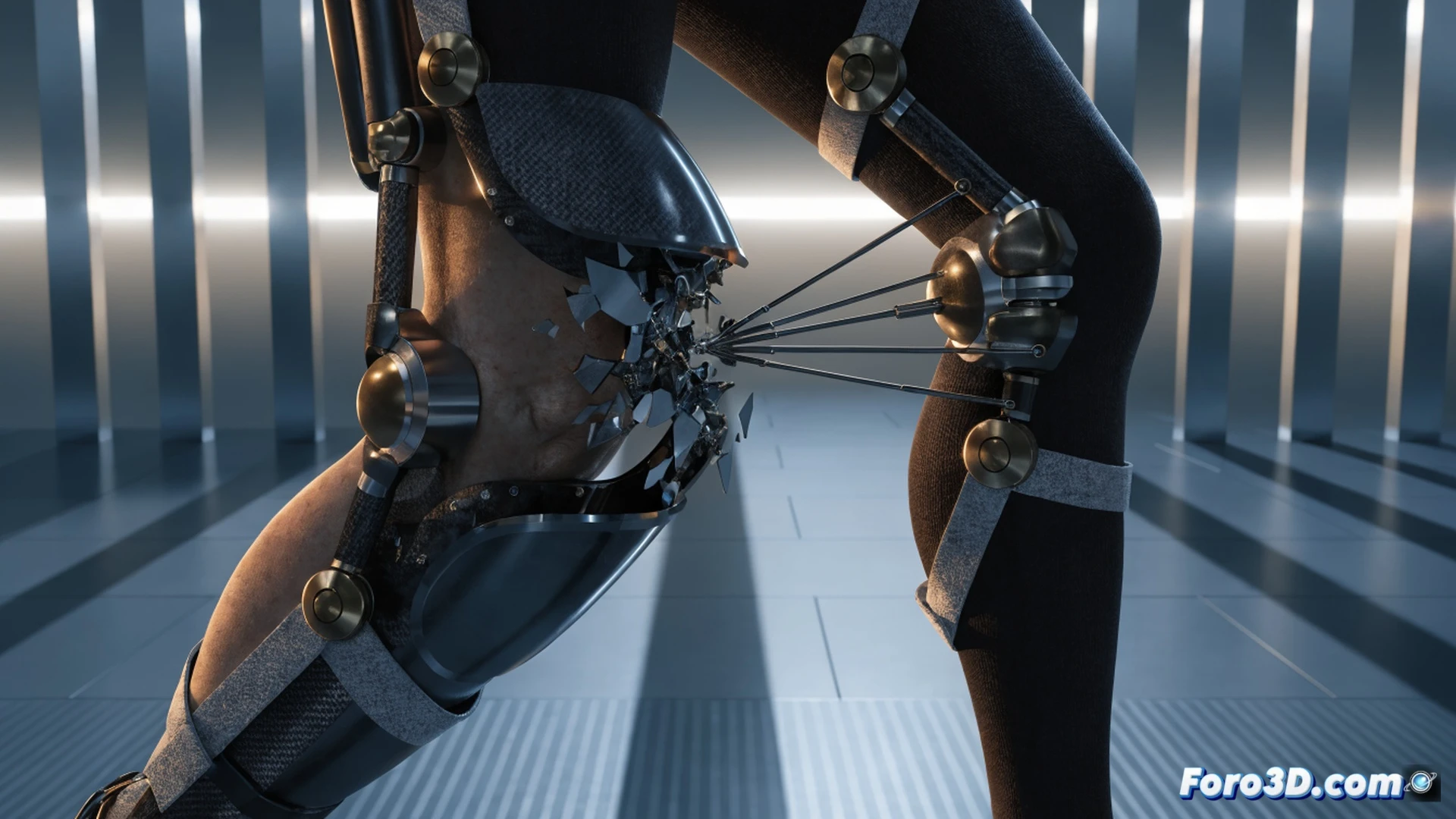
Failure analysis with Blender and OpenSim 🛠️
To understand the break, the event was reconstructed in a 3D pipeline. Blender allowed modeling the support geometry and visualizing the deformation. Then, OpenSim simulated the patient's muscle dynamics and joint forces. The data showed a torque peak in the knee that exceeded the material's elastic limit. The failure was not due to fatigue, but to a specific overstress not foreseen in the initial design.
The knee said enough and the exoskeleton obeyed 🤖
Apparently, the exoskeleton decided that rehabilitation was a very abstract concept and preferred to specialize in fracture mechanics. The knee support, in an act of structural honesty, chose to break rather than continue bearing the weight of expectations. The surprised patient now has an anecdote to tell and a reason to ask if the next version comes with titanium reinforcements or with comprehensive insurance.