A mechanical failure in a healthcare assistance exoskeleton has put development teams on alert. During a routine patient lifting maneuver, the device's ankle joint gave way due to structural overstress. The incident, simulated in a 3D pipeline using Blender and OpenSim, reveals the limits of the materials and the need to review dynamic load ranges in hospital environments.
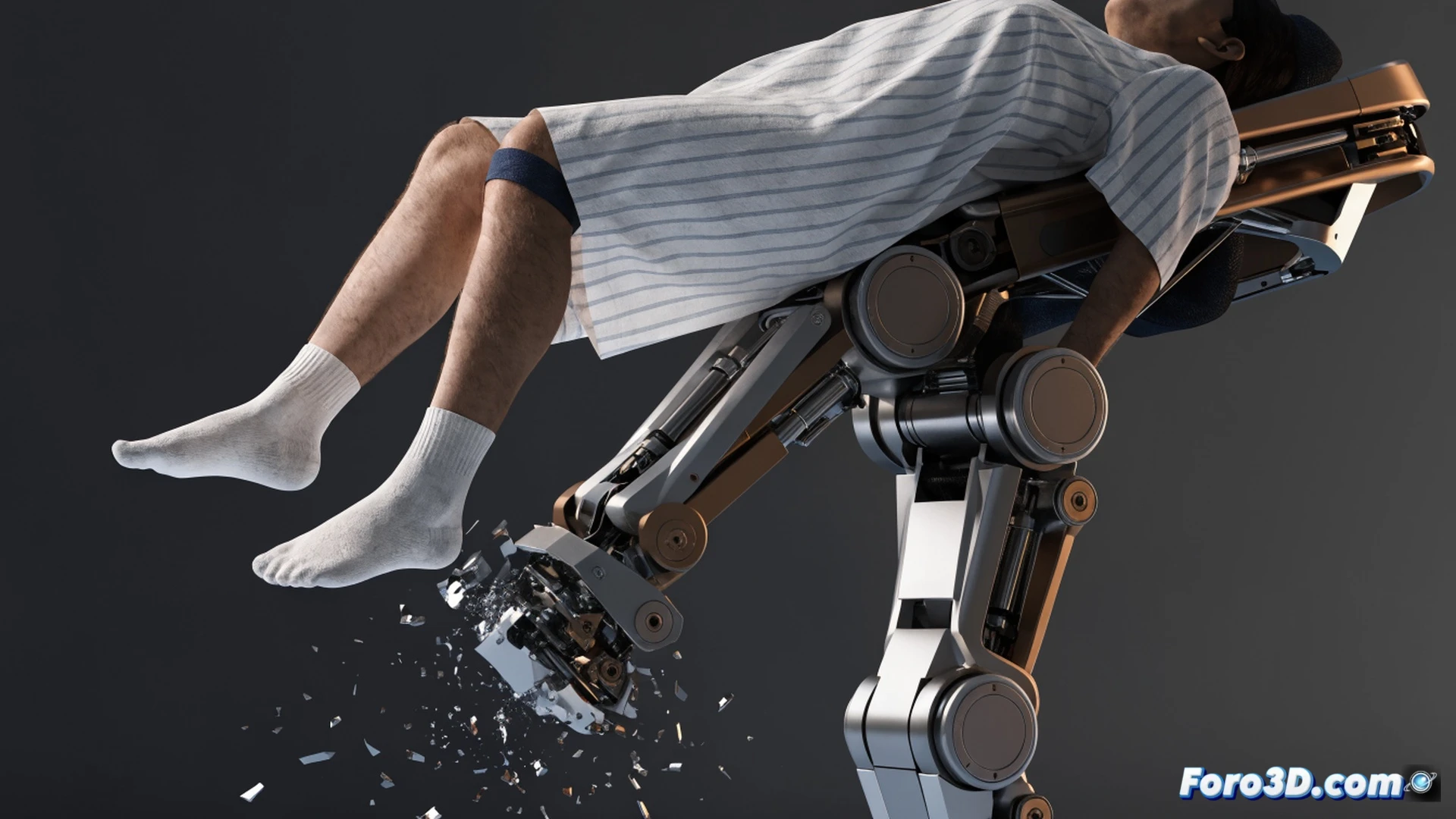
3D Pipeline: Collapse Simulation with Blender and OpenSim 🛠️
The failure analysis was performed by combining Blender for structural modeling and OpenSim for inverse kinematics. It was identified that the torque applied to the ankle exceeded the fatigue limit of the linear actuator. The simulation showed a shear fracture in the alloy support. The data indicates that the original design did not account for asymmetric loads when tilting the torso. The next step will be to optimize the ankle geometry and recalculate safety factors in patient transfer scenarios.
The Bionic Ankle That Said Enough 🤖
It seems the exoskeleton decided that lifting patients wasn't its thing and opted for early retirement, complete with a fracture. Engineers, amidst nervous laughter, are already talking about putting a digital splint on the rebellious ankle. Meanwhile, Blender developers are rubbing their hands together: every break is a new stress simulation tutorial. Of course, no one has yet told the virtual patient that their transfer will be on hold until further notice.