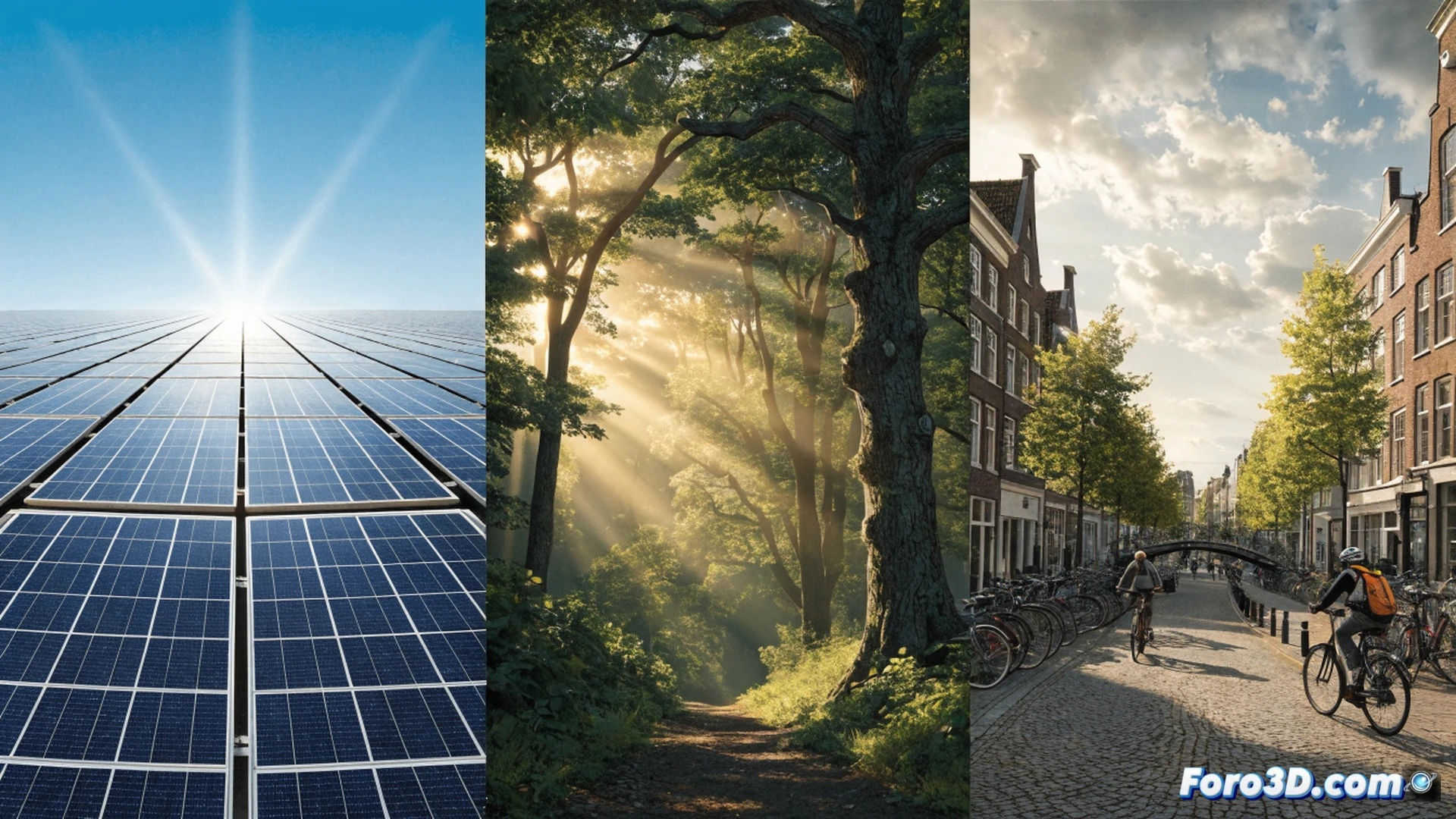
Australia produces so much solar energy that it gives away electricity so people can use appliances during the day and relieve the grid. In Germany, the Hambach Forest was saved from a coal mine, while Utrecht removed cars to prioritize bicycles. For citizens, this means savings on services and more clean spaces. These measures improve daily life and the environment without requiring major sacrifices.
The technical recipe: solar surplus and smart grids 🌞
The Australian trick is simple: solar panels generate more electricity than the grid can handle at midday. To avoid blackouts, they offer negative rates or discounts for turning on washing machines and air conditioners during those hours. Germany, for its part, relied on citizen pressure and environmental laws to stop the expansion of the coal mine in Hambach. Utrecht redesigned streets with wide bike lanes and urban tolls, reducing traffic by 30%. It's not magic, it's planning with data.
Giving away light: the new hobby of the energy-rich ⚡
While at home you watch the meter with fear, in Australia they pay you to use the microwave at three in the afternoon. It's as if the sun said: here, plug everything in, I have plenty to spare. And in Utrecht, cyclists look at drivers stuck in traffic and smile smugly. Germany, for its part, preferred to save a forest rather than keep burning coal. In the end, the planet is grateful, even if some miss the noise of the excavators.