Cast bronze sculpture has a silent enemy: internal porosities. Some workshops hide them with high-density metallic filler to simulate solid pieces. This structural fraud is detected using non-destructive methods such as industrial tomography. Here we analyze how the 3D pipeline with VGSTUDIO MAX and Geomagic Control X uncovers these practices.
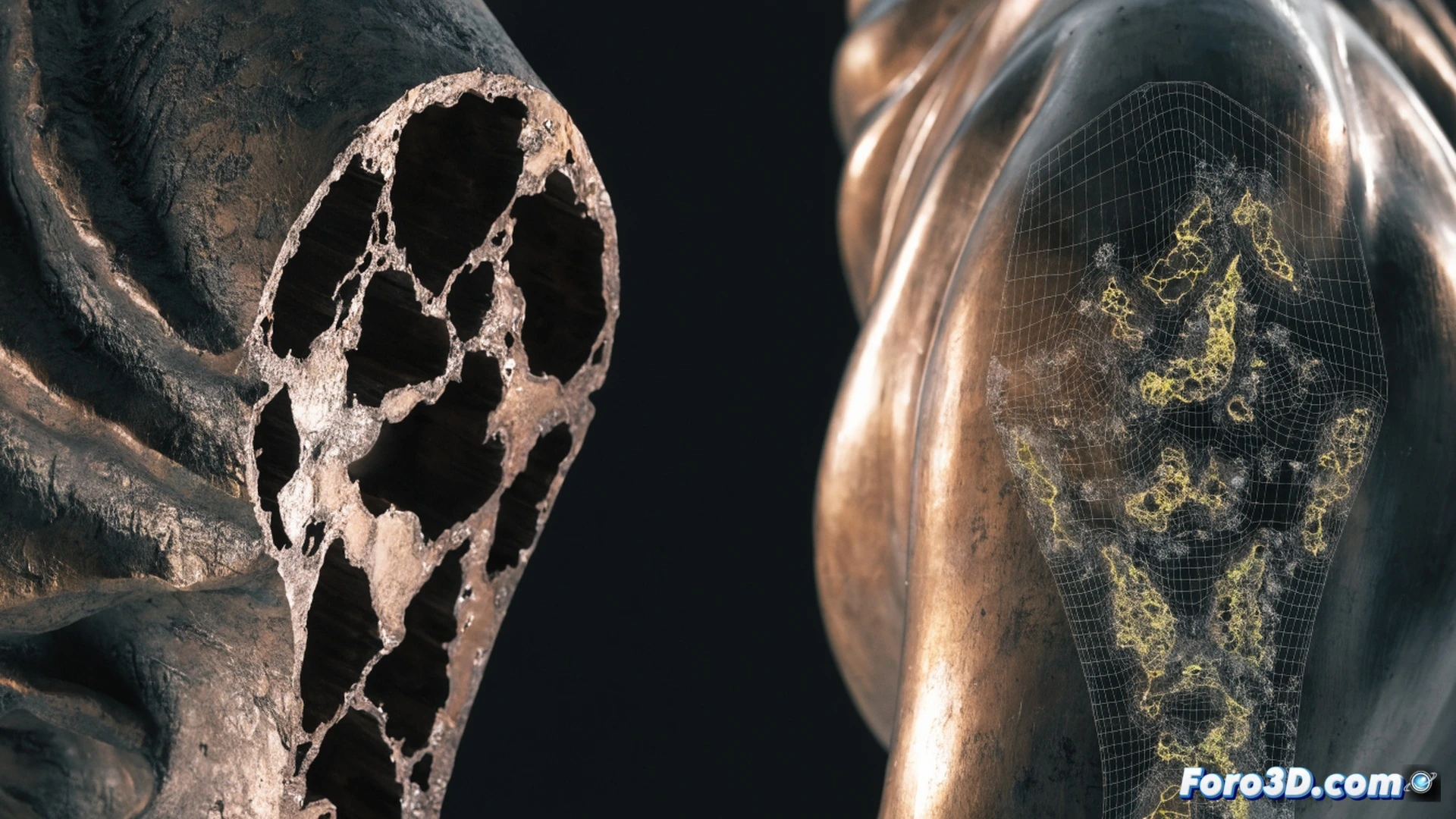
Defect Detection with VGSTUDIO MAX and Geomagic Control X 🔍
The process begins with a CT scan that generates a voxelized volume. VGSTUDIO MAX analyzes internal porosity and calculates the actual void volume. Then, Geomagic Control X compares the point cloud with the original CAD model. The density difference between the filler and the bronze is detectable in the attenuation histograms. This identifies the filled areas, revealing the discrepancy between the theoretical and actual weight.
The Miracle Filler That Weighs Like Bronze (But Isn't) ⚖️
Some artisans believe they have discovered the philosopher's stone: a filler that matches the density of bronze. The problem is it doesn't weld or resist the same. On impact, the sculpture flakes off like a poorly fried croquette. The best part is that the buyer pays for kilos of solid bronze and receives half a kilo of filler and three of air. A great deal, for the seller.