A microbe called Euplotes gigatrox challenges what we thought we knew about simple organisms. When food is abundant, these normal cells swell up, develop a disproportionately large mouth, and turn into giant cannibals that devour their smaller siblings. Then, they can reverse the process by dividing to return to their original size. This behavior reveals survival strategies that seem straight out of a science fiction movie, but they occur on a microscopic scale.
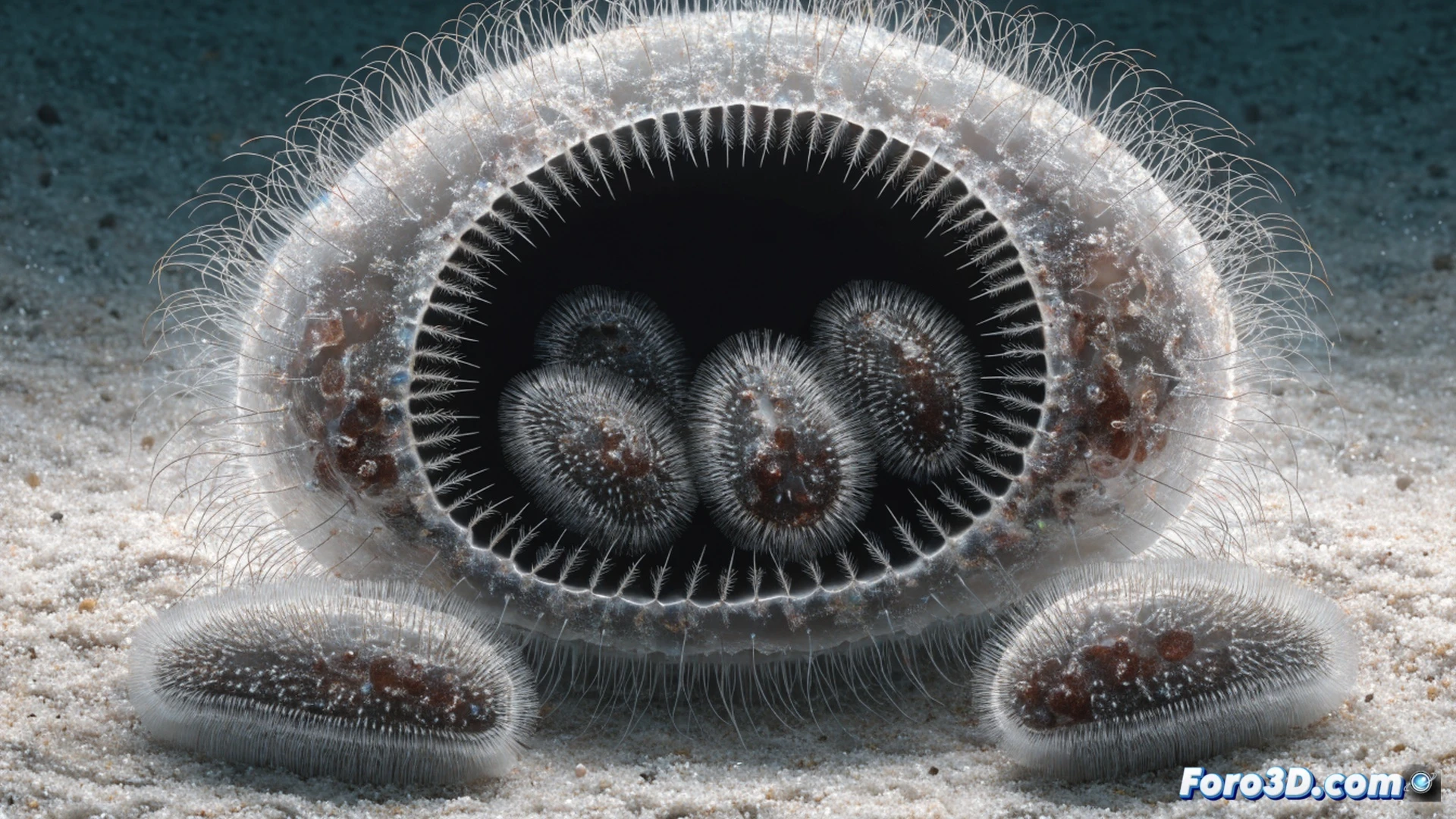
Cellular mechanism: how abundance activates cannibal mode 🧬
From a technical perspective, the morphological change in Euplotes gigatrox is an example of extreme phenotypic plasticity. The detection of nutrients in the environment triggers a signaling cascade that alters the cytoskeleton, allowing the cell to expand up to 10 times its volume. Simultaneously, the membrane reorganizes to form a large oral cavity, capable of engulfing neighboring cells. This process involves the regulation of specific genes that control cell growth and division. Once food becomes scarce, the organism enters a cycle of multiple fission, fragmenting into daughter cells of normal size. It is an efficient biological recycling system, where competition for resources is resolved through programmed cannibalism.
When the all-you-can-eat buffet turns you into a gluttonous monster 🍽️
Imagine going to an all-you-can-eat restaurant and, instead of gaining weight, you grow a mouth the size of a plate and start gobbling up the diners at the next table. That is exactly what Euplotes gigatrox does when it finds a feast. Nature shows us that even microbes have a dark side: if there is plenty of food, they do not share; they swell up and become the terror of the microscopic neighborhood. The best part is that after the feast, they divide and become as harmless as before, as if nothing happened. A clear example that, on the micro scale, gluttony has very literal consequences.