In the world of high-precision lithography, a silent enemy lurks: thermal gradient distortion induced by residual laser absorption. This phenomenon, which few detect in time, can alter the alignment of the optical element and ruin critical processes. With tools like GOM Inspect and COMSOL Multiphysics, engineers attempt to model and correct this error before the substrate becomes a disaster.
Simulation and metrology to control deformation 🔬
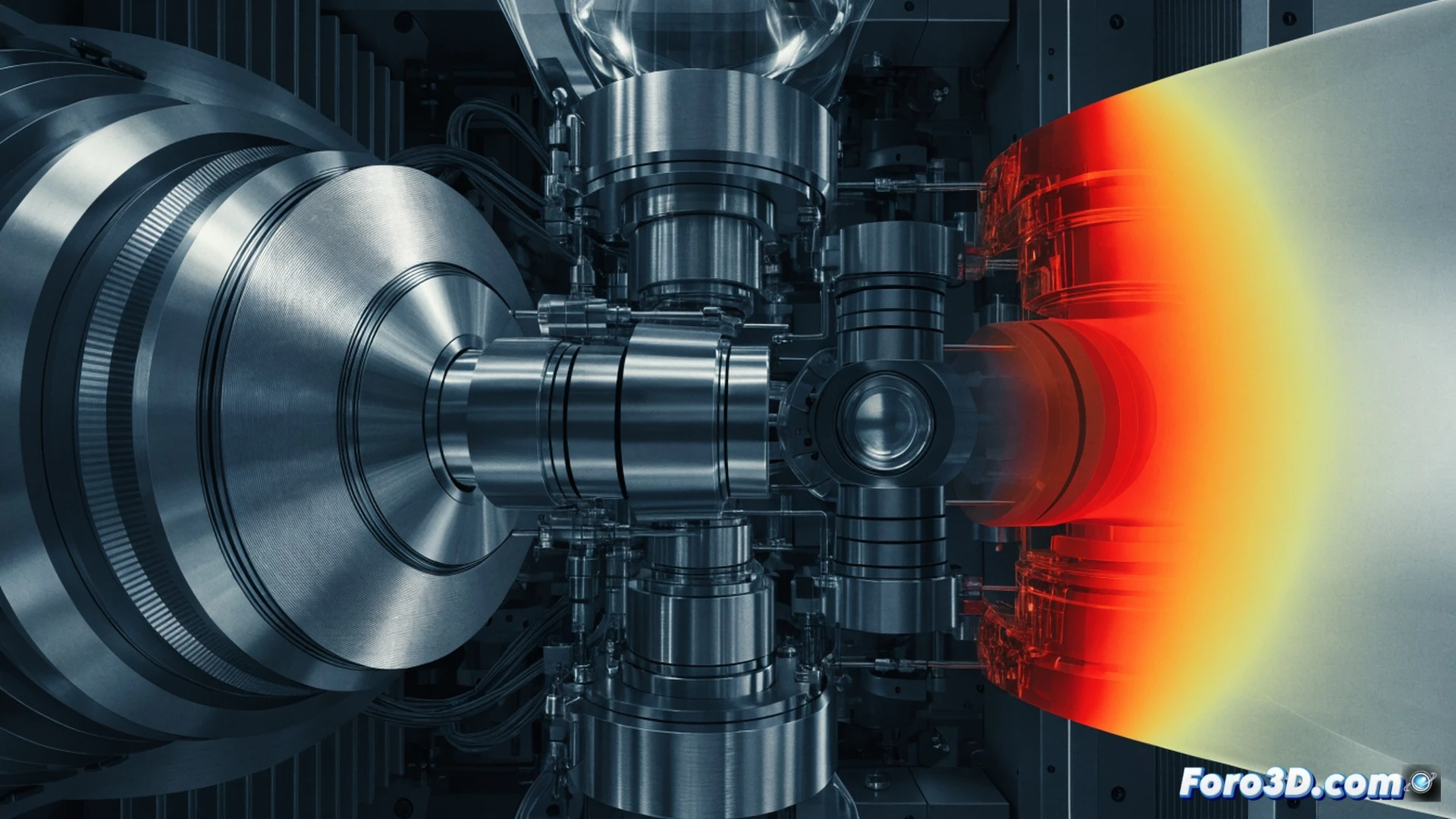
The 3D pipeline begins with COMSOL, where the residual absorption of the laser beam and its effect on the temperature of the optical element are simulated. The gradients generated, although small, produce differential expansions that distort the surface. Then, GOM Inspect captures the actual geometry through structured light scanning, comparing it with the ideal model. The key is to adjust the heat flow and material parameters to predict the deviation before each exposure.
When the laser gets hotter than your coffee ☕
It turns out that the lithographer, that millimeter-precision device, also suffers from thermal stress like a computer scientist after three cups of coffee. The residual absorption of the laser generates a little heat that deforms the optical glass, and no one invites it to the party. With COMSOL and GOM, at least we can blame the gradient and not the lack of ventilation. May the next substrate not warp due to an excess of luminous enthusiasm.