The Large Hadron Collider (LHC), the largest machine ever built to unravel the secrets of the universe, has stopped its operations. It is not a technical failure or a whim: it will take a four-year break for a deep upgrade. Until 2030, the accelerator will be rebuilt to multiply its data collection capacity tenfold, promising a new era of discoveries about dark matter and energy.
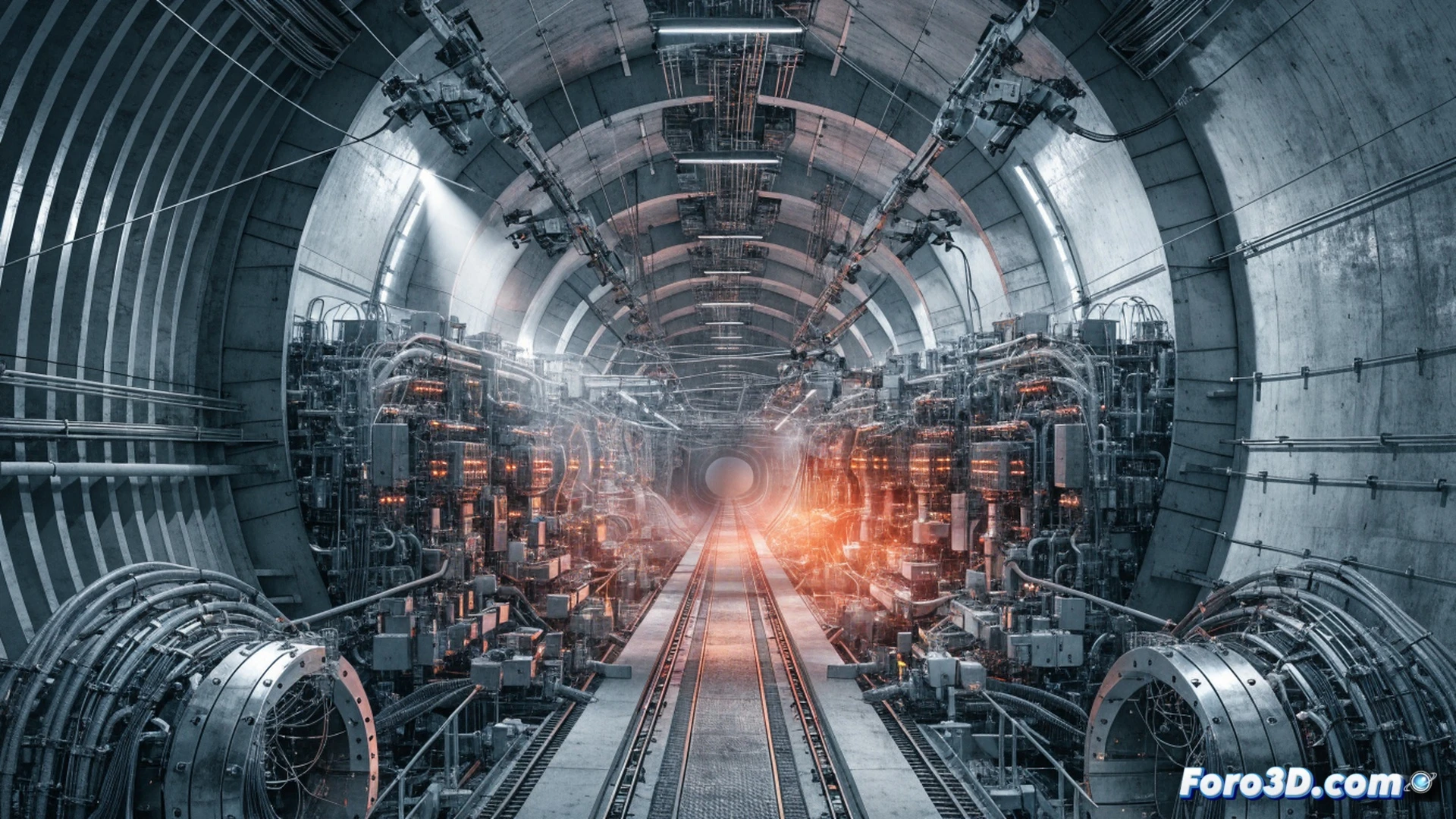
Ten times more data: the new era of the LHC 🚀
The pause is due to a comprehensive upgrade, named the High-Luminosity LHC. The goal is to drastically increase the number of proton collisions per second. To achieve this, more powerful superconducting magnets and advanced collimation systems will be installed. This will allow scientists to study phenomena like the Higgs boson with greater precision and search for particles beyond the Standard Model. The required engineering is a top-level technical challenge.
Four-year break: the time it takes you to decide what to watch on Netflix 🍿
While physicists eagerly await their new toys, the rest of the world wonders if this technical pause will affect their daily lives. The short answer is no. The LHC doesn't fix traffic jams or improve cell phone signals. But hey, four years is plenty of time: you could learn to play the piano, read the Encyclopaedia Britannica, or, like the collider, consider a complete overhaul of your life. Science advances, but its benefits take time to reach ordinary people.