An Egyptian bas-relief of dubious origin has been exposed on the forum. The piece showed uneven wear and suspicious cut patterns. After a detailed analysis, it was confirmed that the artificial aging was carried out using fine sandblasting erosion. This method seeks to imitate centuries of natural wear, but leaves technical traces impossible to hide from a trained eye.
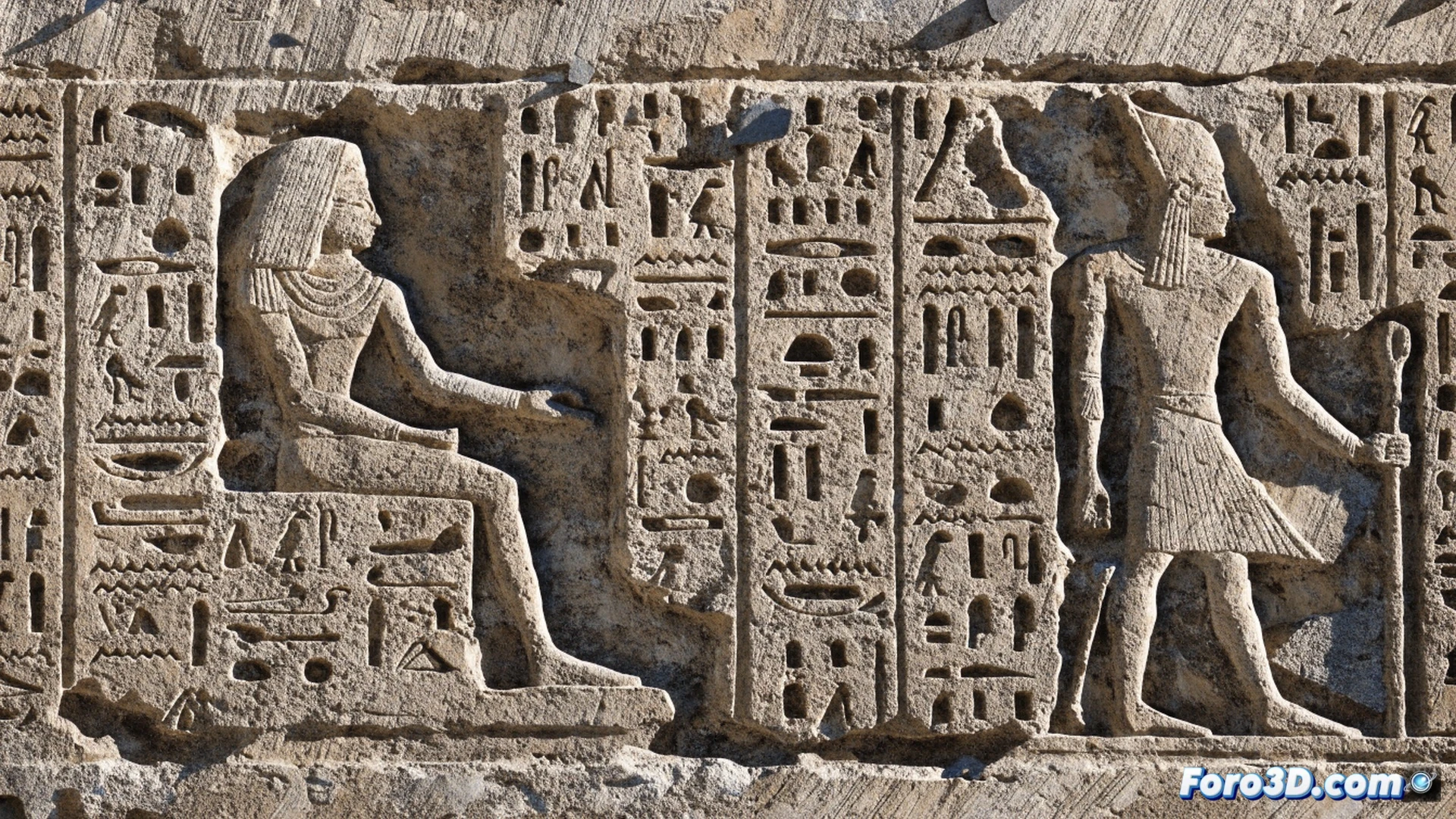
3D Pipeline: Artec Studio and MeshLab to Detect the Fraud 🛠️
The verification process began with a 3D scan using Artec Studio, which captured every micro-detail of the surface. The model was exported to MeshLab for curvature and roughness analysis. There, parallel striations and a homogeneous distribution of wear were identified, typical of controlled erosion by mechanical abrasion. In contrast, natural wear presents random and asymmetric patterns. The evidence was conclusive.
The Pharaoh and His Carver with an Industrial Vacuum Cleaner 😂
The funniest part of the case is that the forger used such a fine sandblasting jet that it seems to have polished the piece with an electric toothbrush. If ancient Egypt had had compressors, the hieroglyphs would surely have included warnings about not inhaling silica dust. Now the bas-relief rests in a private collection, as a table ornament, while its creator seeks new buyers in virtual markets.