A recent news story shows how technology can prioritize the human factor, freeing up time for direct attention. However, in Spain and other countries, the digitalization of public services follows the opposite path: cutting staff and saving costs. The result is a cold bureaucracy that distances the professional from the citizen. A change of course is urgent.
AI to monitor or to free: the technical dilemma 🤖
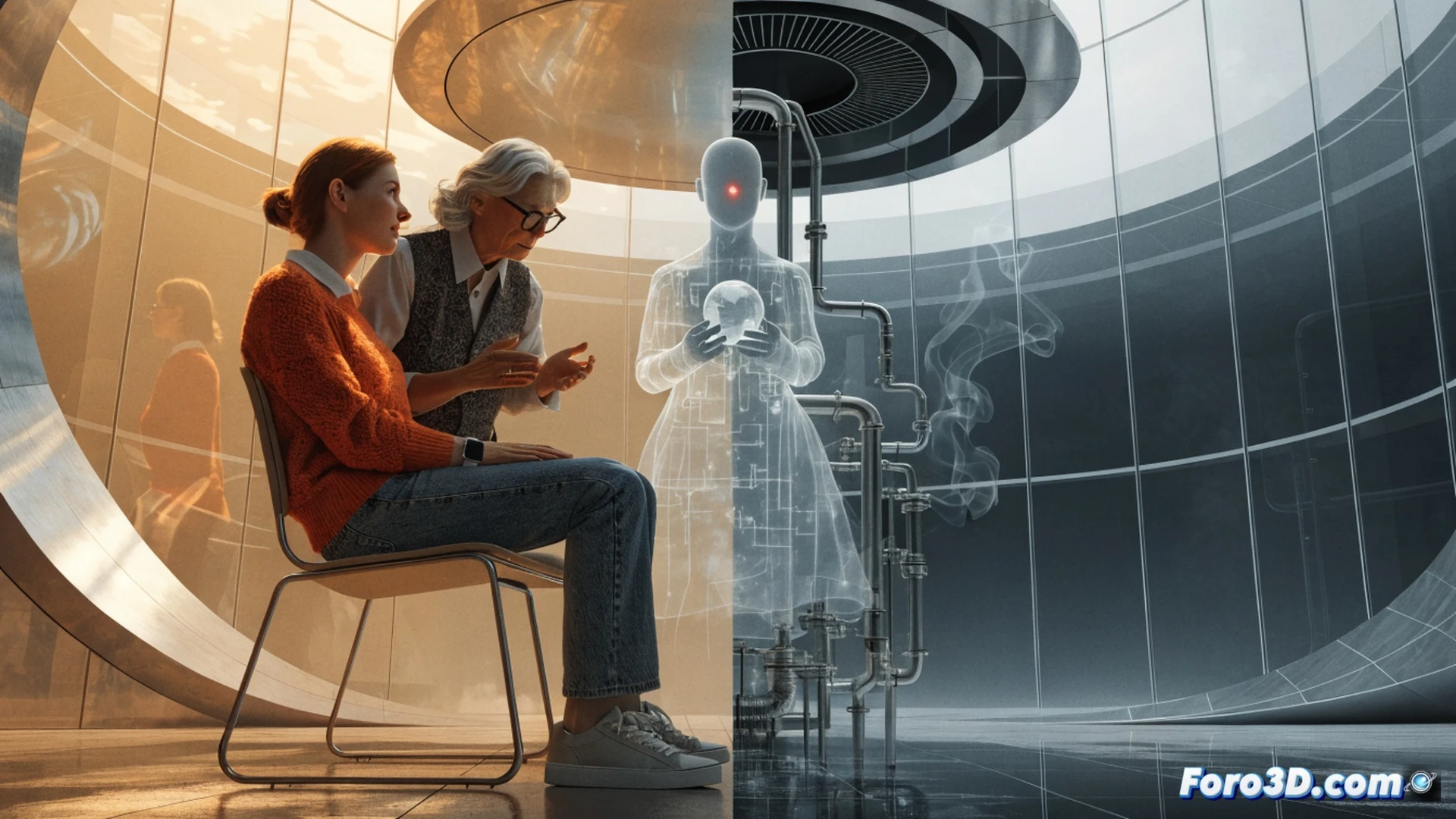
Artificial intelligence applied to healthcare and social services can automate repetitive administrative tasks, such as managing medical records or scheduling appointments. The technical goal should be to free up staff time for human interaction. But when it is used to monitor performance or standardize processes without flexibility, it becomes a control tool that dehumanizes. The technical solution lies in designing systems whose sole purpose is to increase direct dedication to people, not to replace positions or interpose screens between the professional and the user.
The machine that serves you but doesn't listen 💻
Imagine a hospital where an AI gives you an appointment, reminds you of your medication, and even asks how you feel, but the doctor only sees you to sign the discharge. It sounds like science fiction, but it is the real trend: saving on staff to invest in servers. The height of irony would be for the chatbot to diagnose you with a digital smile while the doctor does paperwork. In the end, the human touch becomes a luxury that only a few can afford, and the rest settle for a screen that never complains.