Rubber waste processing hides a latent risk. A recent thermal deflagration in a grinding hopper showed how friction in rotating shredding blades can create explosive conditions. This incident, analyzed with 3D simulation tools, exposes critical failures in industrial safety systems.
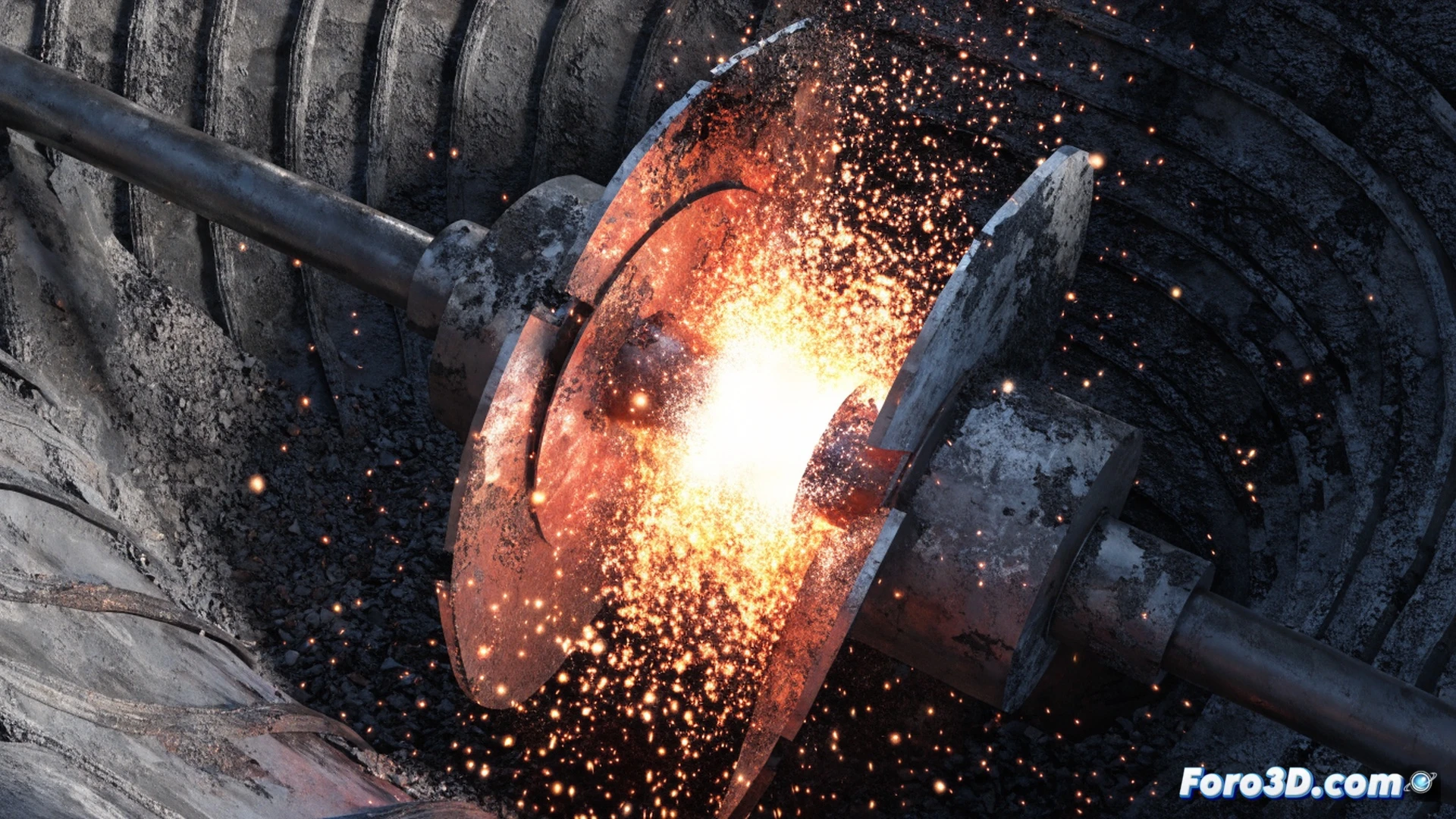
Forensic simulation with FARO Scene and FLACS 🔥
The forensic team used FARO Scene to scan the deformed hopper and blades, capturing every geometric detail of the damage. Then, with FLACS, the deflagration dynamics were modeled: prolonged friction raised the local temperature of the rubber dust to its ignition point. The simulation reproduced the pressure wave and particle dispersion, confirming that the mechanical failure initiated the chain reaction.
Hot blades, cold bosses 😅
The shredding blades, designed to tear rubber, decided to overheat and ruin the party. The rubber dust, that silent stowaway, found its spark of fame. Engineers now debate whether to redesign the system or put a desk fan on it. Meanwhile, operators are asking for vacation: they prefer human warmth to a deflagration.