The escalation of conflicts in municipal swimming pools has led several city councils to consider the presence of police officers as an immediate solution. This approach highlights a worrying social symptom: the abandonment of mediation and education as tools for coexistence. The problem is not the bathers, but the normalization of uncivil behavior that erodes respect for rules and public staff, whose work is overwhelmed.
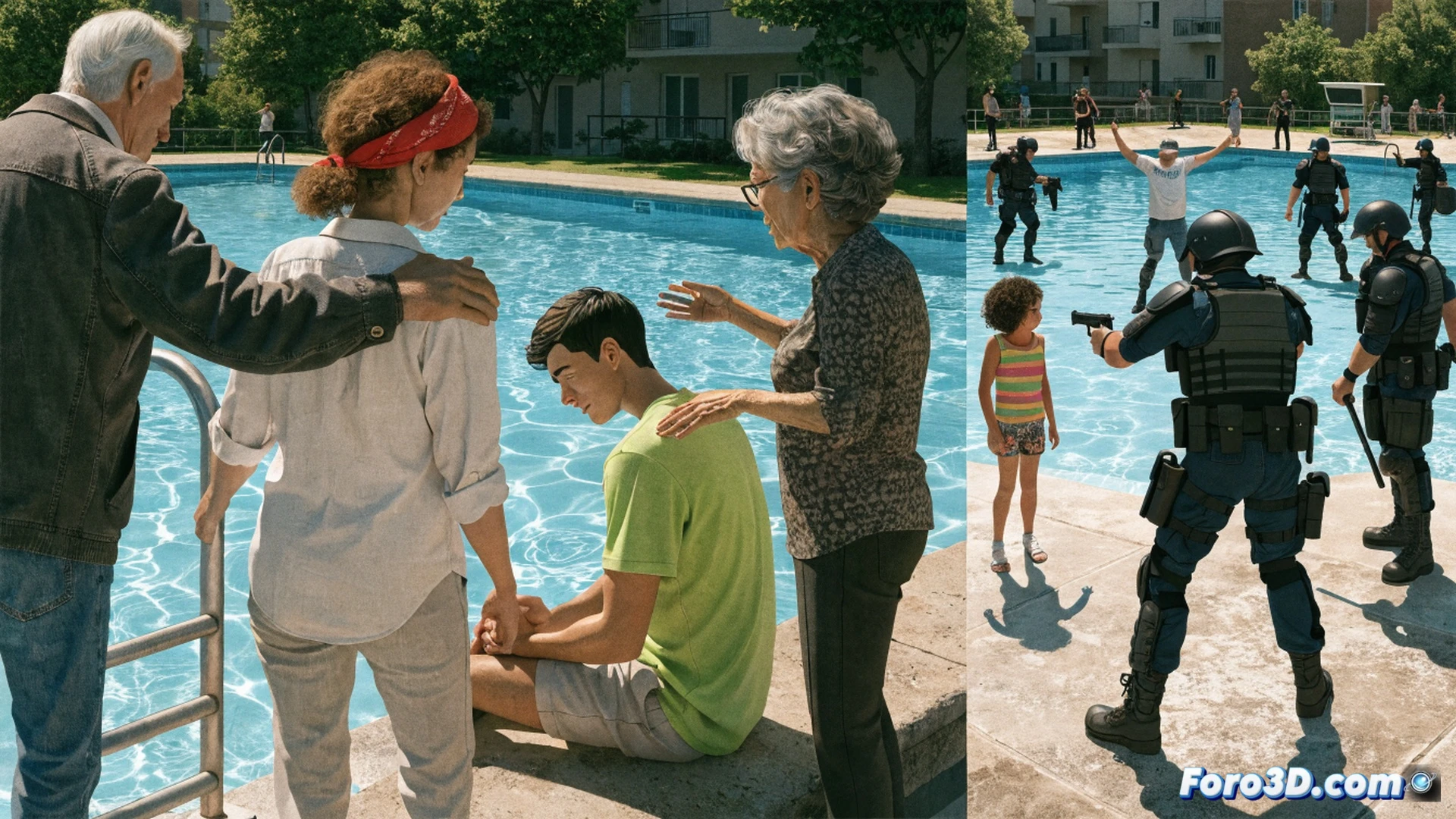
Civic technology: apps and sensors as an alternative to the officer 🏊
Instead of uniforms, capacity control systems with IoT sensors that alert about overcrowding could be implemented, combined with mobile applications to report incidents anonymously. Pool staff, equipped with tablets connected to a central hub, could manage queues and resolve minor disputes through digital protocols. Investing in mediation software and conflict resolution training would be more effective than a patrol car at the door.
Next step: security guards at the supermarket queue 🥖
If the police handle someone who splashes in the pool, perhaps we should ask for officers for the person who cuts in line for bread. The logic is simple: a lifeguard with real authority and a system of deterrent penalties would suffice to remind that chlorine does not dissolve education. But of course, it is easier to call the law than to explain to an adult that they should not do cannonballs.