The Supreme Court of the United States struck down Donald Trump's attempt to eliminate birthright citizenship, known as jus soli. The court ruled that the measure violates the Constitution, thereby protecting those born in the country. Millions of families retain their automatic access to citizenship, despite the president's criticism.
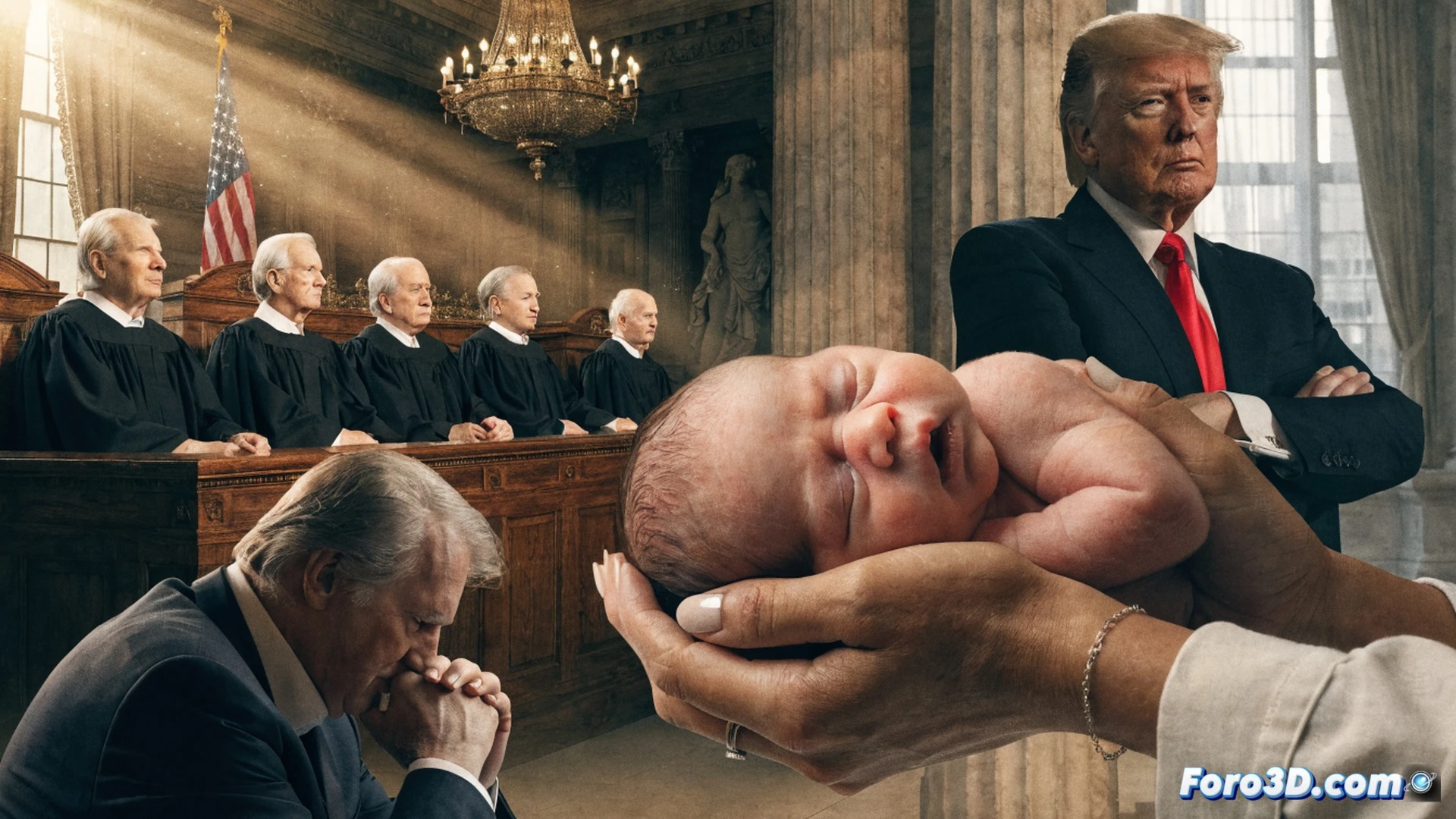
The judicial ruling and its impact on digital verification systems ⚖️
The judicial decision forces federal agencies to maintain civil registration systems without changes to citizenship criteria. Platforms like the Citizenship and Immigration Services (USCIS) rely on algorithms that validate birth certificates without geopolitical discrimination. Any modification to jus soli would have required rewriting databases and authentication protocols. Now, legal code and computer code remain synchronized, avoiding costly updates to critical infrastructure.
Trump and his app: the jus soli he couldn't delete with a tweet 📱
Trump tried to eliminate birthright citizenship like deleting an app from a phone: with a heavy hand and without reading the terms. But the Constitution is not a social network, nor can it be closed with a delete account button. The ruling reminded him that jus soli is not a premium subscription that can be canceled. Now, while he tweets his indignation, millions of babies will continue to be citizens without needing to pay a monthly fee or accept cookies.