The failure of a rubble retaining wall on a road embankment has highlighted a classic error: the absence of a filtering geotextile. Without it, the washing out of fines caused the structure to collapse from within. The project, documented with ContextCapture and modeled in Plaxis 3D, reveals how a technical detail leads to a preventable collapse.
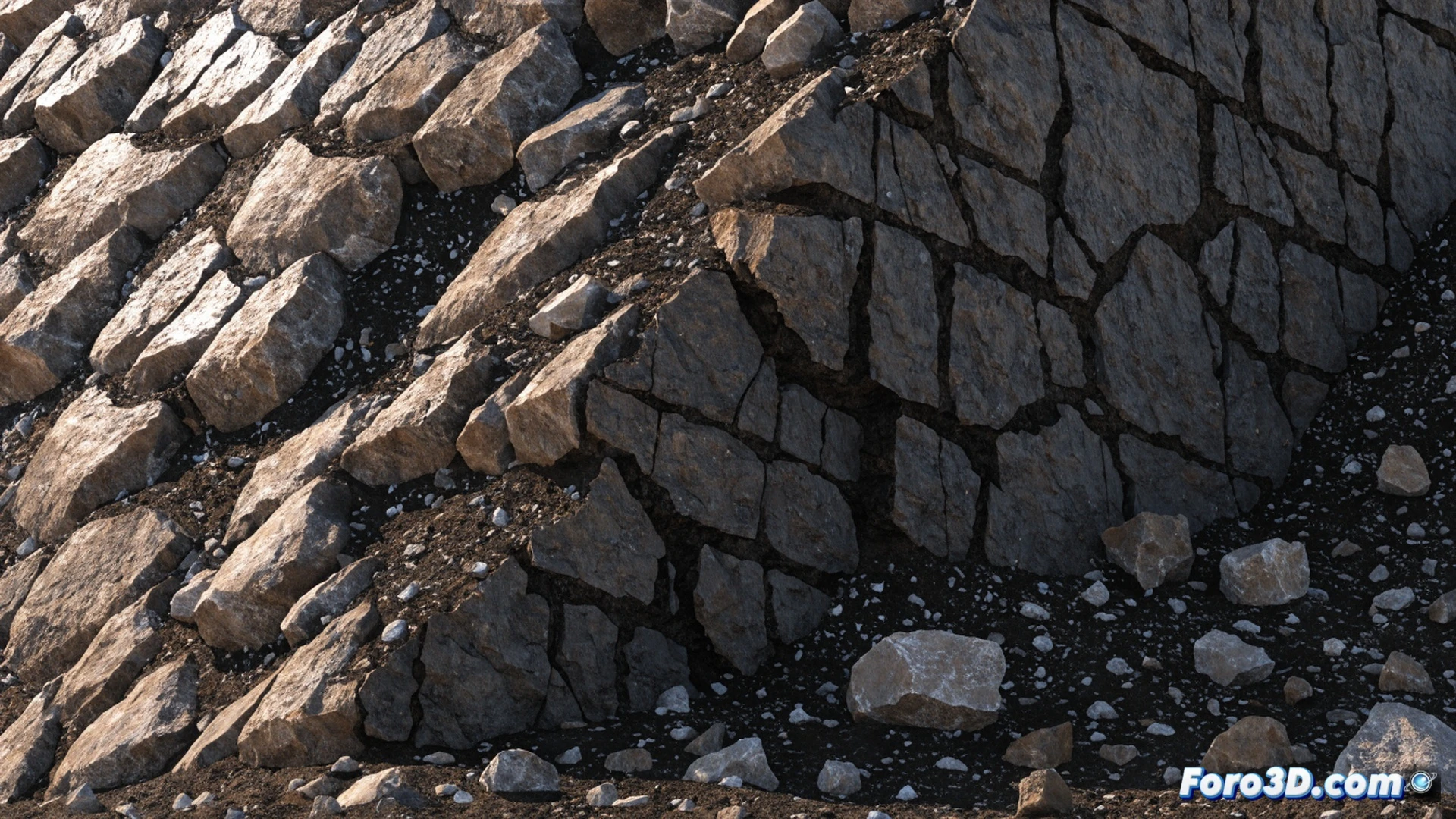
3D Modeling: from point cloud to geotechnical analysis 🛠️
ContextCapture generated a precise point cloud of the collapsed wall, allowing the real geometry of the failure to be reconstructed. This data was imported into Plaxis 3D to simulate the behavior of the soil and rubble. The model showed that pore pressure and the migration of fines, without a filter, reduced shear strength until progressive collapse occurred. The numerical analysis confirmed what was visible to the naked eye.
The forgotten filter: when saving money costs dearly 💸
Someone thought the geotextile was an unnecessary luxury. Now the wall looks like Swiss cheese after a storm: holes everywhere. The contractor saved on fabric and lost the project. The curious thing is that, with the Plaxis 3D modeling, the disaster could have been seen before it happened. But of course, you first have to want to look.