The collapse of a riprap retaining wall has highlighted a recurring problem: the sliding of blocks due to washing of the underlying foundation soil. This failure, documented in the field, was analyzed with a 3D pipeline that combined ContextCapture for the point cloud and Plaxis 3D for geotechnical simulation.
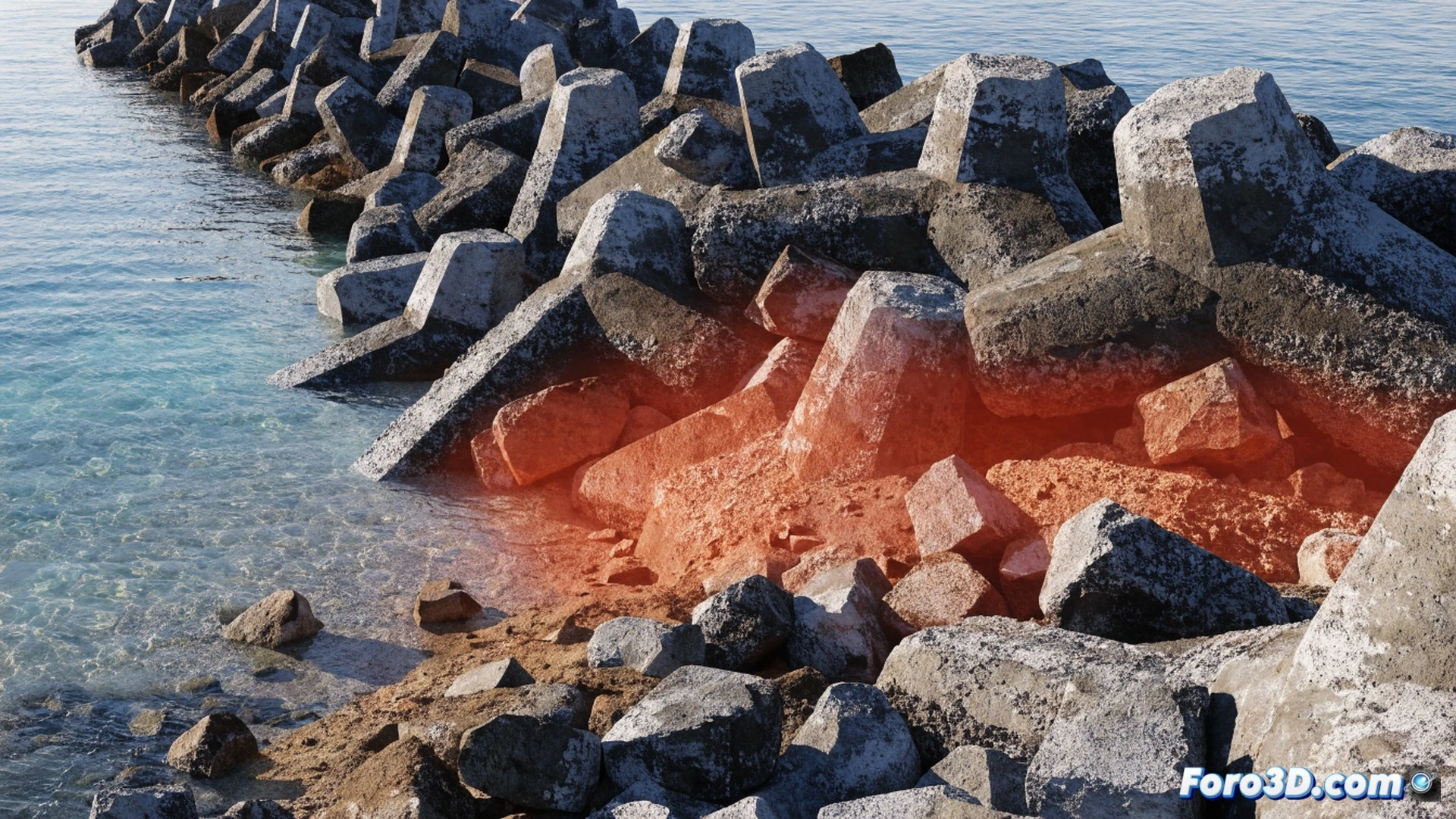
3D Pipeline: from point cloud to geotechnical simulation 🏗️
ContextCapture generated a precise three-dimensional model of the collapsed wall and surrounding terrain. This model was imported into Plaxis 3D to model the soil-structure interaction. The results showed that the progressive washing of fine material under the foundation reduced the bearing capacity, causing the blocks to slide. The analysis allowed identifying the critical erosion zone and its impact on global stability.
The soil went on vacation and the blocks followed 🏖️
Apparently, the foundation soil decided to take a break and disappear without notice. The blocks, faithful to gravity, decided to accompany it on its getaway. The funny thing is that nobody asked their permission. Now, with the 3D model, we know exactly where and how the soil escaped. Good thing the programs don't take vacations.