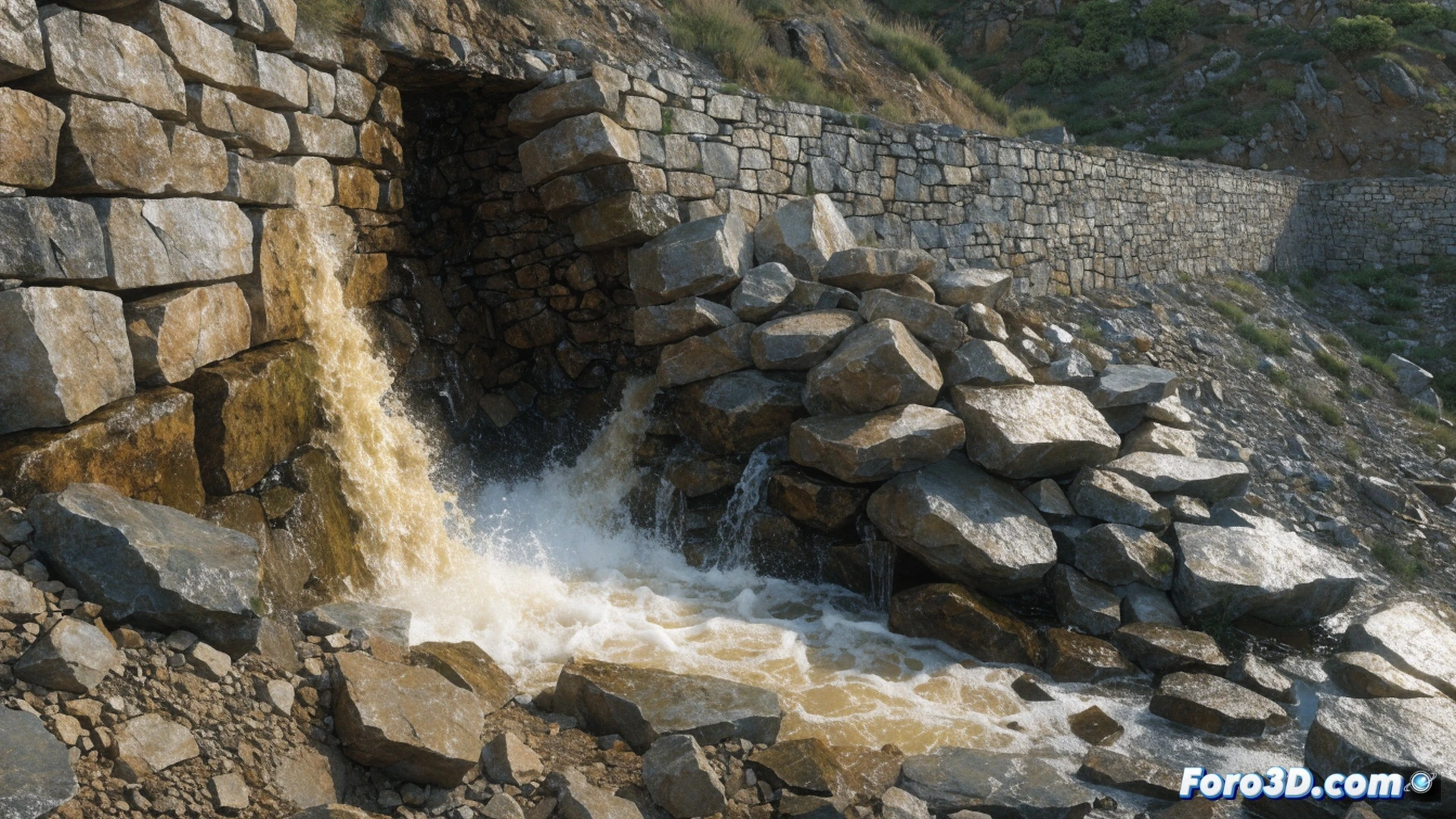
The failure of a dry-stone masonry retaining wall on an urban slope highlighted how the lack of drainage causes structural overturning. Accumulated water generated hydrostatic thrust that exceeded the system's resistance. The collapse, documented with ContextCapture, allowed a detailed analysis of the terrain and structure.
3D Reconstruction and Geotechnical Analysis with Plaxis 3D 🏗️
The workflow integrated ContextCapture to generate a point cloud model of the collapsed wall, capturing cracks and displacements. This model was imported into Plaxis 3D to simulate the behavior of saturated soil. Calculations confirmed that hydrostatic thrust, without drainage, raised pore pressure to the point of overturning. The simulation showed the progressive failure of the masonry joints.
Water: That Invisible Enemy No One Saw Coming 💧
Turns out the wall, which seemed so solid with its stacked stones, had more leaks than an office rumor. Drainage, that abstract concept for many, was conspicuously absent. Now the wall rests on the ground, proving that water, when given confidence, always finds a way to settle the score.