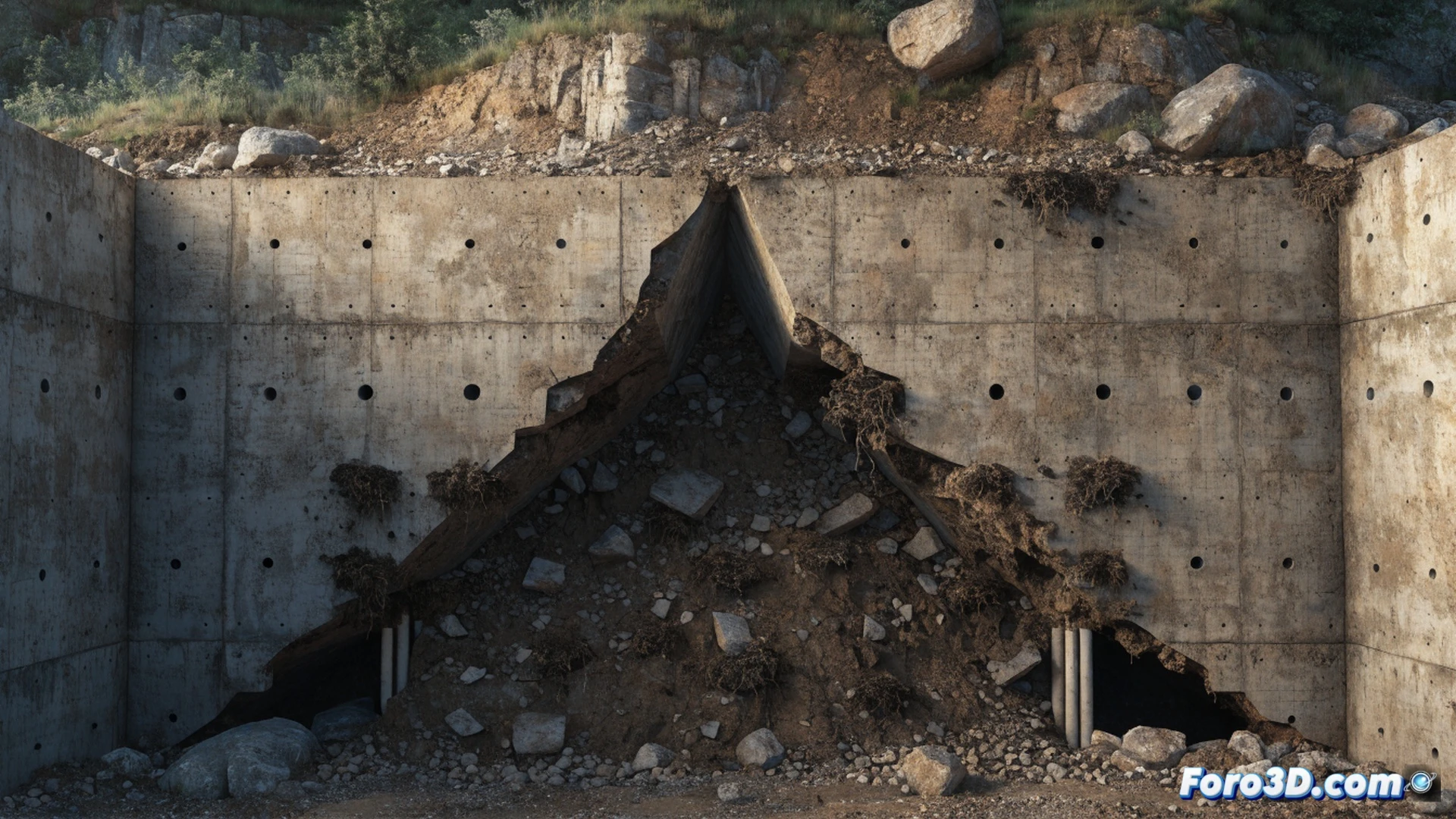
The failure of a concrete gravity retaining wall is usually not due to an initial calculation error, but rather to the accumulation of ignored operational factors. In this case, the clogging of the drainage system generated an increase in active earth pressure, causing the structure to overturn. We analyze the case using a 3D pipeline that integrates ContextCapture and Plaxis 3D.
3D Pipeline: from point cloud to geotechnical model 🏗️
ContextCapture made it possible to generate a precise digital twin of the wall and surrounding terrain from photogrammetry. This model was exported to Plaxis 3D, where the stress-strain behavior was simulated. The key to the analysis was incorporating the pore pressure generated by the clogged drainage. The results showed that the active thrust exceeded the stabilizing moment, validating the overturning hypothesis. The integration of both tools shortened diagnosis times.
Drainage: that friend we always forget to invite to the party 💧
The wall stoically withstood the earth pressure for years, until the drainage decided to take a permanent vacation. Water, true to its nature, found the path of least resistance: pushing the wall forward. In the end, the structure opted to retire abruptly, demonstrating that maintenance is not a luxury, but a necessity. And in engineering, what doesn't drain, falls.