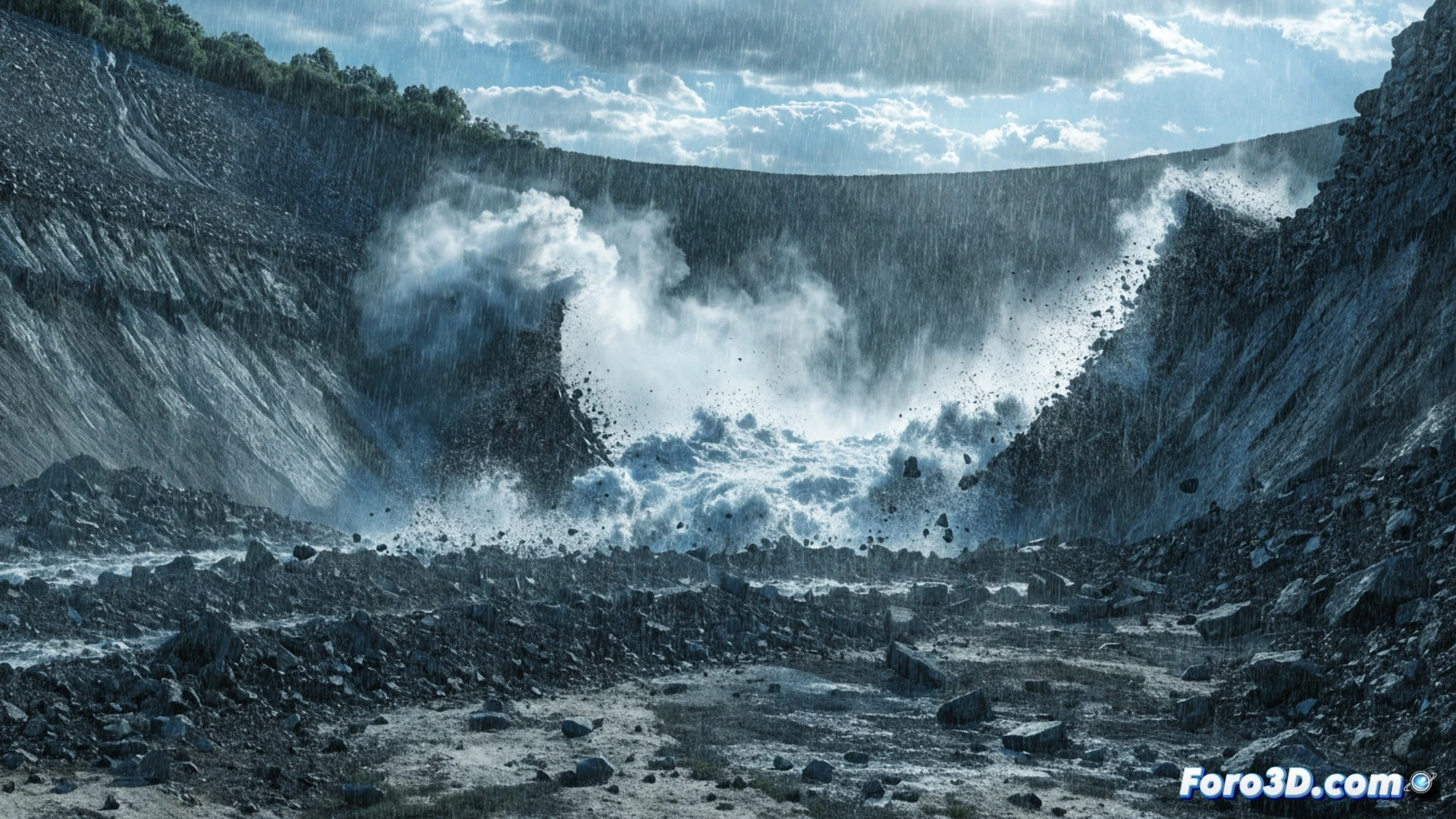
The recent collapse of a mine tailings storage facility has brought waste management into focus. The frontal slope failure occurred due to excess pore pressure, triggered by intense rainfall that saturated the material. This catastrophic failure highlights the need for accurate predictive models to assess the stability of these critical structures.
3D Pipeline: from point cloud to geotechnical model 🏗️
To analyze the incident, a digital workflow was employed. ContextCapture generated a detailed 3D terrain model from photogrammetry, allowing visualization of the post-collapse geometry. This model served as the basis for Plaxis 3D, where the slope behavior was simulated. The coupled hydro-mechanical analyses reproduced the excess pore pressure, validating the hypothesis of failure due to static liquefaction of the saturated material.
Water: that little detail no one saw coming 💧
It seems that for some designers, water is only good for office coffee. Ignoring that rainfall can saturate a slope is like being surprised that a wet sponge weighs more. Excess pore pressure is not black magic; it's basic physics. But hey, it's always cheaper to make the 3D model after the disaster than good drainage beforehand. The epitome of the penny-wise engineer.