A static spark in the hot gas purge triggered the collapse of an industrial bioethanol distillation plant, followed by a large-scale structural fire. The incident, which occurred during a routine maintenance operation, has reopened the debate on safety protocols in facilities with explosive atmospheres. We analyze the disaster and the digital tools used for its reconstruction.
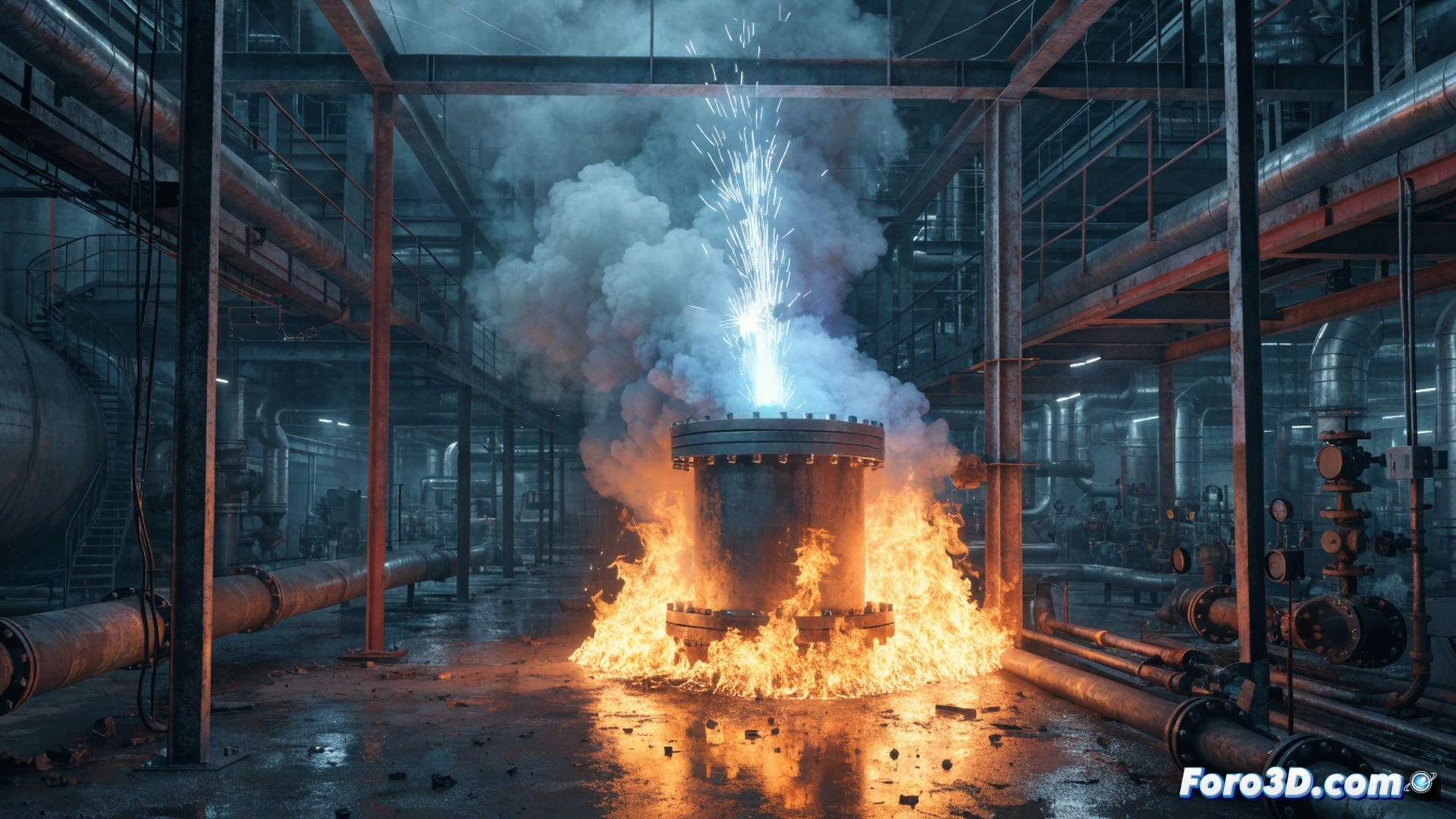
Digital reconstruction of the disaster with Pix4D and PyroSim 🔥
The 3D pipeline for the investigation combined two specialized tools. Pix4D generated a precise photogrammetric model of the plant remains, allowing experts to measure deformations and break points without accessing risk areas. PyroSim, meanwhile, simulated fluid dynamics and fire propagation from the initial spark to the structural collapse. The correlation between the 3D model and the simulation confirmed that the hot gas purge, lacking electrostatic dissipation, was the origin of the failure.
Hot purge, cold spark: the recipe for disaster ⚡
It seems someone forgot that ethanol and sparks don't mix well, like oil and water, but with less chance of making a salad. The hot gas purge, designed for ventilation, turned into an improvised flamethrower. Engineers now debate whether the problem was technical or if the operator should have worn anti-static socks. Meanwhile, firefighters only ask if next time they can use a bigger hose.