A colony of beavers reintroduced in west London has achieved what years of urban engineering could not: preventing flooding at Greenford station after heavy rains. These animals, once considered a pest, build wetlands and dams that naturally retain water, reducing pressure on municipal drainage. For citizens, this translates to fewer transport disruptions and less property damage.
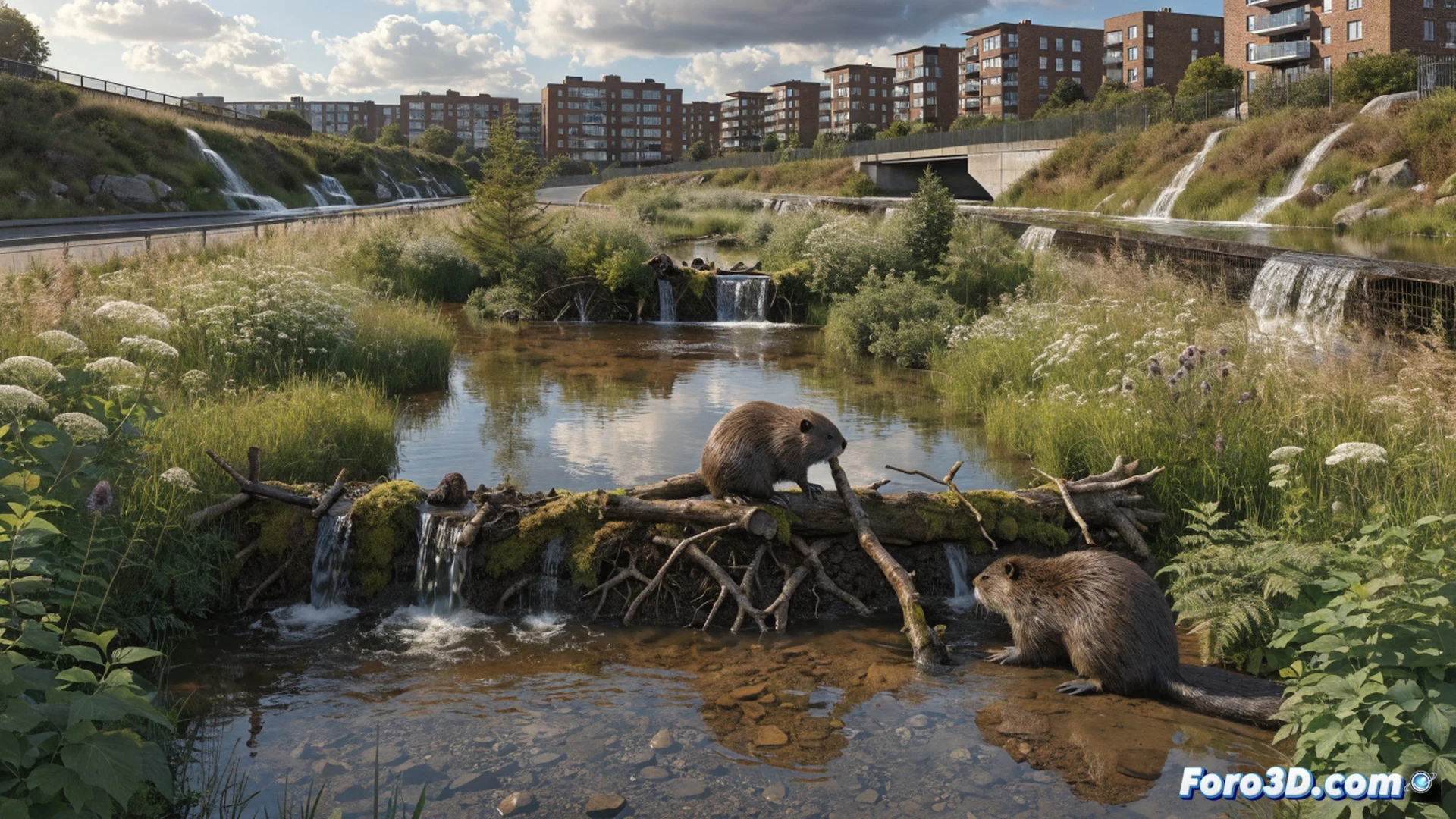
Natural engineering vs. high-tech drainage 🌿
While artificial drainage systems collapse under the weight of increasingly intense storms, beavers offer a low-cost, high-efficiency solution. Their dams slow water flow, creating buffer zones that prevent peak discharge. Local studies indicate that these biological structures can retain up to 10 times more water than a conventional pipe system. The lesson is clear: sometimes, the best technology is the one that already existed in nature.
The city council hires beavers: fewer works, more rodents 🐹
While municipal engineers rub their eyes in disbelief, the Greenford beavers have become the most efficient public employees of the year. No strikes, no million-dollar budgets, and no paperwork—these rodents work 24/7. Of course, the collective agreement will need reviewing: so far, their salary is limited to willow branches and birch bark. At least they don't ask for overtime or paid vacations.