Engine manufacturing takes a turn. Nikon SLM Solutions and Bosch have achieved what seemed like an engineering dream: a complete aluminum V8 block, 3D printed in a single piece. No molds, no casting, no machining tools. This not only reduces weight but also allows for internal cooling channels that would be impossible to manufacture with traditional methods.
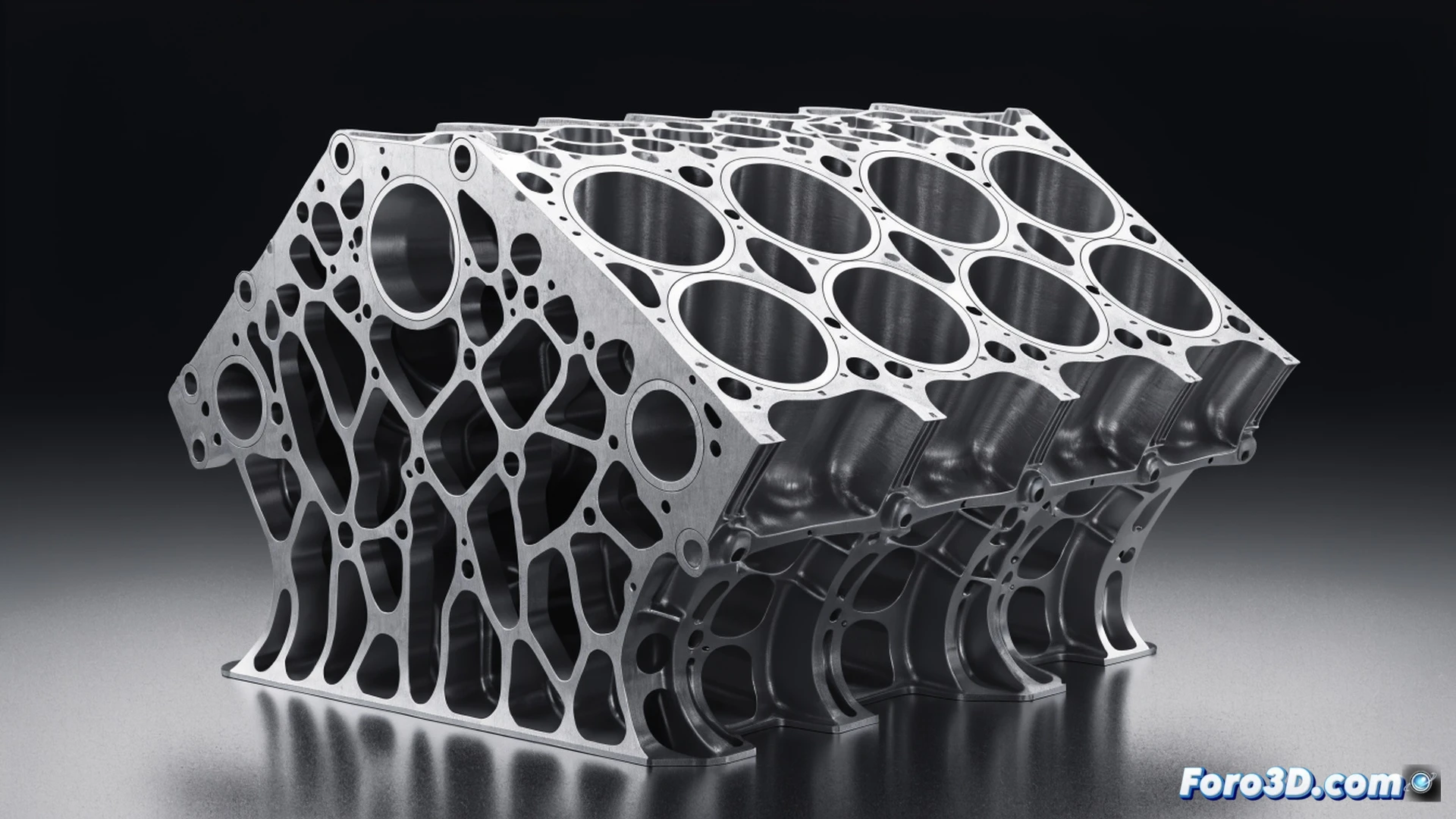
Impossible channels and parts that weigh less 🚀
The key lies in selective laser melting. Layer by layer, the aluminum powder solidifies to form complex geometries. Bosch integrated internal ducts that optimize coolant flow, something unfeasible in a cast block. The result is a lighter engine with better thermal management. For mass production, this means fewer steps, less wasted material, and, in the long run, lower costs per unit.
Goodbye to casting, hello to local workshops 🔧
Now we just need the neighborhood mechanic to know how to repair a printed block. Because if the V8 comes out of a printer, the day it fails, you'll have to call the IT technician before the body shop worker. That said, with these advances, the cars of the future will be so light that you might even be able to push them when they run out of battery. Progress.