Japanese scientists have developed a fertilizer that allows rice to be grown on the Moon using only air, water, and electricity. Tests on simulated lunar soil showed healthy and viable plants. This breakthrough opens the door to producing fresh food in space bases and, incidentally, recovering infertile soils on Earth. Food self-sufficiency beyond the planet is no longer just science fiction.
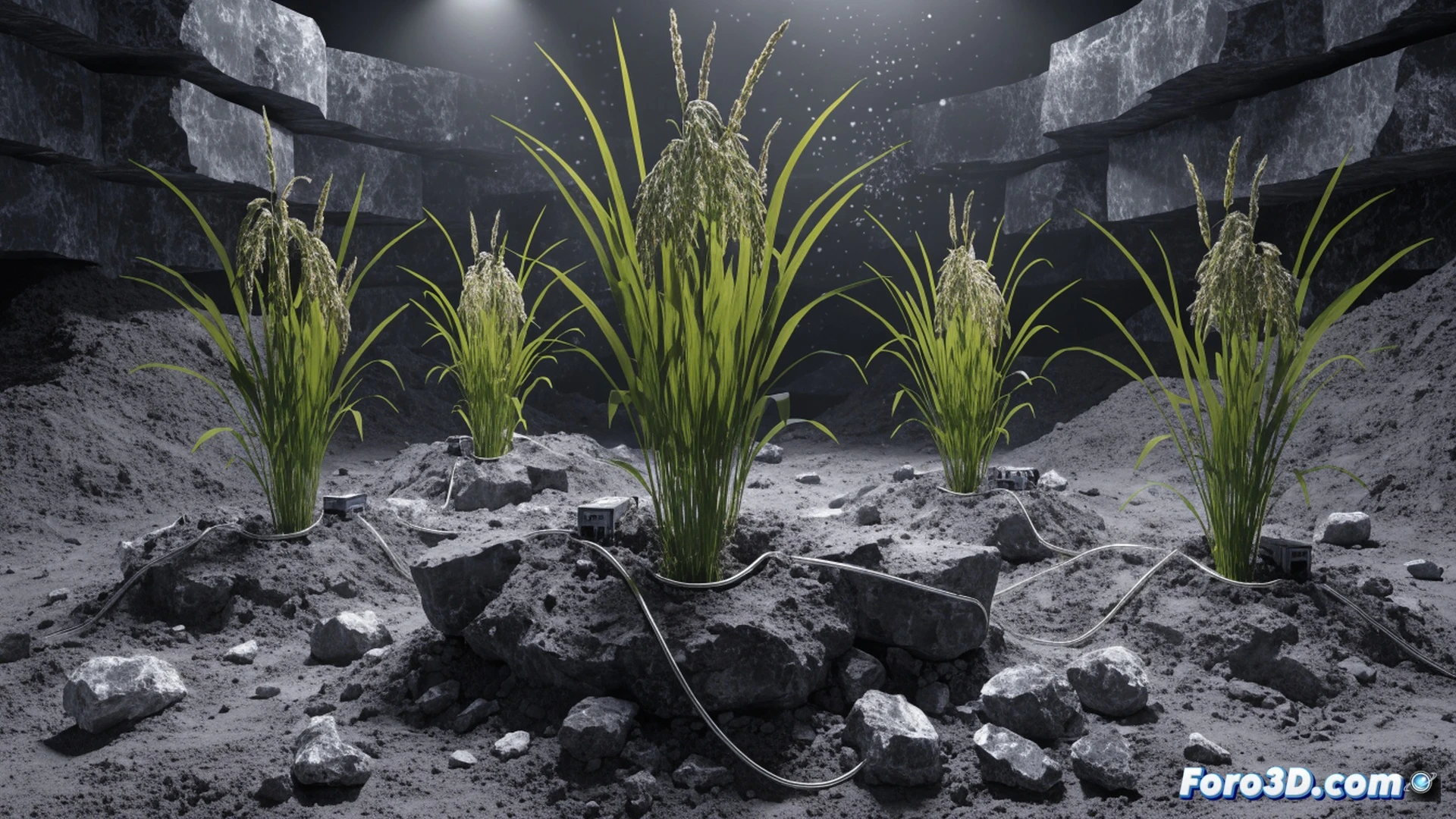
How the fertilizer born from air and electricity works 🌱
The process uses a reactor that extracts nitrogen from the air and combines it with water using electricity, generating a liquid fertilizer without chemical waste. When applied to simulated lunar regolith, the rice showed growth comparable to that on Earth. The key lies in nitrogen fixation at low temperature and pressure, avoiding traditional industrial methods. This reduces the weight of supplies needed for a lunar mission and allows for recycling local resources.
Goodbye to dehydrated salad, hello to rice with a view of Earth 🌾
Astronauts have been eating freeze-dried food with a cardboard-like taste for decades. Now it turns out they could grow their own rice on the Moon, perhaps even with a touch of wasabi if someone dares to plant radishes. The best part is that while engineers figure out how to water crops without them floating, terrestrial farmers are already looking at this fertilizer as an option for dry lands. Lunar agriculture, for now, only needs electricity and a little patience.