The collapse of a jib-type port crane at a container terminal has reopened the debate on high-cycle fatigue in critical components. The preliminary investigation points to the fracture of the boom pin, caused by cyclic loads induced by crosswind. This accident, which occurred during a routine maneuver, exposes the limitations of traditional design models when faced with unforeseen environmental conditions.
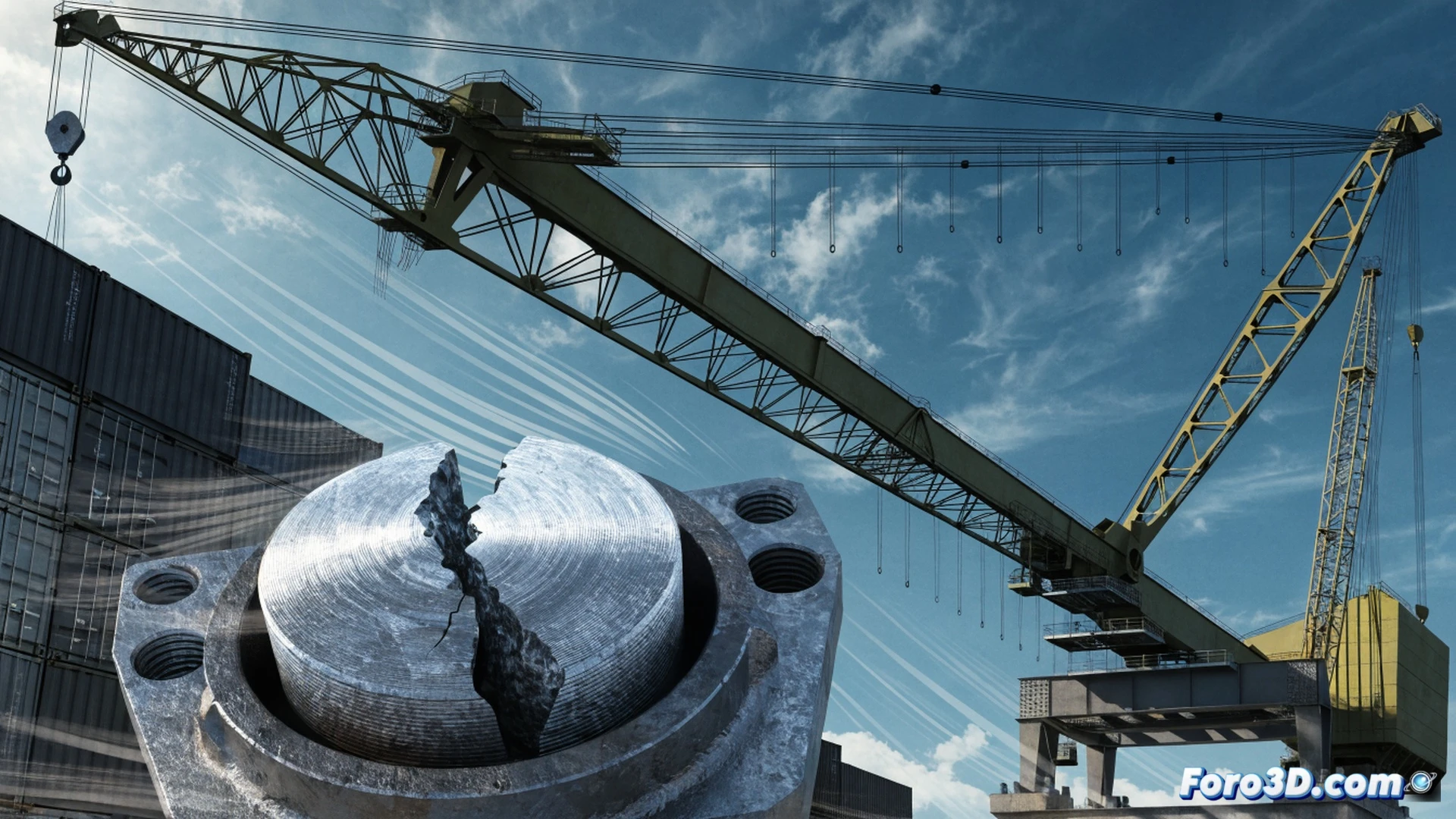
3D Pipeline for Failure Simulation: From Point Cloud to LS-DYNA 🏗️
The forensic team used Agisoft Metashape to reconstruct the geometry of the crane and the failure zone from drone images. The generated mesh was imported into LS-DYNA to perform an explicit finite element analysis. The model included the wind load history recorded by the port's weather station over the previous six months. The results showed a stress concentration in the pin, with an estimated fatigue life of 1.2 million cycles, well below the 5 million expected by the manufacturer.
The Pin That Said Enough: When Crosswind Wins the Match 💥
The pin, according to reports, had been enduring the boom's sway for years like a veteran boxer. But the crosswind, that silent rival, threw a right hook in the form of an 80 km/h gust. And the pin, fed up with so many cycles, decided to retire in style, breaking in two. Now it rests in an evidence bag, while engineers debate whether the culprit was the wind or a design that failed to foresee that air also gets tired.