Fracture of a wrist replacement prosthesis is not a common event, but when it occurs, it reveals important details about the implant's biomechanics. This case presents severe wear due to eccentric friction of the ultra-dense polyethylene component, which generated a structural failure requiring surgical revision. The analysis was performed using a 3D pipeline that combined Materialise Mimics for image segmentation and Geomagic Control X for dimensional inspection.
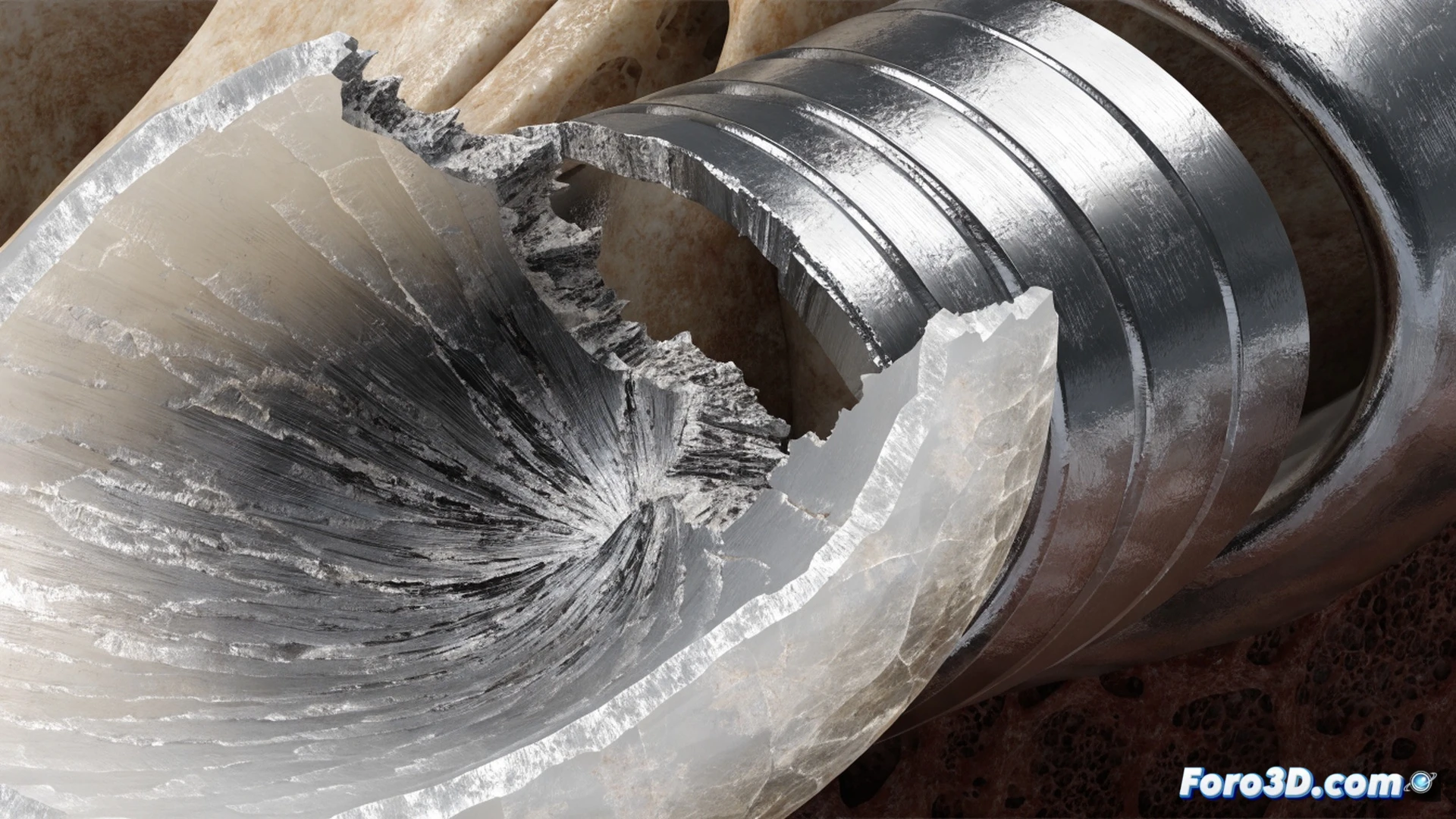
3D Pipeline for Implant Failure Inspection 🛠️
The process began with acquiring CT scans of the explanted implant. Using Mimics, the polyethylene and metallic components were segmented to generate precise 3D models. Then, in Geomagic Control X, the worn polyethylene geometry was compared against the original CAD design. The analysis revealed an asymmetric wear zone with material loss of up to 2.3 mm on the radial edge. This eccentric distribution indicates an abnormal loading pattern, likely due to initial implant malalignment or ligamentous instability.
The polyethylene said enough and fractured out of boredom 😅
The ultra-dense polyethylene, that material that promised to last until the patient's grandchildren were born, decided to take a permanent vacation. It turns out that rubbing against the same side constantly, like a scratched 90s CD, eventually tires anyone out. The fracture wasn't a drama: it was a cry for help from the implant asking for a readjustment. Moral of the story: if your wrist sounds like a rusty door, maybe it's not just age, but that the polyethylene no longer wants to keep dancing.