The detachment of refractory bricks in the municipal incinerator occurred after an uncontrolled emergency shutdown. The severe thermal shock generated internal stresses that fragmented the lining. This case highlights the risks of operating without gradual cooling protocols. A 3D pipeline with Pix4D was used to capture the damage geometry and Abaqus to simulate stress distribution.
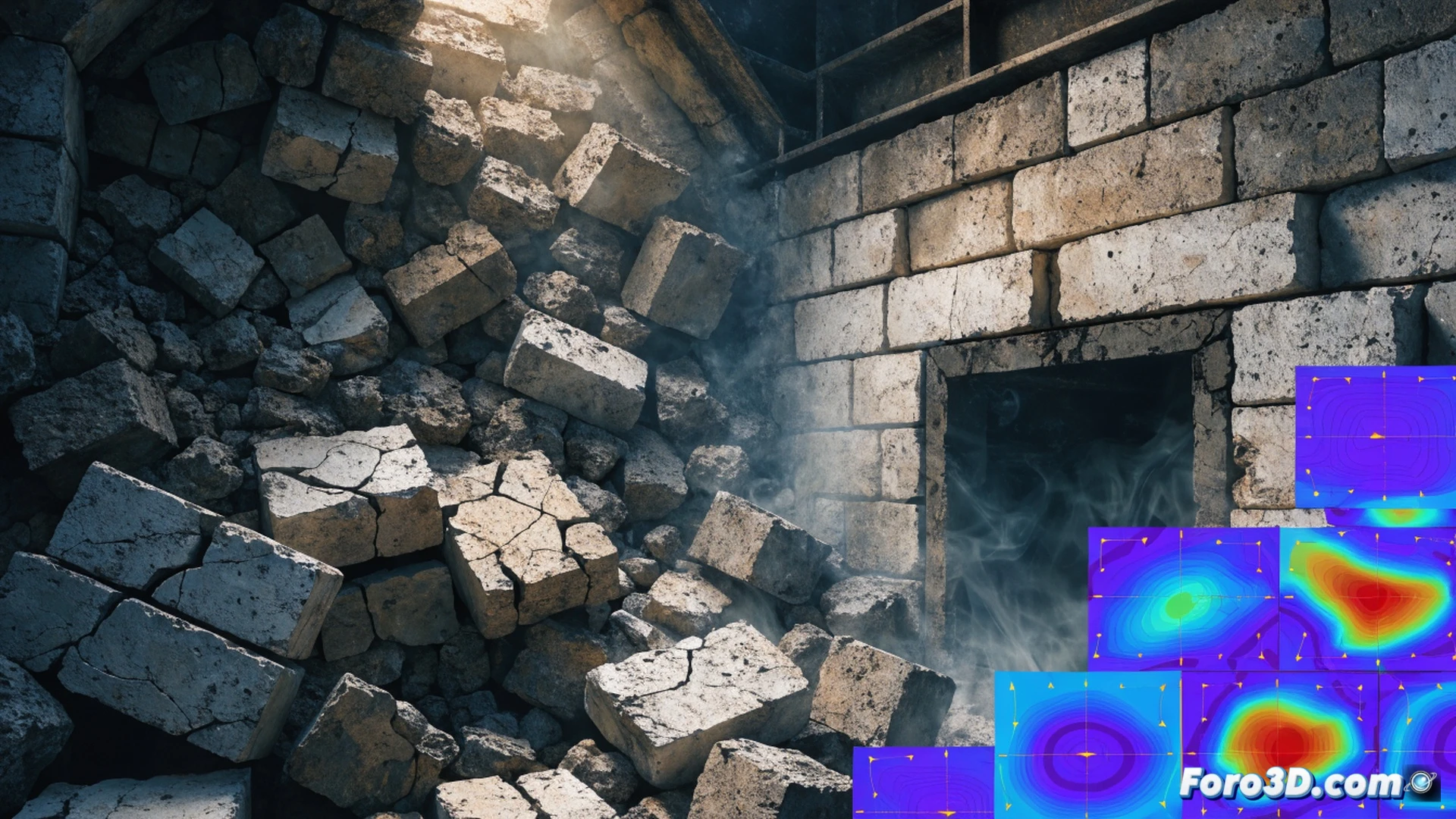
3D Pipeline: from point cloud to finite element simulation 🔥
The process began with a photogrammetric survey using Pix4D to generate a point cloud of the damaged furnace. A clean mesh was exported to Abaqus, where a thermo-mechanical model with refractory brick properties was defined. Boundary conditions included a thermal gradient from 800°C to ambient temperature in 15 minutes. The results showed stress concentrations at expansion joints, exceeding the material's rupture limit by 35%.
The brick that said enough is enough without warning 😅
The bricks decided to take an unscheduled break just when the incinerator needed them most. Apparently, the sudden temperature change was not in their employment contract. While engineers rushed to turn off alarms, the refractories opted for early retirement in the form of rubble. The moral: if you don't respect cooling times, the furnace will charge you in loose bricks.