A structural failure in a counterweight ship elevator has put the industry on alert. The breakage of the steel cable, caused by internal corrosion beneath the strands, led to the accident. This type of degradation is difficult to detect visually. To investigate the incident and model the system's behavior, engineers used a 3D pipeline combining Leica Cyclone for point cloud capture and Simpack for multibody dynamic simulation.
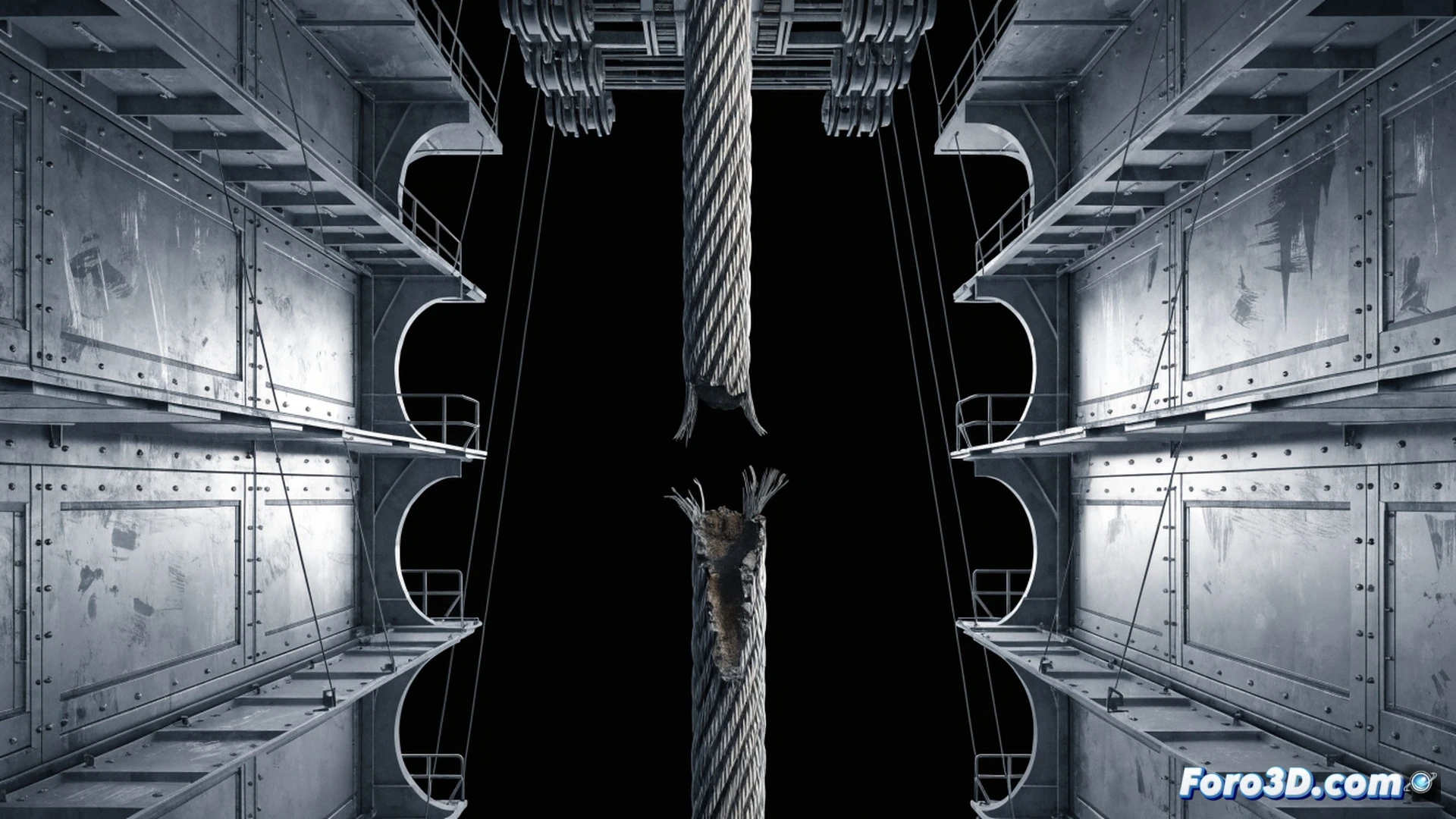
3D Pipeline: From Point Cloud to Dynamic Analysis 🔧
The technical process began with Leica Cyclone, scanning the elevator and counterweight geometry to obtain an accurate point cloud of the environment. This information was integrated into Simpack, a multibody simulation software that allowed recreating the system's movement and the stresses on the cables. The digital model revealed how internal corrosion, hidden beneath the outer strands, reduced the effective cross-section of the cable to the breaking point. The combined analysis made it possible to identify the critical failure point and validate the accident hypotheses.
The Cable That Rusted Inside Without Warning 🦠
It turns out the steel cable, so tough and reliable, had a dark side: it was rusting inside like an old pipe, but without smoking or sounding alarms. The outer strands, like a building facade, kept up appearances while the interior was falling apart. Good thing the 3D scanner and simulation arrived in time to perform the digital autopsy. Because if the cable had scheduled an appointment with the dermatologist, we might have found out sooner. At least now we know that corrosion doesn't warn, but the software does.