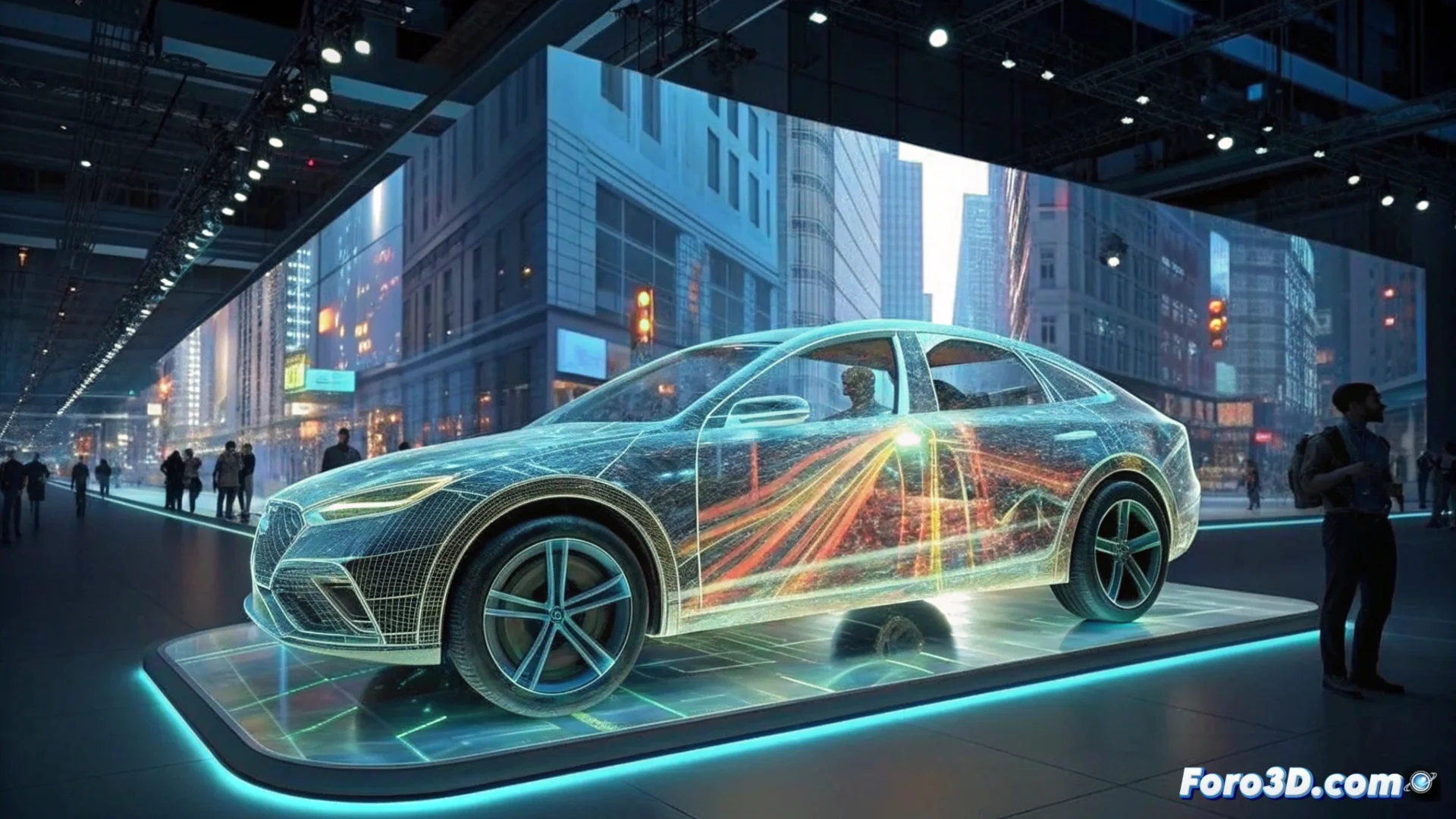
ZF Showcases its Driving System at CES 2026
At the CES 2026 technology trade show, the German supplier ZF Friedrichshafen showcased an innovative technology that enables vehicles to interact intelligently with everything around them. This system collects and analyzes environmental information so that the car can perceive its context comprehensively, a key step toward safer and more connected mobility. 🚗
An Artificial Brain Inside the Car
The centerpiece of this development is a high-performance computing unit that runs artificial intelligence algorithms directly in the vehicle. By processing data locally, the system does not depend on a constant cloud connection, allowing for extremely fast reactions and real-time decision-making. Additionally, its architecture is designed to optimize energy use and efficiently manage the heat it generates. 🔥
Key Advantages of Local Processing:- Faster response speed by eliminating cloud latency.
- Robust operation even in areas with limited coverage.
- Efficient management of system energy and heat.
The technology not only detects objects but interprets entire scenes, anticipating intentions to prevent risky situations.
From Detection to Context Understanding
This system goes beyond identifying obstacles. It is capable of interpreting complex urban traffic scenes. It can differentiate between a pedestrian standing still on the sidewalk and another showing intent to cross, analyze cyclists' behavior, and understand temporary or dynamic traffic signals.
Interpretation Capabilities:- Distinguish intentions of pedestrians and other vulnerable users.
- Analyze cyclists' trajectories and signals.
- Read and understand the status of traffic signals.
Toward Industrial Implementation
ZF's stated goal is for automobile manufacturers to integrate this technology into their upcoming models. This advancement suggests a future where the car not only avoids collisions but can anticipate unpredictable movements, adding a new layer of complexity—and potentially safety—to urban coexistence. The vehicle becomes an actor that understands, and does not just react. 🤖