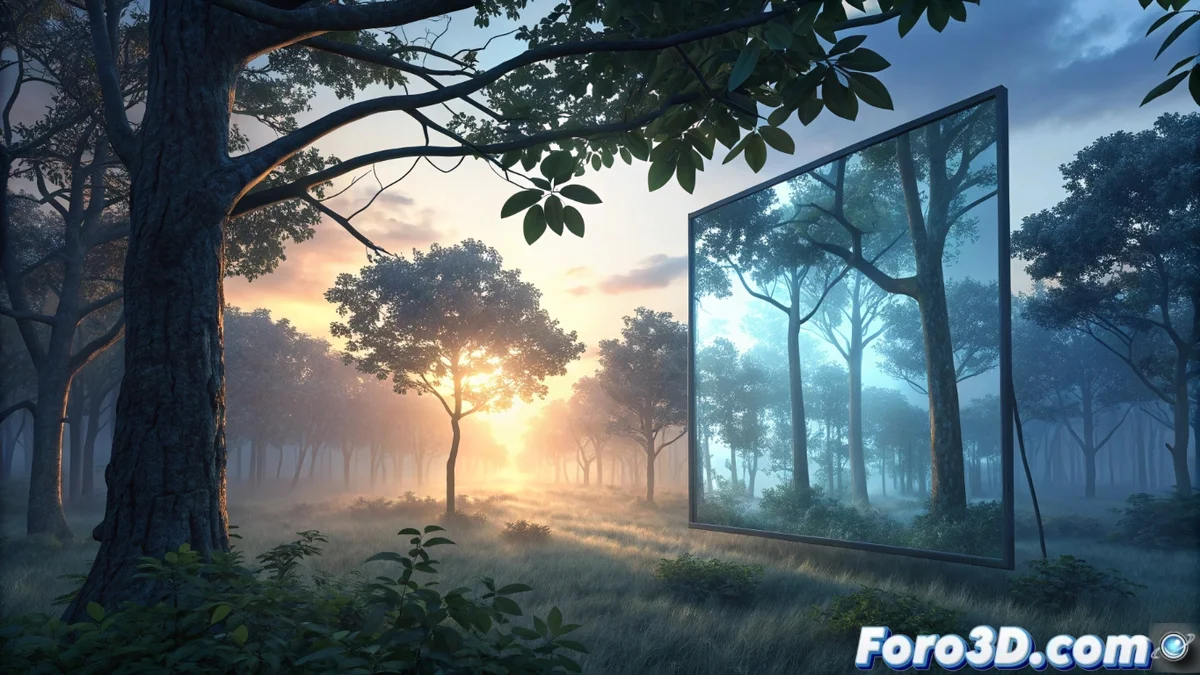
Z-depth slicing: slicing the scene for total compositing control
In the world of digital post-production, Z-Depth Slicing stands out as an advanced methodology that allows dissecting a rendered image with surgical precision. This technique leverages the depth pass or Z-Depth pass, a grayscale map where light values indicate proximity to the camera and dark values indicate distance, to generate a series of selection masks. By segmenting the scene into "slices" or discrete layers based on distance, artists gain unprecedented autonomy over each visual plane, freeing themselves from the limitations of the initial render 🎛️.
Absolute domain in the compositing suite
The true magic of Z-Depth Slicing is revealed when applying effects in isolation. This segmentation allows, for example, realistically simulating atmospheric fog by increasing its density in distant layers while foregrounds remain sharp. It is equally powerful for performing selective color corrections, such as cooling tones in the background to accentuate depth, or applying lens blurs with the precision that emulates high-end photographic equipment. This practice is a pillar in VFX and animation pipelines for integrating CGI with live footage and adding a professional cinematic finish.
Key applications of the technique:- Atmospheric effects: Gradual addition of fog, mist, or volumetric dust based on distance to create a sense of scale and depth.
- Planar color correction: Independent adjustment of saturation, color temperature, or contrast in different areas of the scene to guide the viewer's attention.
- Precise depth of field: Simulation of optical blur (depth of field) with smooth transitions and total control over the focal point, without depending on the 3D engine's render.
Z-Depth Slicing transforms a simple grayscale map into a set of master keys to unlock total control over every corner of the scene.
Implementation and best practices in the workflow
To execute this technique successfully, the first critical step is to generate a clean and well-calibrated depth pass from the 3D render engine, whether Blender, Maya, Unreal Engine, or others. In compositing software like Nuke or After Effects, this pass is processed using keying nodes, expressions, or specific tools to create the masks. The definition of distance thresholds for each slice must be strategic, seeking utility for the desired effect and avoiding artifacts or jagged edges in transitions. It requires prior planning in the render phase and a clear understanding of the spatial arrangement of objects in the original scene.
Essential technical considerations:- Z-pass rendering: Ensure a value range (from the camera near to the far clip) that captures the entire scene without clipping, usually exporting in 32-bit format for maximum precision.
- Software selection: Use robust compositing tools that allow manipulating channels and creating complex masks from depth data.
- Layer planning: Define how many "slices" are needed and at what distances, based on the desired final effect, to avoid unnecessarily complicating the process.
A power that requires artistic judgment
Like any powerful tool, Z-Depth Slicing carries the responsibility to use it with restraint. Its ability to isolate planes can tempt overloading a composition with effects. The final paradox, and a valuable lesson, often comes after hours of meticulous work: sometimes, the most elegant and powerful effect is absolute subtlety, or even preserving the beauty and balance of the original render. This technique, therefore, is not just a technical process, but an extension of the artistic judgment of the compositor, who decides when and how to intervene to enhance the visual narrative without overshadowing it 🎨.