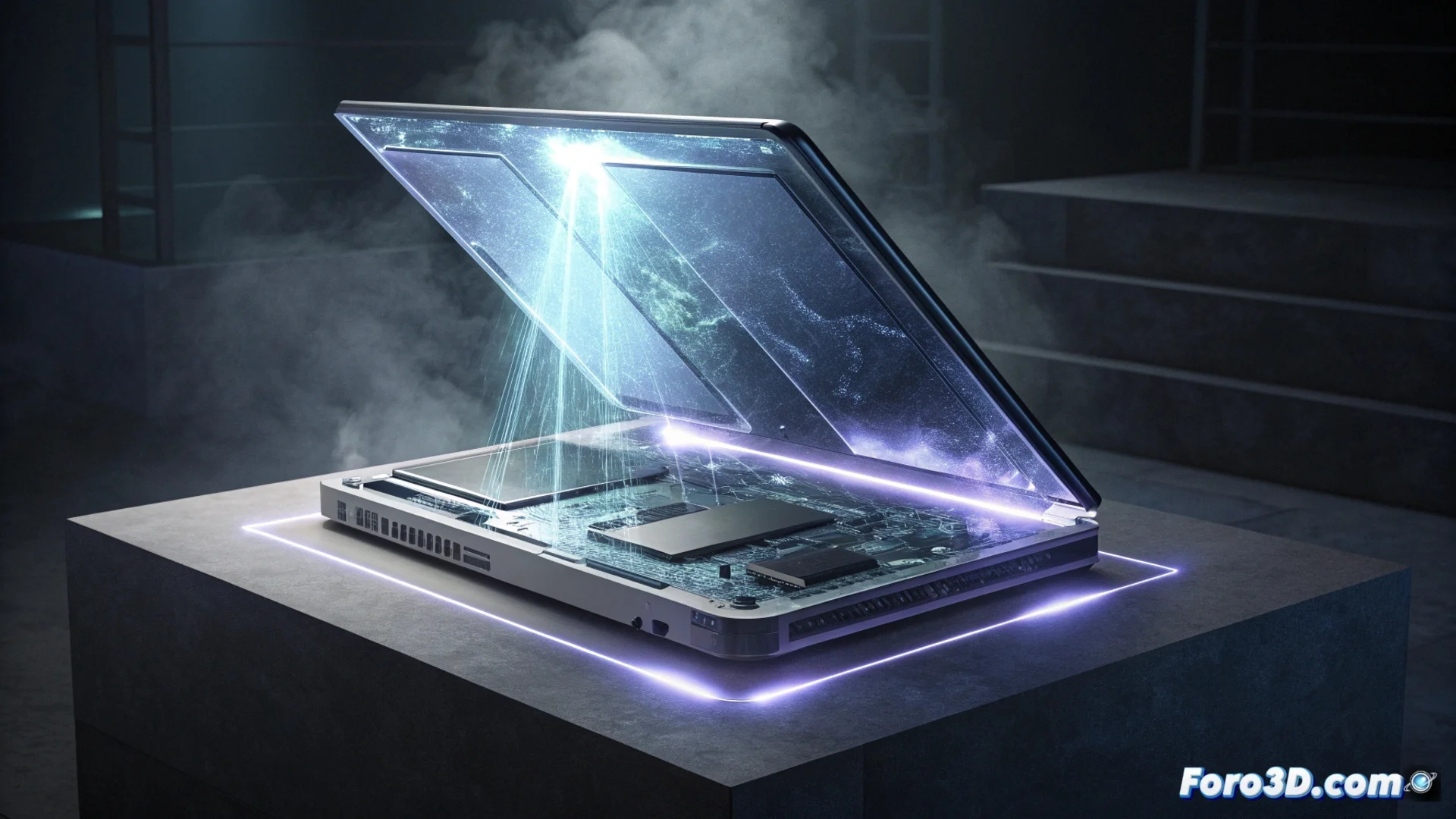
YPlasma Presents a Laptop Cooled with Cold Plasma at CES 2026
The CES 2026 trade show in Las Vegas was the stage where the startup YPlasma unveiled a functional prototype that challenges the norm in laptop cooling. Its innovation lies in replacing fans with a system that generates cold plasma, a technology that promises to completely redesign how we manage heat in mobile devices. 🔥
DBD Technology: The Heart of the Silent System
This method is based on dielectric barrier discharge (DBD). By applying a high voltage between two electrodes separated by a dielectric material, an ionized gas or cold plasma is generated. This plasma efficiently moves the air to extract heat from the processor and other components, dissipating it without the need for moving parts. The process is inherently silent and prevents dust from accumulating inside the device, a persistent problem in traditional coolers.
Key Advantages of Plasma Cooling:- Completely eliminates fan noise, changing the user experience in quiet environments.
- Allows engineers to design thinner laptops or use the internal space to integrate batteries with greater capacity.
- Improves long-term reliability by preventing blades from attracting dust and dirt inside.
The concept is so silent that the only sound you'll hear will be your frustration when the operating system decides to update at the most inopportune moment.
Implications for the Future of Hardware
By dispensing with fans, not only is the device silenced, but new possibilities open up in industrial design. Manufacturers can optimize space in previously impossible ways, prioritizing lightness or autonomy. The more uniform thermal management promised by cold plasma could also help maintain sustained hardware performance.
Aspects to Clarify About This Technology:- The real cost of producing and implementing DBD systems on a commercial scale.
- The total energy efficiency of the process compared to current active and passive cooling methods.
- The durability and maintenance of the electrodes and dielectric over time.
A Step Toward a New Generation of Devices
YPlasma's prototype marks a turning point, demonstrating that it is possible to cool powerful components without moving parts. If the startup manages to solve the manufacturing and efficiency challenges, we could be witnessing the beginning of a new era in laptop design, where silence and reliability are standard features. The path from prototype to final consumer product, however, still lies ahead. 💻✨