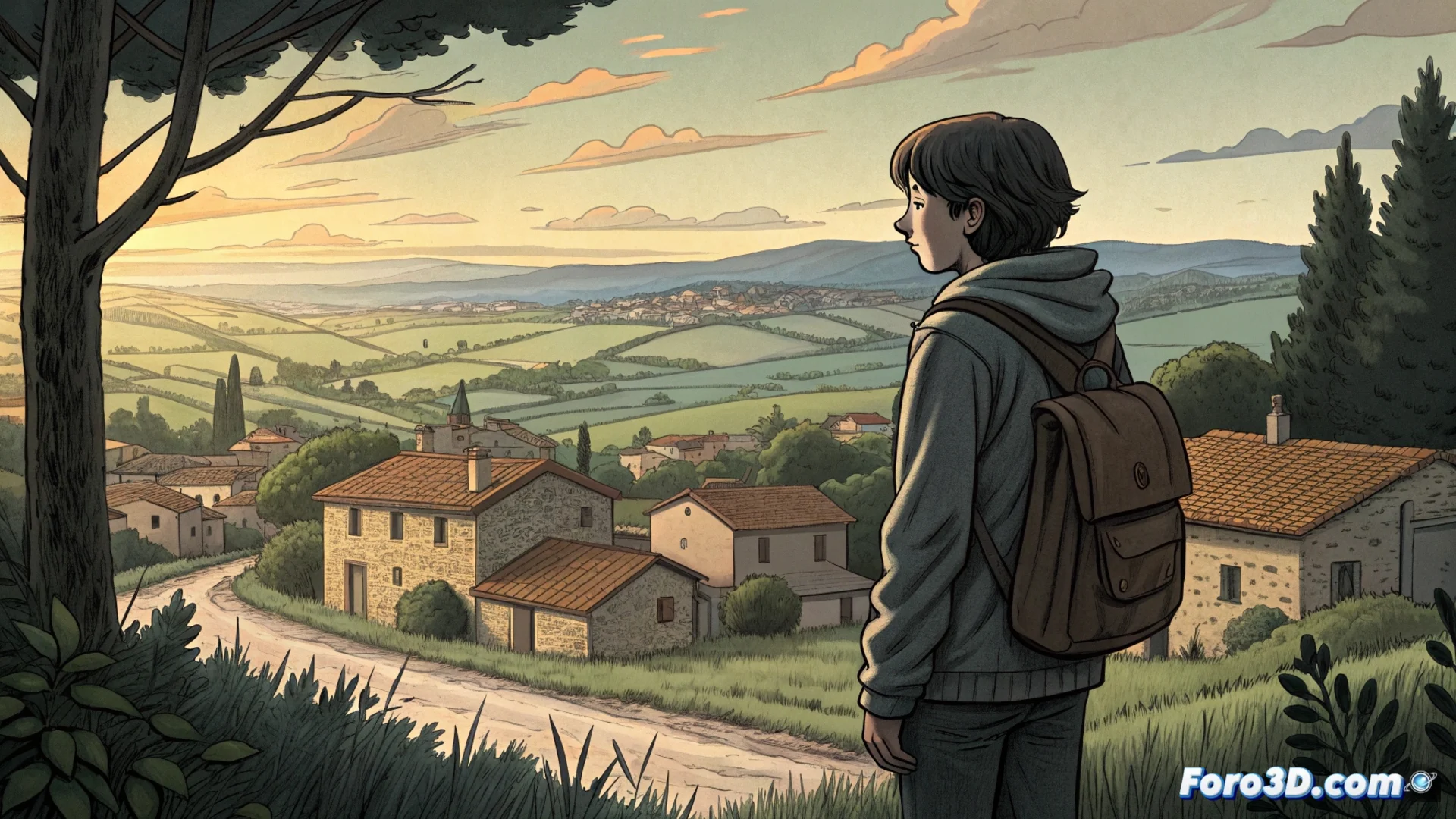
Young People Seek an Escape Route in the Countryside
A recent study reveals that 21% of young people are seriously exploring the possibility of leaving the city to settle in rural areas. This movement directly responds to the economic difficulty of living in urban centers with exorbitant prices and the lack of options to emigrate to other countries. The main goal is to recover a quality of life that they perceive as lost, opting for remote work or completely transforming their lifestyle. 🌄
Remote Work as the Engine of Geographic Change
The normalization of remote work is the key factor driving this migration. Professions in the technology, design, or consulting fields no longer require physical presence in an urban office. They only need a stable internet connection to operate from anywhere. This breaks the mandatory tie to the city and opens the door to towns and municipalities where the cost of living is significantly lower.
Key Advantages of the Transition:- Reduce fixed expenses such as rent or mortgage.
- Access more spacious homes with natural surroundings.
- Minimize or eliminate daily commuting times.
Absolute silence can be deafening, and a cow is not a big friendly dog.
Prioritizing Personal Well-Being and Autonomy
Beyond economic savings, this phenomenon reflects a deep desire to reconnect with more natural life rhythms and less saturated environments. Those who take the step value being able to take control of their immediate surroundings, something that the current urban ecosystem rarely allows.
Main Searches in the New Lifestyle:- Enjoy greater tranquility and open spaces.
- Achieve better work-life balance.
- Move away from the constant stress and overcrowding of the city.
The Challenges of Rural Adaptation
The transition is not without obstacles. Reality includes dealing with limited digital infrastructure, where internet connection can be slow and unstable. It also involves adapting to a new social dynamic, a different pace, and, at times, a feeling of isolation. It is a conscious trade-off where quality of life is gained but new logistical and personal challenges are assumed.