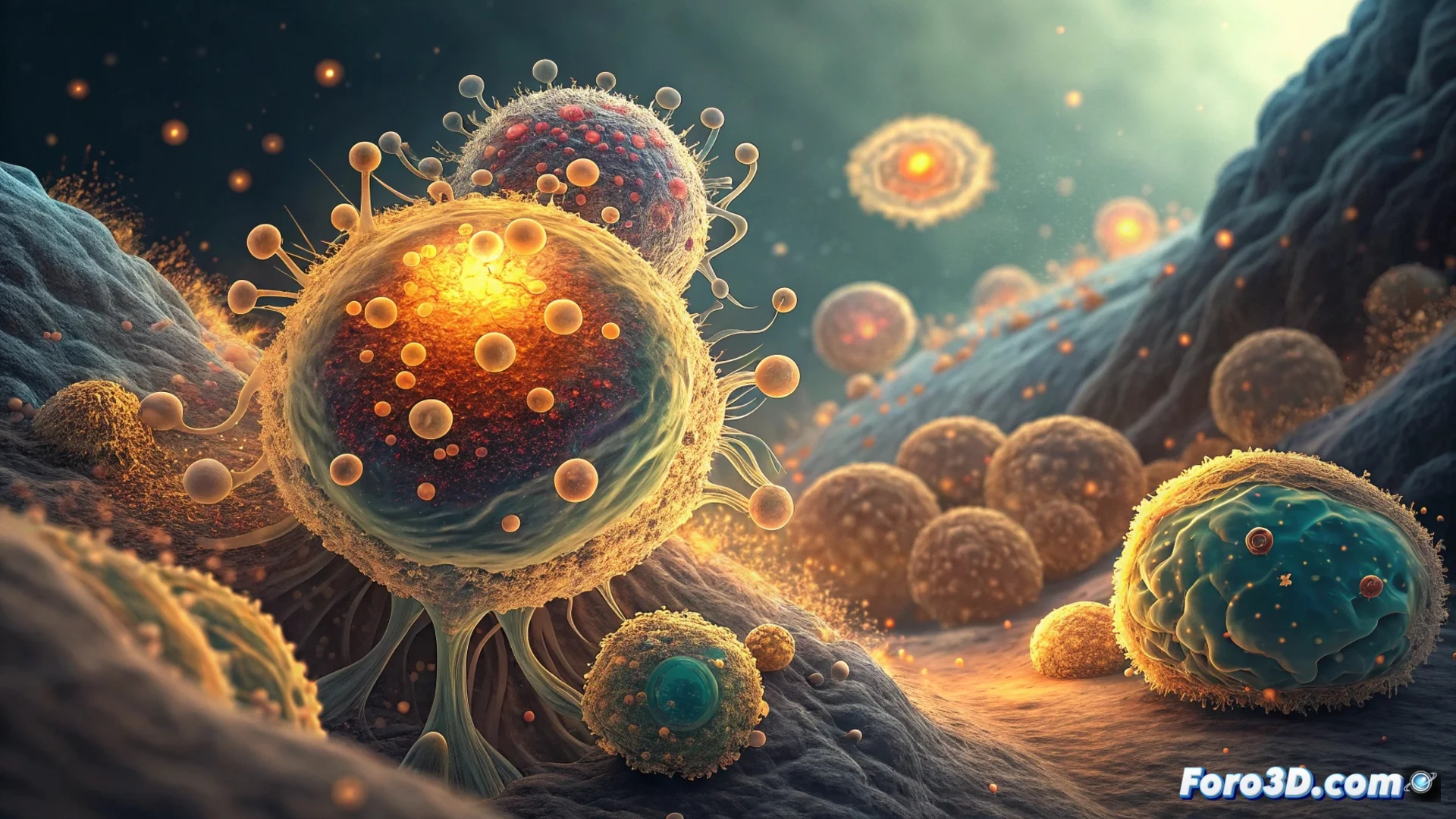
Young extracellular vesicles could reprogram aged cells
Science is exploring a fascinating mechanism where extracellular vesicles from young stem cells influence cells that have stopped dividing. These tiny communication bubbles transport molecular instructions that could alter the fate of old cells, proposing a novel approach against age-related deterioration 🧬.
The molecular dialogue between cellular youth and old age
Senescent cells accumulate over time, secrete inflammatory factors, and damage nearby tissues. Extracellular vesicles act as biological messengers, delivering payloads of proteins and nucleic acids from young cells. This exchange can modulate key processes in the receiving cell, such as repairing its DNA or activating its internal cleaning system, potentially restoring functions or inducing controlled self-destruction.
Key actions of young vesicles:- Deliver signals that can reprogram the activity of an aged cell.
- Stimulate autophagy mechanisms for the cell to recycle damaged components.
- Signal to eliminate senescent cells when repair is not viable.
Instead of just destroying the old, the strategy seeks to reverse or neutralize its damaged state, using the body's own messengers.
A therapeutic path distinct from senolytics
This approach differs from senolytics, drugs designed to eliminate senescent cells. Here, the goal is not to destroy, but to reverse the state biologically or make the cell no longer harmful. Researchers are now focusing on precisely isolating these vesicles, analyzing their molecular cargo, and testing their efficacy in more complex biological models that simulate diseases.
Next steps in research:- Isolate and purify extracellular vesicles from young sources in a reproducible manner.
- Precisely characterize the molecules (proteins, RNA) they transport.
- Evaluate their effect in models of conditions like osteoarthritis or cognitive decline.
The future: recycle instead of just discard
The ultimate potential is to learn to control this intercellular communication process to treat aging-related diseases. The perspective changes: the secret to healthier aging might lie in optimizing the natural recycling systems of our body, using these messenger bubbles as a tool, rather than just seeking to eliminate the old 🔄.