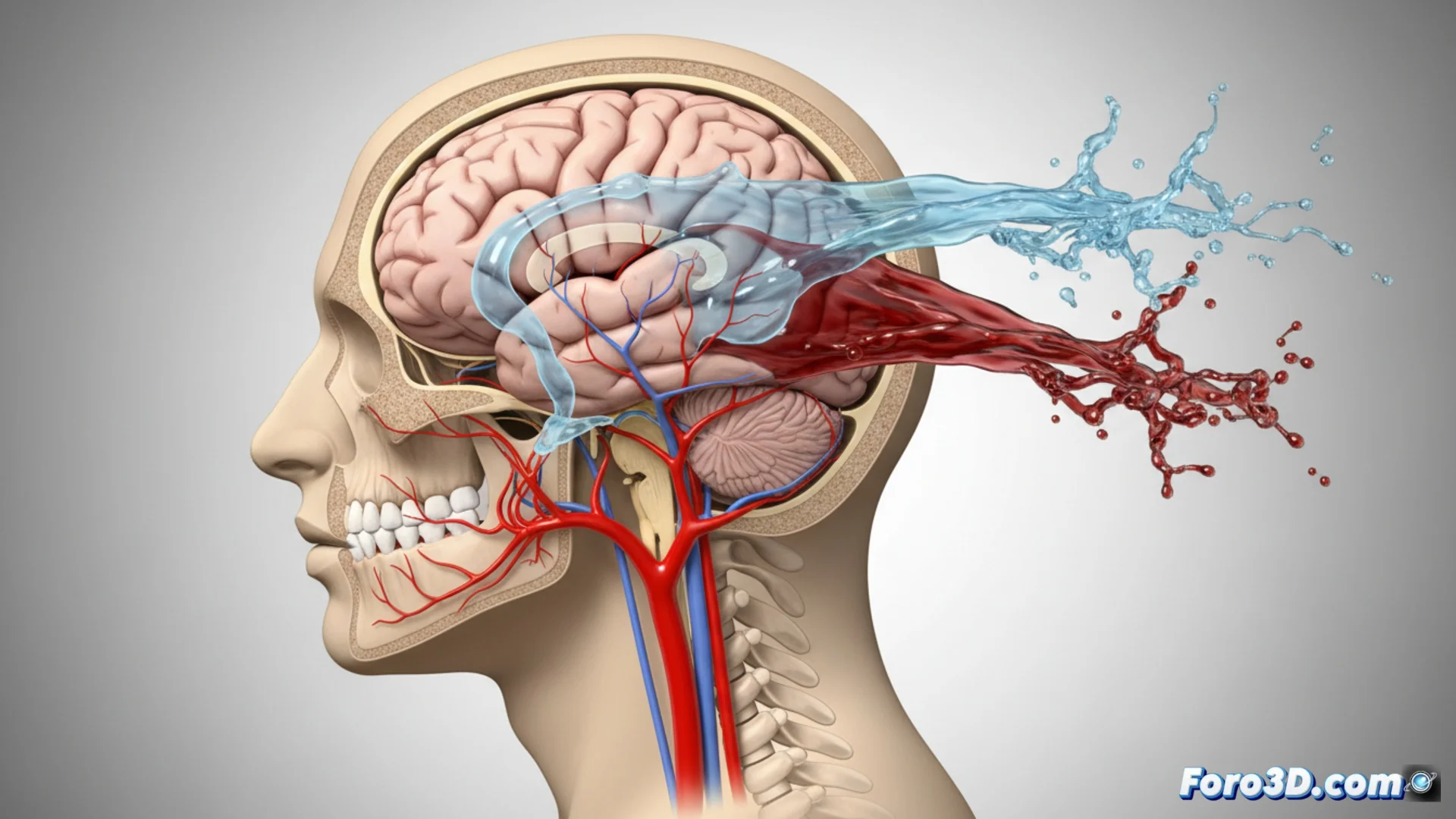
Yawning Moves Cranial Fluids Differently Than Deep Breathing
A new scientific study has discovered that the act of yawning generates a pattern of movement of fluids inside the skull that is completely different from that produced by a simple deep breath. This specific action reorganizes the flow of cerebrospinal fluid and venous blood, temporarily displacing them away from the brain, while increasing the supply of arterial blood through the carotid artery. 🧠
A Unique and Active Physiological Mechanism
The data indicate that yawning is not just a more intense deep sigh, but a differentiated physiological maneuver with a concrete impact on the dynamics of vital fluids for the central nervous system. This particular movement could be the key to understanding more complex brain functions.
Key Findings from the Study:- Redistributes cerebrospinal fluid and venous blood in a way that normal breathing does not achieve.
- Temporarily moves these fluids away from the brain mass during the act.
- Causes a simultaneous increase in the flow of oxygenated blood reaching the brain through the carotid arteries.
Yawning appears to be an active tool that the body uses to manipulate the brain's fluid environment, not a simple passive reflex.
Possible Functions: Cooling and Cleaning the Brain
This exclusive mechanism for moving fluids is related to hypotheses about essential brain functions. The reorganization of the flow could serve to dissipate heat from neural tissue or to accelerate the elimination of accumulated metabolic waste and toxins. Researchers propose that yawning plays an active role in maintaining the brain's internal balance, although further investigation is needed to confirm these benefits and unravel the exact processes.
Areas That Science Needs to Investigate:- Confirm whether the fluid movement effectively cools the brain.
- Determine if it facilitates more efficient neural toxin cleaning.
- Clarify if it has another unidentified physiological purpose.
The Path Ahead: From Curiosity to Confirmation
Although the results are promising, scientists emphasize that further research is necessary to understand all the implications. Future studies must verify whether this phenomenon is a residual function with little utility or, on the contrary, an active and necessary tool that the organism uses to preserve brain health. The next time you yawn, it might not just be due to tiredness or boredom, but because your brain is executing an internal maintenance protocol. 😉