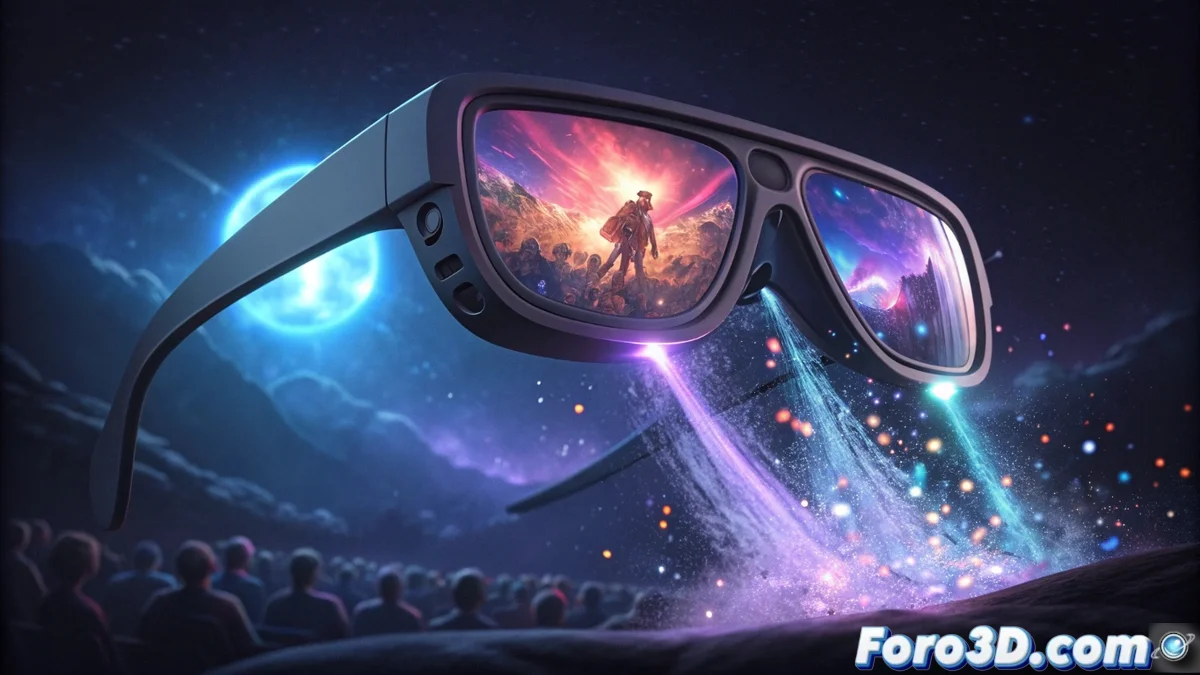
Xreal 1S Presents Automatic 2D to 3D Conversion for Its AR Glasses
The technology company Xreal has officially launched its new augmented reality glasses, the Xreal 1S. This model is strategically positioned as the most accessible option in its portfolio, but it comes loaded with a surprising innovation: a system that transforms 2D content into 3D experiences automatically. Most notably, this functionality will not be exclusive, as it is planned to be extended to users of the Xreal One and One Pro models through a software update. 🚀
Revolutionizing Flat Content Consumption
This automatic conversion technology represents a qualitative leap in how we interact with digital entertainment through AR devices. Using advanced artificial intelligence algorithms, the glasses analyze two-dimensional video sequences and are capable of generating, in real time, a convincing stereoscopic depth. This creates a sense of immersion and volume without the original source needing to have been produced specifically for 3D, opening up a huge range of possibilities for streaming platforms, classic video games, and personal multimedia files.
Key Advantages of Automatic Conversion:- Content Universality: Allows enjoying a three-dimensional experience with virtually any 2D video, series, or movie from your library.
- Instant Immersion: Depth generation occurs in real time, eliminating the need for prior and lengthy rendering processes.
- Catalog Expansion: Transforms massive libraries of flat content into potential immersive experiences, multiplying the value of subscription services.
This software update policy that adds high-end features to already sold hardware is a move highly valued by the community.
Accessibility and Loyalty Strategy
With the launch of the Xreal 1S model as an economical entry point and the decision to democratize the flagship feature among its existing user base, Xreal deploys an intelligent strategy. It seeks to expand its market by attracting new consumers, while retaining early adopters by rewarding their loyalty with significant improvements. This approach, which prioritizes product lifespan over planned obsolescence, has been very well received. The news, initially reported by the outlet Gizmochina, has generated healthy skepticism and anticipation about the practical quality and final performance of this conversion in everyday use.
Impact on the User Ecosystem:- Long-Term Value: Owners of previous hardware see their investment revalued with new capabilities, extending the device's utility.
- Reduced Entry Barrier: A more affordable model combined with powerful software makes AR technology more accessible to the general public.
- Engaged Community: This type of gesture builds a relationship of trust and community around the brand, crucial in emerging markets.
The Future of Immersive Content
The promise of 2D to 3D conversion is ambitious and marks a milestone in the evolution of augmented reality glasses as mass consumer devices. However, as the original article ironically points out, the technology can add visual depth, but it is still far from improving scripts or performances. The real challenge will be to perfect the algorithms so that the resulting three-dimensional experience is comfortable, consistent, and truly enriching, transcending the mere novelty effect. The launch of the Xreal 1S and its pioneering software is, without a doubt, a firm step toward a future where the boundaries between flat and immersive content completely blur. 🎬