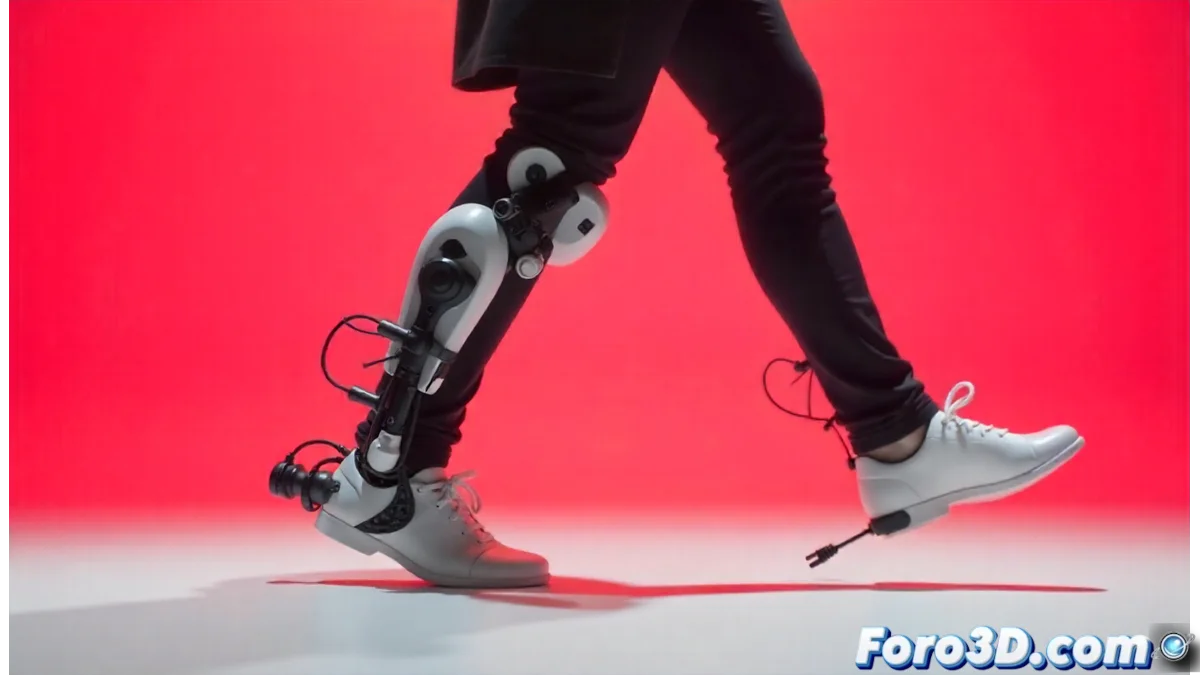
Wyss Institute's Soft ReBoot Exoskeleton Reduces Walking Effort
The Wyss Institute at Harvard University has introduced an innovative soft ankle exoskeleton called ReBoot, which significantly reduces metabolic expenditure during walking. This portable device uses a pneumatic mechanism that stores and releases elastic energy during the toe-off phase, providing assistance to the natural ankle movement without disrupting human biomechanics. Its design adapts to both individuals with limited mobility and healthy people performing extensive tasks, offering a lightweight and non-invasive alternative that increases energy efficiency when walking. 🦿
System Architecture and Operation Mode
The exoskeleton integrates flexible textile materials and air chambers that activate in synchronization with the gait cycle. A specialized sensor captures heel movement and regulates pneumatic pressure to provide assistance at the exact moment, reducing metabolic cost by up to 15% compared to walking without assistance. The technology enables personalized fitting through algorithms that learn from each user's gait pattern, optimizing support based on speed and muscle fatigue.
Main Features of ReBoot:- Pneumatic system that stores and releases elastic energy during the toe-off phase
- Flexible textile materials and air chambers that activate synchronously with walking
- Sensor that detects heel movement and controls pressure for precise assistance
ReBoot represents a significant advancement in mobility assistance, combining lightness and adaptability for users with diverse needs.
Practical Uses and Benefits
ReBoot is particularly beneficial for people suffering from multiple sclerosis, who have had strokes, or older adults with weakness in the lower extremities. It is also useful for workers who stand for long periods or athletes in endurance training. By enabling more efficient walking, it helps prevent injuries and delays the onset of fatigue, increasing autonomy in daily activities. Its discreet design and low weight encourage continuous use without stigmatization.
Key Benefits of the Technology:- Reduction of metabolic cost by up to 15% during walking
- Prevention of injuries and delay in the onset of muscle fatigue
- Lightweight and discreet design that promotes prolonged adoption without stigma
Future Perspectives and User Wishes
With these technological advances, users hope that future versions will include a specific mode for climbing stairs effortlessly, as challenges like accessing a third floor without an elevator remain a common complaint despite the progress. ReBoot lays the foundation for more comprehensive solutions in assisted mobility. 💡