World Position Offset in Unreal Engine 5: complete usage guide
The World Position Offset represents a fundamental tool within the Unreal Engine 5 material system, allowing the alteration of the spatial location of any mesh's vertices during the rendering process. This technique is processed directly in the vertex shader, providing the ability to generate deformations, smooth animations, and dynamic visual effects without relying on conventional skeletons or traditional animation systems 🎮.
Implementation in the material editor
To correctly employ World Position Offset, it is necessary to access the specific node within the material editor of UE5 and establish connections through a node network that calculates the desired three-dimensional displacement. The 3D vectors fed into this port define both the direction and intensity of the movement applied to each vertex, facilitating the creation from basic oscillations to complex transformations based on displacement textures or advanced mathematical functions. It is essential to carefully manage the displacement magnitude to prevent excessive visual distortions in the geometry, preserving the aesthetic integrity of the model during animations ⚙️.
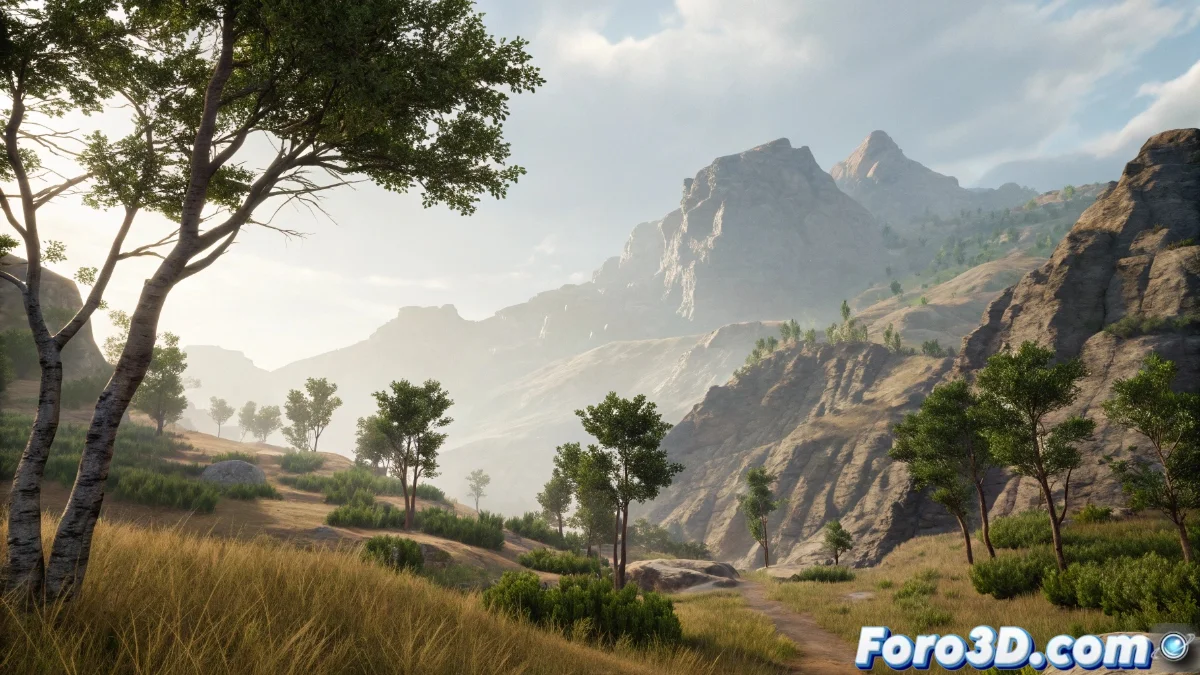
Most common applications:- Simulation of vegetation affected by atmospheric conditions such as wind or rain
- Creation of water surfaces with realistic undulating movement
- Organic animation in virtual creatures such as breathing or heartbeat mechanisms
The power of deformation must be exercised responsibly to avoid turning models into visual nightmares that defy the laws of geometry
Performance considerations and optimization
Although World Position Offset demonstrates exceptional versatility for dynamic effects, its intensive implementation can generate significant impacts on performance, particularly on hardware with limited graphics capabilities. Each vertex that undergoes modification demands additional processing resources during rendering, forcing developers to implement intelligent optimization strategies. Among the most effective techniques are the implementation of Level of Detail (LOD) systems and the progressive restriction of affected vertices on objects located at greater distances from the camera 🖥️.
Recommended optimization techniques:- Implementation of automatic LOD systems to reduce complexity at long distances
- Selective limitation of affected vertices based on distance to the main camera
- Use of influence masks to control specific deformation zones
Conclusion on its practical application
World Position Offset establishes itself as an extremely powerful solution within the Unreal Engine 5 ecosystem, ideal for creating dynamic visual experiences that respond to real-time parameters. However, its implementation requires a careful balance between visual quality and performance efficiency, especially in projects destined for multiple platforms. A deep understanding of its internal mechanisms allows developers to exploit its full potential without compromising the stability of the final project 🚀.