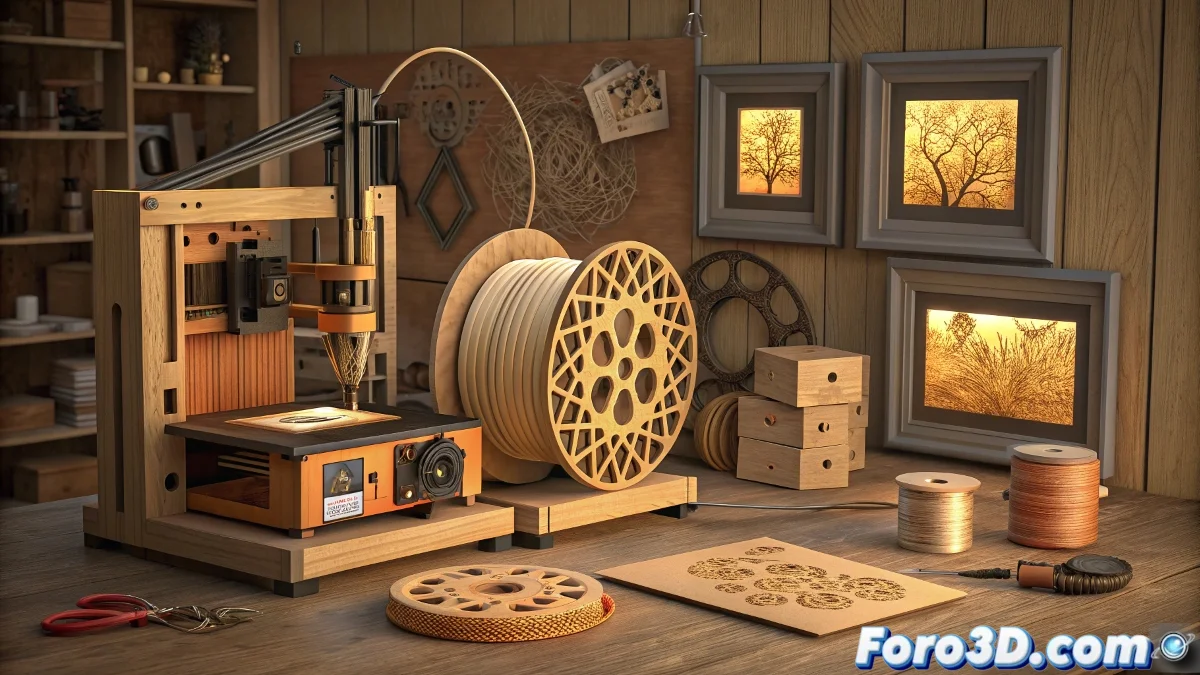
When Technology Meets Nature
Wood PLA represents a fascinating fusion between the digital and the organic, creating a composite material that deceives both the eye and touch. This specialized filament blends real wood particles with a PLA base, offering designers and creators the possibility of producing parts with an authentic woody appearance. The result is objects that combine the precision of 3D printing with the warmth and texture of natural wood.
The magic of this material lies in its ability to be treated like real wood after printing. The wood fiber particles embedded in the PLA matrix allow sanding, staining, varnishing, and even lightly carving the finished parts. This versatility in post-processing opens up a world of creative possibilities for projects seeking that highly valued artisanal and organic touch in product design and decoration.
Unique Characteristics of Wood PLA
- Composition varying between 20% and 40% real wood fibers
- Surface texture that perfectly simulates natural wood
- Ability to show visible grain depending on printing parameters
- Characteristic smell of burnt wood during printing
The Art of Printing with Natural Essence
Working with Wood PLA requires adapting parameters to take advantage of its unique qualities. The presence of wood particles demands the use of larger diameter nozzles, preferably 0.5mm or more, to avoid clogs. The printing temperature is usually slightly higher than standard PLA, generally between 190°C and 220°C, depending on the brand and the percentage of wood in the composition.
Wood PLA democratizes the creation of artisanal soul pieces using digital technology
One of the most fascinating aspects of this material is how printing parameters influence the final appearance of the grain. Variations in temperature, print speed, and infill pattern can create completely different visual effects. Some experienced users even manage to simulate characteristic growth rings of natural wood through strategic changes during the printing process.
Post-Processing Techniques for Professional Results
- Progressive sanding to enhance the natural wood texture
- Application of stains and varnishes to accentuate the grain
- Use of a soldering iron to create burnt and aged effects
- Polishing with wire brushes to highlight the fibers
Wood PLA has found its niche in applications where natural aesthetics and artisanal value are priorities. From consumer product prototypes to decorative pieces and sculptures, this material offers a warm and organic alternative to the coldness of traditional plastic. The ability to combine digital reproducibility with the uniqueness of wood makes it an invaluable tool for creators seeking that differentiating edge. 🌳
Printing with Wood PLA is like being a digital carpenter: you can create furniture without hammers and get splinters without the pain... though the smell of burnt sawdust is still present. 🔨
You can see this product and similar ones in the: store