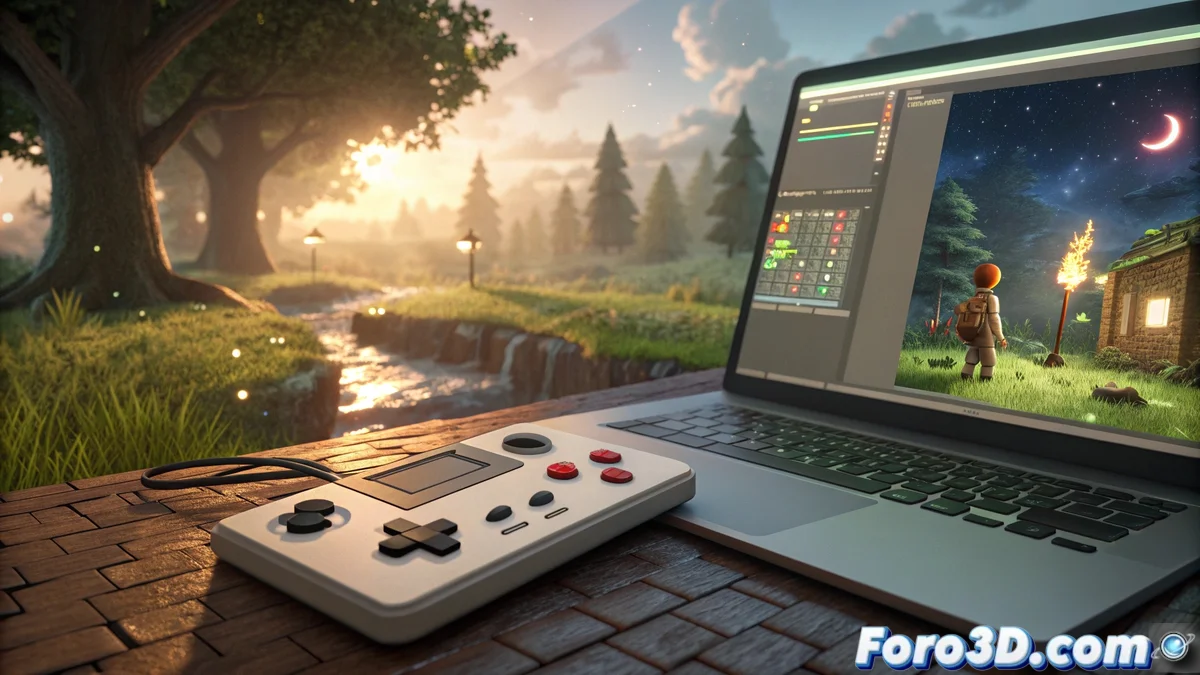
Wick Editor vs Pico-8: two creative worlds in interactive development
As we delve into the universe of creating interactive experiences, we encounter two tools that represent completely opposing philosophies: Wick Editor and Pico-8. While the first offers a modern and flexible approach to web development, the second intentionally recreates the technical limitations of classic consoles, attracting very different creator profiles 🎮.
Contemporary flexibility versus programmed nostalgia
Wick Editor presents itself as a comprehensive development environment that combines intuitive visual tools with programming capabilities, allowing the creation of animations and 2D games without requiring deep coding knowledge. It works directly in the browser and supports export to multiple web formats, making it ideal for educational projects and agile prototyping. On the other hand, Pico-8 meticulously emulates retro hardware restrictions with a limited palette of 16 colors, 128x128 pixel resolution, and 4-channel sound, where each limitation transforms into a creative challenge ✨.
Main features of Wick Editor:- Modern visual interface with integrated animation tools
- Native export to standard web formats without complications
- Online collaboration capabilities for team work
- Deliberate technical limitations that emulate 8-bit hardware
- Characteristic pixelated aesthetic with reduced color palette
- Self-contained environment that includes sprite and sound editors
Choosing between these tools is like deciding between a modern recording studio with unlimited equipment and a vintage cassette recorder where background noise is considered part of the creative experience.
Creative communities and practical applications
The Wick Editor community is mainly composed of educators, digital artists, and beginners in game development who value immediate accessibility and the visual approach. In contrast, Pico-8 attracts retro development enthusiasts, programmers who enjoy technical challenges, and creators who appreciate vintage aesthetics, with a very active community that shares virtual cartridges and participates in specialized game jams 🏆.
Differentiated use cases:- Wick Editor: ideal for teaching visual programming and rapid prototyping
- Pico-8: perfect for retro game jams and development of games with creative restrictions
- Both tools: effective for introducing programming concepts to different audiences
Educational approaches and programming languages
Both platforms have proven to be effective for teaching fundamental programming concepts, although they use different approaches. Wick Editor employs JavaScript as the main language, offering a natural transition to professional web development. Pico-8 uses simplified Lua syntax, focusing on programming logic within a retro gaming context. This difference reflects their underlying philosophies: while Wick Editor prepares for modern development, Pico-8 teaches how to optimize resources and work within creative limits 💡.
Conclusion: complementary tools for different visions
The choice between Wick Editor and Pico-8 ultimately depends on the creative objectives and the preferred work approach of each creator. Wick Editor represents modern versatility and visual accessibility, while Pico-8 embodies creativity through limitations and technical nostalgia. Both tools demonstrate that there is no single right path in interactive development, but rather different approaches that resonate with different types of creators according to their interests, skills, and creative aspirations 🚀.